
Updated 2026-06-24 — Originally published 2016-04-12
Key Takeaways:
– Clearomizers are see-through tanks with built-in atomizer coils — good for beginners who want to monitor their e-liquid level
– Cartomizers combine battery and cartridge in one unit, making them the simplest option available
– Tanks are large-capacity reservoirs — ideal for vapers who hate constant refilling
– All three share the same basic job: holding e-liquid and vaporizing it
– Most vapers start with cartomizers and gradually move toward clearomizers or full tank setups
If you’re new to vaping, the terminology alone can feel overwhelming. Atomizers, ohms, wicks, coils — it stacks up fast. But Clearomizers, Cartomizers, and Tanks: Clearing Up the Confusion is exactly what this guide tackles. These three terms come up constantly in vaping discussions, and once you understand what each one actually does, the rest starts making sense.
None of this is as complicated as it sounds.
A Quick Word on Ohms and Resistance
You’ll hear “ohms” mentioned constantly, so it’s worth a quick explanation before getting into the hardware itself.
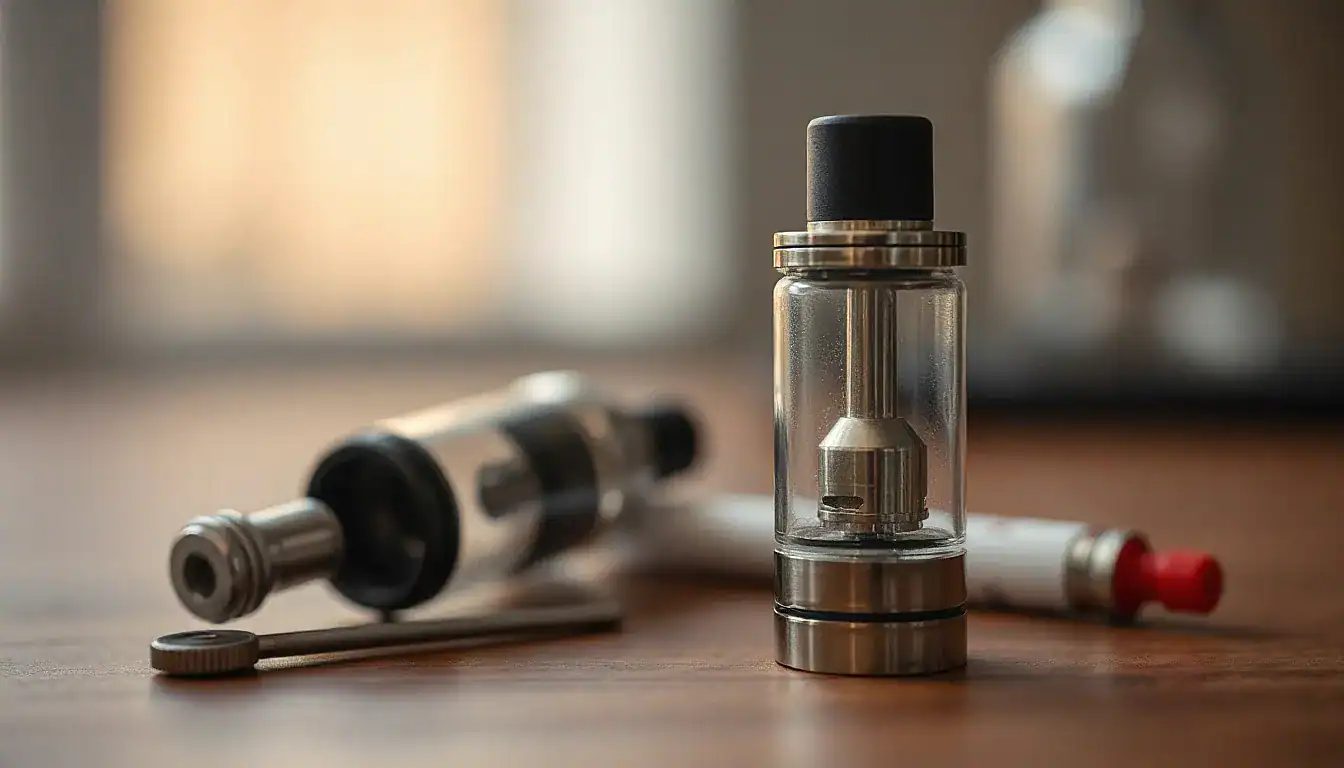
Ohms measure electrical resistance. Lower ohms mean less resistance — more of your battery’s power reaches the coil. More power equals more heat, which produces bigger vapor clouds and a stronger throat hit. The trade-off is straightforward: your battery drains faster. Higher ohm setups are gentler on your battery and produce a tighter, more cigarette-like draw — which is exactly what a lot of new vapers are looking for.
If you want to go deeper, our guide on sub-ohm vaping and good practices covers everything in detail.
What Is a Clearomizer?
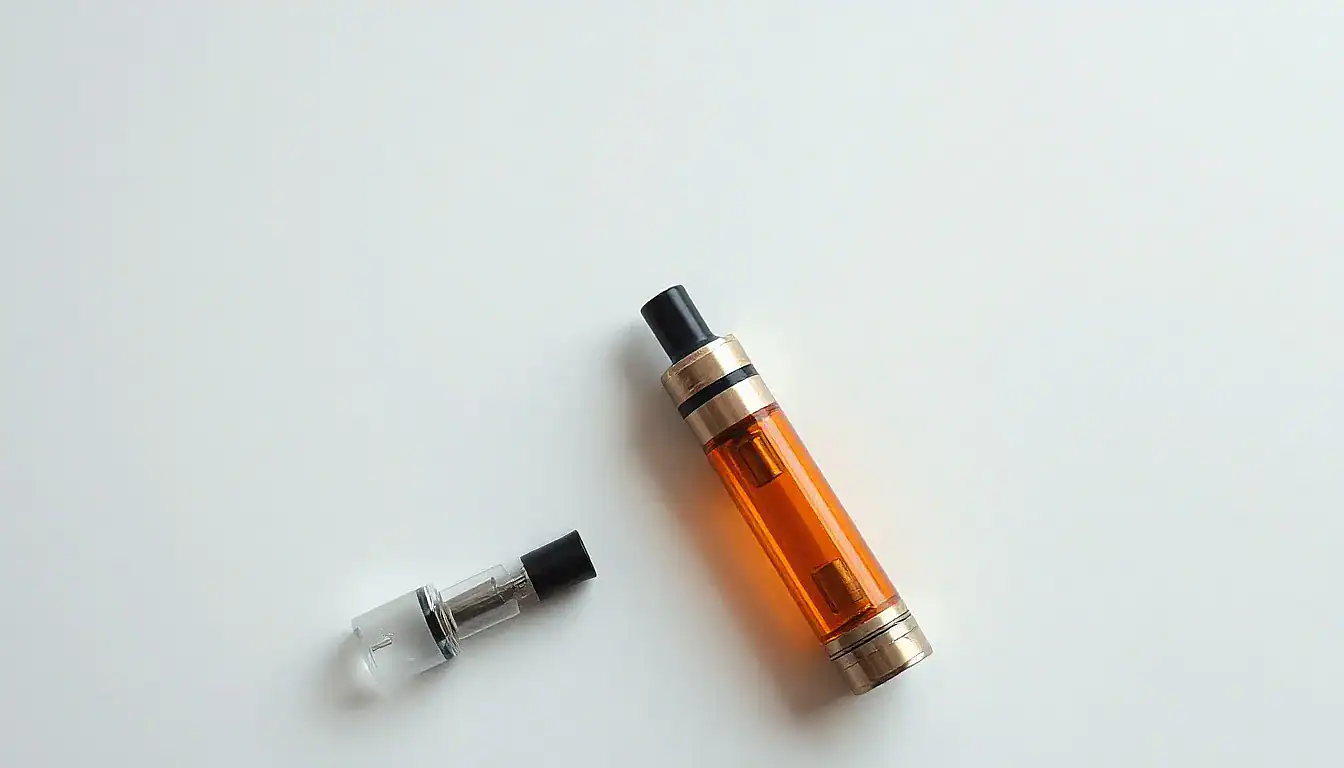
A clearomizer is a see-through tank — usually glass or clear plastic — that holds e-liquid and contains a pre-built atomizer coil. The “clear” part is the whole point. You can see exactly how much juice you have left without guessing or shaking the thing.
How Clearomizers Work
The setup is straightforward: a clear reservoir, a coil, and a wick. The wick pulls e-liquid from the reservoir into the coil. Fire the device, the coil heats up, and you get vapor. That’s it.
Coils sit at either the bottom or top of the unit. Bottom-coil designs win here — gravity feeds liquid directly to the wick, which means better flavor and more consistent vapor production. Top-coil designs are older technology and harder to find for good reason.
What to Know Before You Buy
Capacity in 2026 typically runs between 2ml and 5ml for standard clearomizers. Sub-ohm versions push higher. Some clearomizers are fully reusable — you swap out the coil head when flavor drops off or vapor thins out. Others are disposable; use it, toss it, replace it. A smaller number are rebuildable, letting you install your own wicks and coils for a fully custom setup.
Quality varies — a lot. Even within the same brand, you’ll get inconsistent results because of how these are mass-produced. Stick to established names like Aspire or Vaporesso rather than grabbing whatever’s cheapest on a third-party site.
Honestly? Clearomizers are my pick for most new vapers. You get visibility, decent capacity, and replaceable coils without any real learning curve.
What Is a Cartomizer?
A cartomizer merges a cartridge and an atomizer into a single unit — that’s where the name comes from. Screw it onto a rechargeable battery and you’re vaping. No settings, no coil priming, no fuss.
Who They’re Actually For
Cartomizers are the classic entry point for people switching from cigarettes. They’re small, light, and designed to feel familiar. The draw is tight. The format is pen-like. If someone hands you a cartomizer setup, you’ll figure it out in about thirty seconds. For a fuller look at this device category, our guide to cig-a-like e-cigarettes breaks down the whole space.
Disposable vs. Refillable Cartridges
There are two types, and this is where a lot of confusion creeps in.
Disposable cartridges come pre-filled. Once the e-liquid runs out, you swap in a new one. They’re convenient — but the cost adds up fast if you’re vaping daily.
Refillable cartridges start empty. You fill them yourself with whatever e-juice you want. More effort up front, more flexibility overall, and significantly cheaper over time.
One thing worth knowing: most “disposable” cartridges can technically be refilled. The fill port is usually awkward, and it gets messy. Most people skip it — and that’s a perfectly reasonable call.
What Is a Tank?
Here’s where the terminology gets genuinely messy. “Tank” gets applied loosely to almost every type of vape hardware. Clearomizers get called tanks. Cartomizers get called tanks. Pod systems get called tanks. It’s a catch-all term that doesn’t mean much on its own.
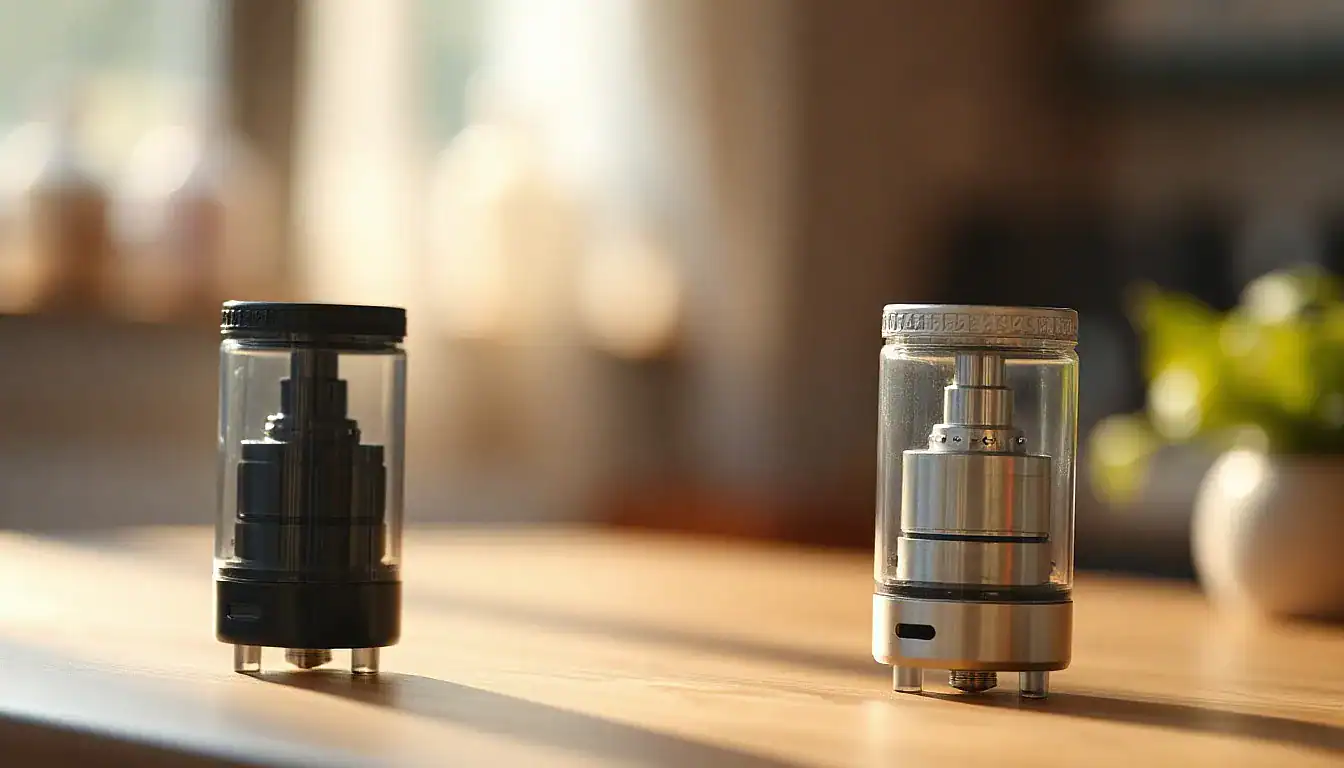
For the purposes of this guide: a tank is a standalone, high-capacity liquid reservoir designed to pair with a box mod or similar device. It’s a separate component — not an all-in-one unit.
What Sets Tanks Apart
Size is the main differentiator. A clearomizer might hold 2-4ml. A dedicated tank typically holds 5-8ml, and some sub-ohm tanks go even higher. Fewer refills. More vaping. That’s the appeal.
Tanks also give you full control over your setup. You choose the tank. You choose the mod. You choose the coil resistance. You pick your e-liquid from any US supplier you prefer — no proprietary cartridges, no locked-in flavor options.
Material matters more than most people realize. Glass tanks are flavor-neutral, easy to clean, and don’t react with acidic or citrus-heavy e-liquids the way some plastics do. If you’re choosing between a glass tank and a plastic one at the same price point, take the glass every time. Our sub-ohm tanks guide goes further on what to look for in a quality tank setup.
Keeping Your Tank in Good Shape
Tanks are low-maintenance but not zero-maintenance. Clean it when you switch e-liquid flavors — leftover residue will muddy the taste of whatever you put in next. Check the O-ring seals regularly. A worn or cracked seal causes leaks, and a leaking tank in your pocket is nobody’s good day.
So Which One Should You Choose?
There’s no universal right answer — but there are some useful patterns.
Cartomizers suit people who are brand new to vaping, especially those coming from cigarettes. The simplicity removes every barrier. Clearomizers work well once you’ve got the basics down and want a bit more control and visibility. Full tank setups make the most sense when you know what you like — a specific coil resistance, a preferred wattage range, a go-to e-liquid — and you want to build around those preferences.
| Type | Best For | Capacity | Complexity |
|---|---|---|---|
| Cartomizer | Beginners, ex-smokers | Low (1-2ml) | Very simple |
| Clearomizer | Intermediate vapers | Medium (2-5ml) | Easy to moderate |
| Tank | Experienced vapers | High (5ml+) | Moderate |
Most vapers follow that progression naturally — cartomizer first, then clearomizer, then tank. But plenty of people skip straight to a clearomizer starter kit and never touch a cartomizer at all. If you’re not sure where you fall, the Vape Finder Quiz can narrow it down fast. And if you want a broader look at the full range of device types available right now, the types of vapes explained guide covers everything with clear pros and cons.
The core point of Clearomizers, Cartomizers, and Tanks: Clearing Up the Confusion is simpler than the terminology suggests — all three do the same fundamental job. They hold e-liquid and turn it into vapor. Everything else is just degrees of capacity, control, and complexity. Start where you’re comfortable, learn what you actually want from a vape, and build from there.