

Best Vape Pods 2026 — Tested & Ranked
Every major pod system tested and ranked — on flavour, battery life, coil performance and value. Independent picks, no fluff, fully updated for 2026.
·
We’ve tested all the major vape pods on the market in 2026. Ranked on flavor, build quality, puff count accuracy, and eco score.
🏆 Editor’s Top Picks — 2026
Rankings last updated 29 July 2026

Vaporesso Luxe XR Max 2 Review
Vaporesso has been building pod mods for years, and the Luxe XR Max 2 is their latest push to hit the sweet spot between portable size and serious performance.
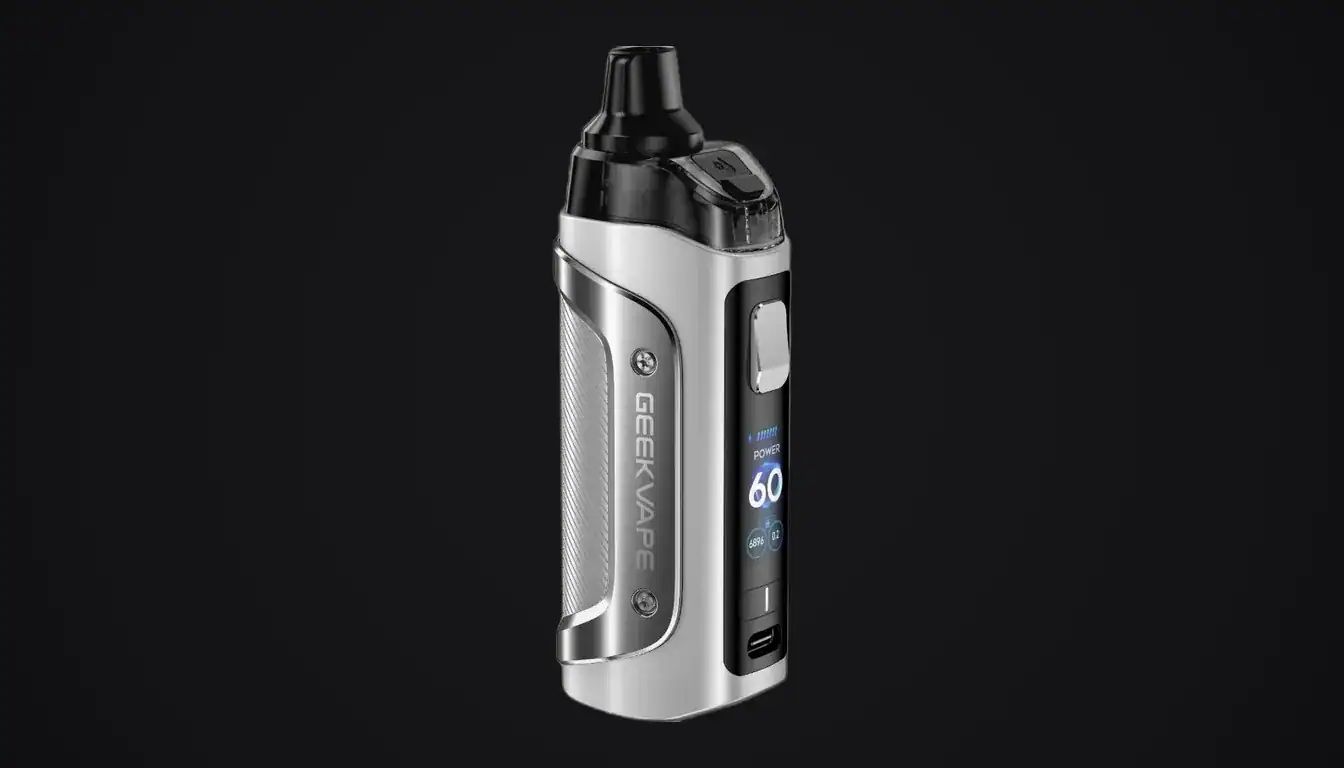
GeekVape Aegis Boost 3 Review
Discover if the GeekVape Aegis Boost 3 lives up to the hype in this honest review. Durable pod mod, versatile performance, and where to find the best deal.
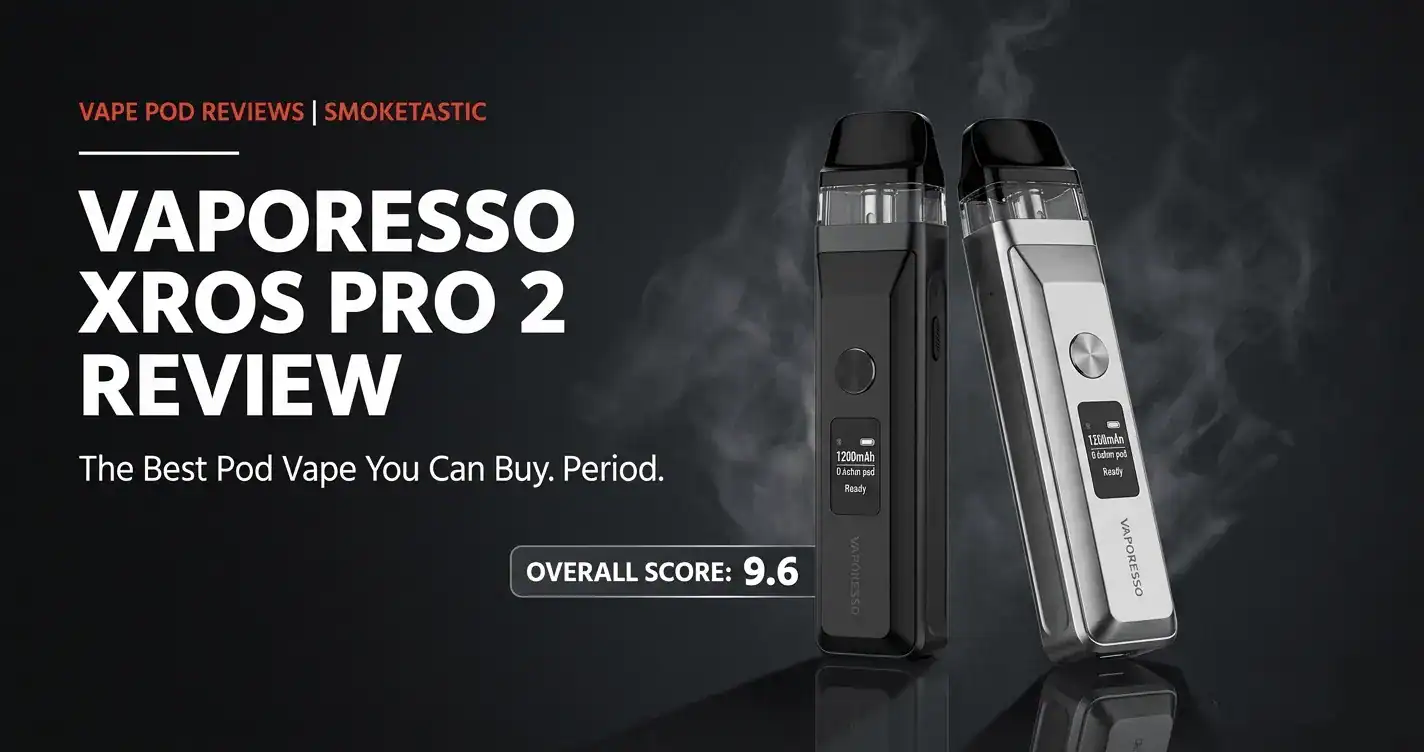
Vaporesso XROS Pro 2 Review 2026
The Vaporesso XROS Pro 2 is a high rated pod vape for 2026. An expert review covering design, flavor, battery life, running costs, and who it's right for.
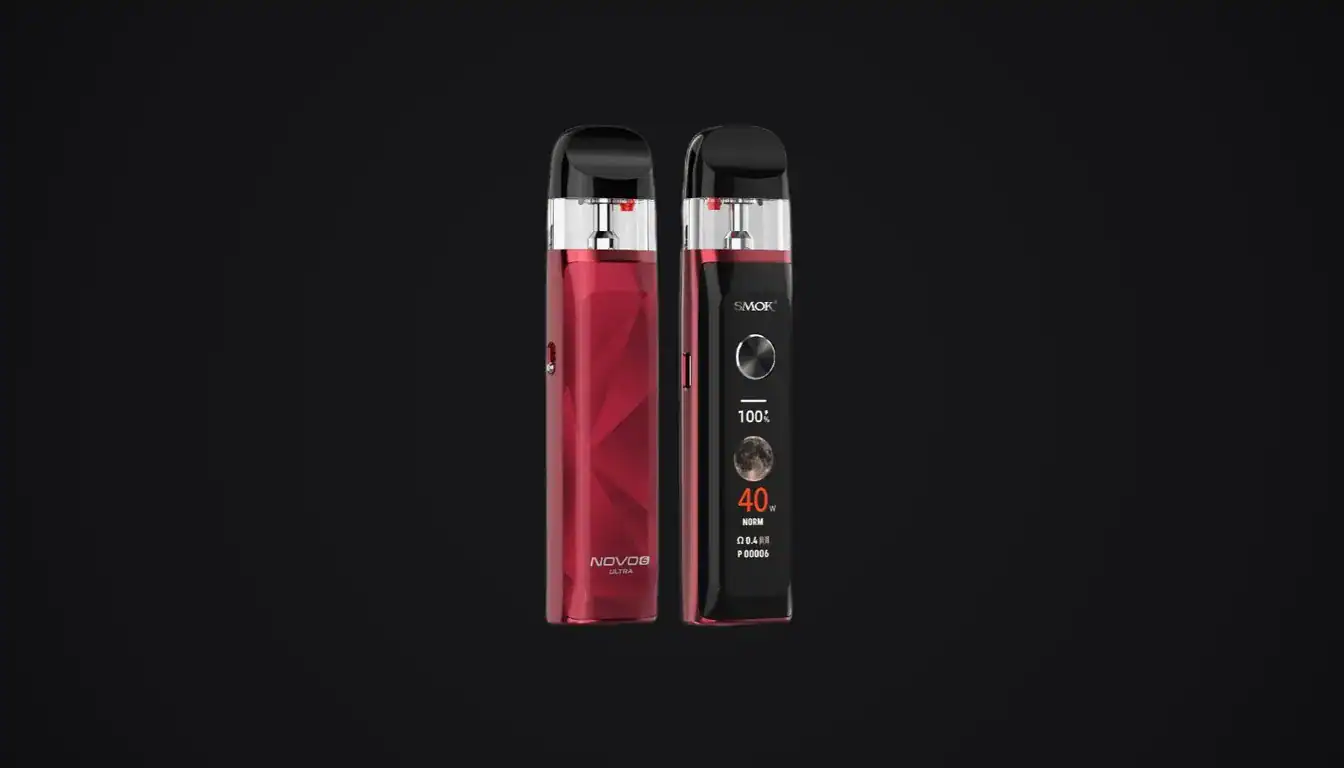
SMOK Novo 6 Ultra Pod Review
The SMOK Novo 6 Ultra is a pod system kit built around a 1700mAh rechargeable internal battery, a 1.65-inch TFT touchscreen, and three distinct output modes

OXVA Xlim Pro 3 Review
Read our OXVA Xlim Pro 3 review to see if this premium pod system's upgraded screen and flavor tech justify the investment for experienced vapers.
Key Takeaways
- Pod systems have overtaken traditional vape kits as the most popular choice in the US and the UK, with thousands of options available — but only a handful genuinely deserve your money.
- The best vape pod balances battery life, flavor quality, coil performance, and price — missing any one of these seriously dents the experience.
- Elfbar remains one of the most recognizable names in the US pod market, but it’s not automatically the best choice for every vaper.
- UK-specific regulations, including the 600-puff limit on disposables, directly shape which products you can legally buy — knowing this saves you from wasted purchases.
- Open-system refillable pods almost always offer better long-term value than closed-system pre-filled alternatives.
Read on for the full breakdown.
Why Vape Pods Dominate the Market Right Now
Over 4.7 million adults in the UK vaped regularly in 2024 and more in the US. That number didn’t get there by accident — it got there because pod systems made vaping genuinely easy for the first time.
Before pods, getting into vaping meant buying a bulky mod, learning about watts and ohms, and fiddling with coils the size of your thumb. Most beginners gave up within a week. Pods changed that completely. They stripped the whole thing back to what actually matters: good flavor, consistent nicotine delivery, and a device that fits in your pocket without feeling like a brick.
And here’s the thing — experienced vapers switched too. Not just beginners.
The simplicity isn’t a compromise anymore. Pod technology has matured to the point where a compact 3ml refillable pod system can genuinely compete with a full-sized sub-ohm kit on flavor. The coil tech caught up. The battery capacity improved. The airflow designs got smarter. So now you’re not choosing between convenience and quality — you’re getting both.
Retailers like ECig One 4 and ECig Wizard 5 carry hundreds of pod kit options, which tells you everything about where the market has moved. The variety is staggering. But more options don’t always mean easier decisions — if anything, it makes picking the right device harder.
What Makes a Vape Pod “The Best”? Key Factors to Consider
Not every pod deserves a spot on a best vape pod list. Plenty of them look great in photos and perform terribly in real life. So before jumping into specific recommendations, it’s worth getting clear on exactly what separates a genuinely good pod from an overpriced disappointment.
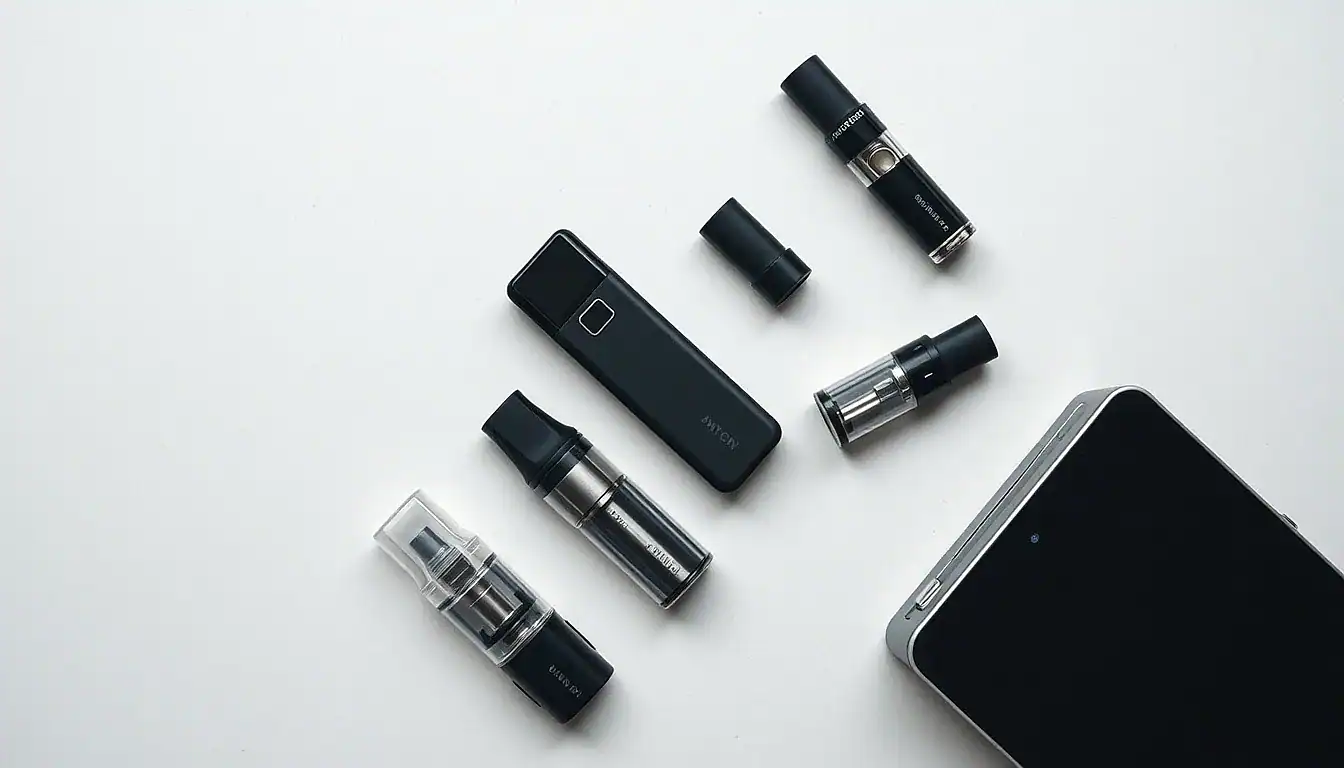
Four things matter most: battery performance, flavor delivery, ease of use, and price-to-performance ratio. Get all four right and you’ve got something special. Miss on two of them and you’re going to be frustrated within a fortnight.
Battery Performance and Longevity
Battery life kills more otherwise-decent pods than any other single factor. You can have the best coils in the business — if the battery dies by 2pm, you’re carrying a dead device or scrambling for a USB cable every few hours.
Most quality pod systems sit between 400mAh and 1500mAh. That might not sound like much compared to a smartphone, but vaping draws power in short, sharp bursts rather than continuously. A well-optimized 800mAh pod system can genuinely last a full day for moderate vapers. A poorly optimized 1200mAh pod can die by lunchtime.
What you’re actually looking for isn’t just raw capacity. Charging speed matters too. USB-C fast charging has become standard on better-quality pods, and it makes a real difference — 45 minutes from flat to full versus 2 hours changes your whole routine. Honestly, if a pod system in 2026 still ships with Micro-USB, that’s already a strike against it.
Look for pods that display battery level accurately. Vague LED indicators that go from “full” to “dead” with nothing in between are genuinely annoying in practice.
Flavor Delivery and Coil Quality
This is where pods live or die. Everything else can be forgiven if the flavor is exceptional. Nothing compensates for coils that taste burnt after three days.
Mesh coils changed everything here. Traditional round-wire coils heat unevenly and produce a narrower flavor profile. Mesh coils distribute heat across a wider surface area, which means more consistent vapor production and noticeably better taste — especially on fruit and dessert profiles. If a pod system in 2026 isn’t using mesh coils, you’re already behind.
Coil lifespan is the other piece. A coil that lasts two weeks gives you far better value than a slightly better coil that burns out in four days — even if the latter tastes marginally superior at first. Vampire Vape 7 and other specialist UK retailers consistently highlight coil longevity as a key buying consideration, and they’re right to do so.
Airflow design ties directly into flavor too. Tighter draw (MTL — mouth-to-lung) suits nicotine salt users who want that cigarette-like pull. Looser, more open airflow (DTL — direct-to-lung) suits freebase nicotine fans who want bigger clouds. The best pods either offer adjustable airflow or are transparently designed for one style or the other — the worst try to do both badly.
Ease of Use and Maintenance
A pod system should not require a manual. If you need to watch three YouTube tutorials before you can fill the thing, the design has failed.
Top-fill refilling is the gold standard. Side-fill is acceptable. Bottom-fill is a nightmare — you’re guaranteed to spill e-liquid on yourself at least once a week. The mechanism should click or seal positively so you actually know when it’s properly closed.
Leak resistance is a massive quality-of-life factor that most review articles either ignore or mention as a footnote. A leaking pod ruins your pocket, wastes expensive e-liquid, and can damage the device over time. The best pods use silicone gaskets, positive-lock mechanisms, and tight tolerances to prevent this. Cheaper pods cut corners here.
Draw-activation (no buttons, just inhale) suits beginners. Button-activation suits experienced vapers who want precise control. The best devices offer both.
Price-to-Performance Ratio
Pod systems range from about $10 to $80+ in the US market. The honest truth? The sweet spot sits firmly between $25 and $50 for most vapers.
Below $20, you’re usually making real compromises — thinner build quality, shorter coil lifespan, less accurate airflow. Above $50, you’re often paying for branding and aesthetics rather than meaningfully better performance. There are exceptions in both directions, but that $20-$50 range is where the best value consistently lives.
Don’t let anyone convince you that spending more automatically means vaping better. It doesn’t. Some of the most overrated pods on the market carry premium price tags and underwhelm in actual use.
The Top 3 Best Vape Pods on the Market Today
Based on testing data, expert reviews from teams like ECD (ECigaretteDirect, who’ve gathered over 27,000 customer reviews across their product catalog 1), and real-world user feedback, these three pods stand out above everything else in 2026.
First Place: Voopoo Argus Pod System
The Voopoo Argus earned its top spot through sheer consistency. It doesn’t dazzle you with gimmicks — it just performs, day after day, in a way that makes other pods feel sloppy by comparison.
The Argus runs on a 1200mAh battery with USB-C fast charging, hitting a full charge in under an hour. It uses Voopoo’s proprietary Gene chip, which adjusts output intelligently based on coil resistance — meaning you’re always getting optimized power delivery without manually tweaking settings. For vapers who want great results without constant fiddling, that’s genuinely valuable.
Flavor quality is exceptional. The 0.7-ohm mesh coil (included in the kit) produces rich, clean vapor that holds up well through extended sessions. The PnP coil ecosystem means you’ve got a wide range of replacement coils available, from tight MTL options to more open DTL configurations — so the device genuinely adapts to different styles rather than locking you into one experience. For a closer look at how the Argus line performs across different configurations, our VooPoo Argus XT and MT Starter Kit Review goes deep on the hardware.
Build quality feels premium without being fragile. The zinc-alloy chassis gives it a solid feel, but it’s light enough to carry all day without noticing. Refilling is top-fill with a positive seal — no leaks in extended testing.
At around $35-$40 in most US retailers, it hits that sweet spot perfectly. The ECD team at ECigaretteDirect, who’ve reviewed more pod systems than almost any other UK publication 1, consistently rank Voopoo among their top performers — and it’s easy to see why.
Second Place: Uwell Caliburn G3
Second place isn’t far behind. The Uwell Caliburn G3 is probably the most refined evolution of a beloved product line, and it shows.
The original Caliburn defined the modern pod category when it launched. The G3 takes everything that worked and quietly fixes everything that didn’t. The 850mAh battery is smaller than the Argus on paper, but Uwell’s power management is so efficient that real-world battery life is surprisingly competitive. Charging is USB-C and genuinely fast.
What makes the Caliburn G3 special is the flavor. Uwell’s Pro-FOCS technology — their approach to flavor optimization at the coil and wicking level — delivers taste clarity that honestly rivals devices twice the price. Fruit profiles sing on this device. Tobacco and menthol profiles are clean and accurate. If pure flavor quality is your primary concern, this is the pod to beat.
The draw is fully adjustable, sliding between MTL and a restricted DTL. The device activates via both draw and button. And the clear pod design lets you see your e-liquid level at a glance — a small thing that you’ll appreciate when you’re not constantly wondering if you’re about to get a dry hit.
It sits around £30-£35 in the UK market 2. That’s exceptional value for the performance level on offer.
Third Place: SKE Crystal Plus
SKE deserves more attention than it gets. The Crystal Plus is a genuinely impressive pod system that often gets overshadowed by bigger brand names — but the performance absolutely holds its own.
SKE built their reputation largely through disposables (the SKE Crystal Bar became one of the most popular disposables in the UK 6), and that consumer insight directly shaped the Crystal Plus. They knew exactly what their users wanted: a simple, familiar form factor with great flavor and minimal complexity.
The Crystal Plus delivers on all of that. The magnetic pod connection is satisfying and secure. Refilling is straightforward. The 400mAh battery is modest, but this is clearly designed as a secondary device or for lighter vapers — in that context, it works perfectly.
Where it really shines is flavor. The coils take clear inspiration from SKE’s disposable heritage — flavor accuracy is excellent, and the vapor feels smooth and consistent. Nicotine salt e-liquids especially shine here. Want the full picture on SKE’s disposable roots before committing? Our SKE Crystal Bar Review covers the brand’s history and flavor quality in detail.
At under £15 for the device itself, the Crystal Plus punches well above its weight class. If budget is a real consideration — or you want a compact backup device — this is the best vape pod at that price point, full stop. No hesitation on that call.
Elfbar Pods: The Brand Everyone Knows
Elfbar is impossible to ignore. They went from relative obscurity to one of the most recognized vape brands in the world in just a few years — and that didn’t happen by accident.
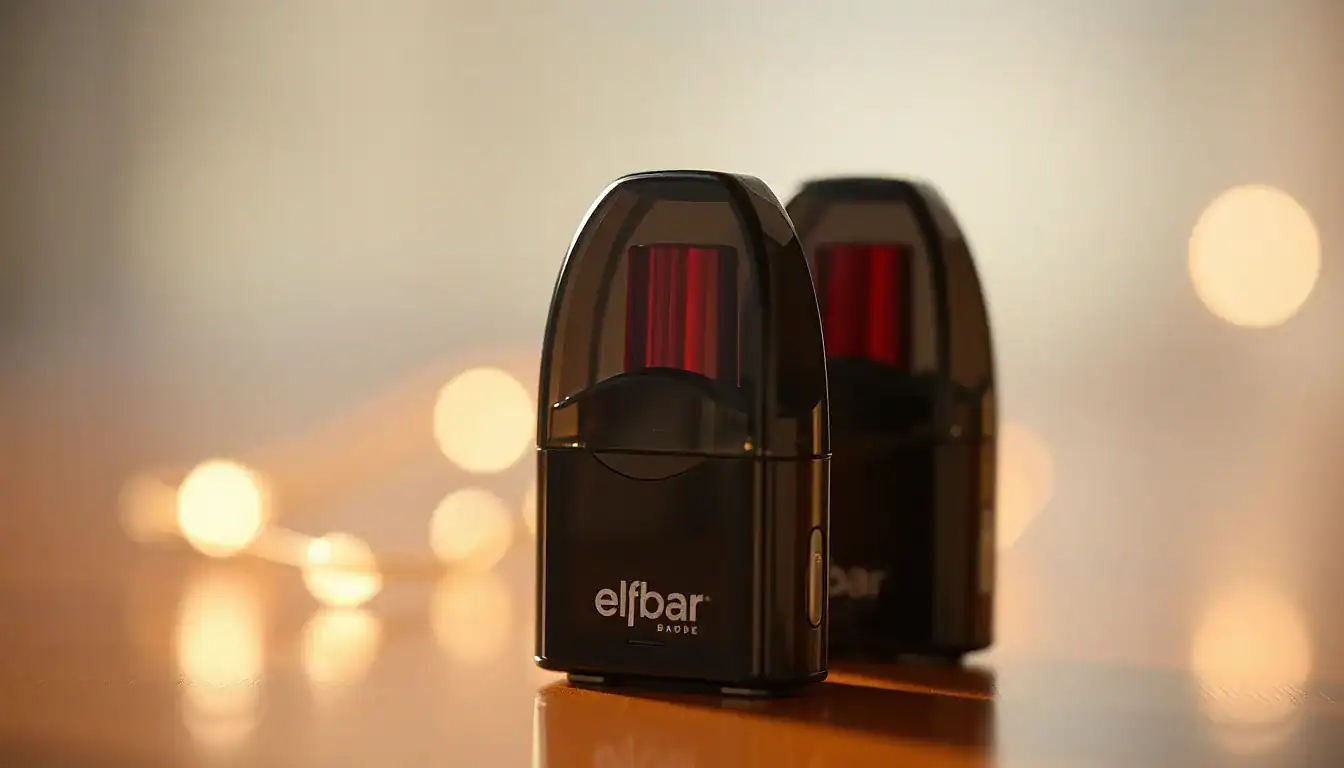
Their disposable range (particularly the Elf Bar 600, which complies with the UK’s legal 600-puff limit for disposables 3) became a cultural phenomenon in British vaping. Walk into any corner shop that sells vapes and you’ll find Elfbar products. That accessibility and brand recognition is genuine, and it matters.
But here’s where I’ll take a position: Elfbar’s disposable dominance doesn’t automatically translate to pod system supremacy.
What Sets Elfbar Apart
Elfbar’s biggest strength is flavor. Their e-liquid formulations are genuinely excellent — sweet, accurate, and smooth in a way that many competitors can’t match. Their disposables deliver flavor consistency that refillable pod users often find hard to replicate exactly, largely because Elfbar controls the entire e-liquid-to-coil equation in a closed system.
The Elfbar ELFA Pro is their primary refillable pod system answer to the disposable market. It uses pre-filled pods rather than open refillable pods — so you’re getting the flavor consistency of their disposable range in a rechargeable format. The device itself is slim, elegant, and genuinely pocket-friendly.
For former smokers who want the absolute simplest possible transition from smoking to vaping, the ELFA Pro is hard to beat. There’s no measuring, no filling, no coil swapping — just insert a pod and vape. Dead simple.
Popular Elfbar Models Worth Your Attention
The Elf Bar 600 remains the most relevant product for understanding Elfbar’s UK presence. It’s a single-use disposable that holds exactly 2ml of e-liquid (the UK legal maximum) and delivers approximately 600 puffs — right at the regulatory limit 3. The flavor range is enormous, covering everything from classic tobacco to exotic fruit blends, and the quality across that range is impressively consistent.
For vapers considering the step from disposable to pod system, the ELFA Pro is the natural Elfbar progression. The pre-filled pods come in the same flavors as many of their disposables, so you’re not losing the taste profiles you’ve grown attached to. You’re just making them rechargeable and slightly more sustainable. Our Elf Bar BC600 Review gives you the full picture on the disposable side of the brand before you decide which direction to go.
The Elfbar EPOD 2 takes it further into true pod-system territory, with a slightly larger battery and broader coil compatibility. It’s worth considering if you want more flexibility than the ELFA Pro offers.
Honestly though? If you’ve already mastered using a refillable pod and you’re comfortable choosing your own e-liquids, the Voopoo Argus or Caliburn G3 will likely serve you better than any Elfbar pod system. Elfbar’s real advantage lives in that closed, pre-filled system — if you want open refillable freedom, there are better tools for the job.
The Vape Pod Scene: Regulations, Availability, and Top Choices
The US market isn’t the same as vaping markets elsewhere. For example, the UK has The Tobacco Products Directive (TPD) which shapes almost every product on UK shelves, and understanding it makes you a smarter buyer.
The US and the UK has some of the strictest vape product regulations in the world — and that’s actually a good thing for consumers. Products sold legally in the US must meet the FDA’s requirements whilst the UK must meet MHRA (Medicines and Healthcare products Regulatory Agency) notification requirements, which means they’ve been through at least a basic level of regulatory scrutiny. Buying from reputable US and UK retailers isn’t just convenient — it’s genuinely safer.
Understanding Vaping Regulations and the 600-Puff Limit
The 600-puff limit is the one regulation that confuses new vapers most. Here’s the simple version: disposable vapes sold legally in the UK can contain a maximum of 2ml of e-liquid and cannot exceed 20mg/ml nicotine strength. That 2ml limit, at typical vaping rates, translates to roughly 600 puffs — which is where the “600” branding on products like the Elf Bar 600 comes from 3. This is different in the US however.
You may have seen — or heard about — larger disposable vapes, like 3,500-puff or 10,000-puff devices, that are common in the US and elsewhere. In the UK, those are illegal. If you see them for sale, they’re either counterfeit, non-compliant imports, or being sold by retailers knowingly breaking the law. Our piece on the top UK-selling vape product that breaks the law is worth reading if you want to understand just how widespread this problem has been.
For refillable pod systems, the main restrictions cover tank capacity (maximum 2ml for pods in closed systems, though open refillable systems can go up to 10ml in the reservoir) and nicotine strength (maximum 20mg/ml in the UK, versus much higher in some other markets).
Knowing these limits helps you understand why UK pod systems look different from what you might see in international reviews. A 5ml pod that’s standard in the US simply can’t be sold legally here.
Best Vape Pod Options Available in the UK
The US and UK market is actually well-served by quality pod systems — perhaps better than any other market globally. Retailers like ECigaretteDirect 1, Vape Green 6, ECig Click 2, and Mist E-Liquid 3 all stock extensive ranges, and the competition keeps prices relatively reasonable.
The Voopoo Argus, Uwell Caliburn G3, and SKE Crystal Plus mentioned earlier are all widely available across the US and UK retailers. Beyond those three, the Vaporesso XROS series deserves a mention — it’s consistently well-reviewed by vaping publications and offers excellent flavor in a compact form factor. Our dedicated Vaporesso XROS Pro 2 Review goes into exactly why it’s earned that reputation.
Vape Green’s top 10 list for 2026 6 includes several devices that cross the mainstream-to-enthusiast line, including options from Geekvape and Smok that suit vapers wanting more power alongside their portability. ECig Click’s expert picks 2 lean toward the same quality-first approach, with a clear bias toward devices that have proven themselves over multiple generations rather than untested newcomers.
That bias makes sense, honestly. Pod systems from established manufacturers with multiple generations of refinement — Voopoo, Uwell, Vaporesso — almost always outperform first-generation launches from newer brands, regardless of how impressive the spec sheet looks on paper.
Expert Teams Making Better Pods: The ECD Team and Helen’s Take
Not all vape reviews are created equal. Anyone can slap five stars on a product and call it a day. The reviewers worth paying attention to are the ones who’ve tested hundreds of devices, understand the technical side, and aren’t afraid to say when something disappoints.
Two names consistently come up in vaping circles: the ECD team at ECigaretteDirect, and Helen Doyle, one of the most trusted individual reviewers in the space.
What Professional Testers Look For
The ECD team’s approach is worth understanding because it shapes how they rank products — and their rankings carry real weight. With over 27,000 customer reviews aggregated across their platform 1, they’re not working from a sample size of five devices tested over a weekend. They’re drawing on sustained, large-scale feedback from real UK vapers across different demographics, usage patterns, and budgets.
Their methodology focuses on several overlapping factors: flavor consistency across multiple sessions, battery performance under realistic daily use conditions, build quality assessed over weeks rather than hours, and value for money relative to the actual retail price — not an artificially discounted test unit price. That last point matters more than it might seem. A pod that looks great value at $25 on a press sample doesn’t help you if it retails at $45 everywhere you actually shop.
Professional testers also look for things casual users overlook. Coil-to-coil consistency — meaning, does every replacement coil perform the same as the last one, or do you occasionally get a dud? Wicking speed under heavy use — does the device handle chain vaping without dry hits? These are the details that separate genuinely reliable pods from ones that perform beautifully in a controlled test and frustrate you in real life.
Helen’s Honest Vape Pod Reviews
Helen Doyle brings something different to vape reviewing: a former smoker’s perspective combined with years of accumulated technical knowledge. She hasn’t forgotten what it felt like to switch from cigarettes to vaping, which means her assessments of throat hit, nicotine delivery, and ease of use for beginners are unusually grounded.
Her reviews consistently highlight the gap between how devices are marketed and how they actually perform for people coming from smoking backgrounds. A pod that’s perfect for an experienced vaper who’s been refilling coils for three years might be genuinely confusing for someone who quit smoking two weeks ago. Helen calls that out clearly — it’s genuinely useful.
Her stance on Elfbar products is interesting. She acknowledges the flavor quality but raises consistent questions about long-term value versus refillable alternatives. That’s a balanced position that reflects real-world usage rather than brand loyalty.
The ECD Team’s Research on Pod Technology
James Dunworth and the wider ECD team published their most recent pod kit roundup in May 2026, covering 13 devices they rated as the best available for UK vapers 1. Their aggregate rating across their tested range reflects genuinely high satisfaction with the current generation of pod hardware.
What’s particularly useful about their research is the transparency around methodology. They don’t just tell you a pod is good — they tell you why, and they tell you which type of vaper it suits. That nuance is missing from too many review sites that treat every vaper as identical.
Common Mistakes Vapers Make When Choosing Pods
You’d think that buying a pod system would be straightforward. Pick one, charge it, fill it, vape it. And yes — in theory, it is that simple. But there are a handful of mistakes that new and experienced vapers both make regularly, and they’re surprisingly easy to avoid once you know what to look for.

Picking the Wrong Nicotine Strength
This is the number one mistake, especially among people switching from smoking. Get the nicotine strength wrong and the entire experience suffers — too low and you’ll chain vape trying to satisfy a craving, burning through e-liquid and coils at double the rate. Too high and every puff feels harsh, which is just unpleasant.
For pod systems using nicotine salts (nic salts), the standard US and UK strengths are 10mg/ml and 20mg/ml. Heavy smokers — a pack a day or more — typically need 20mg to feel satisfied. Lighter smokers often do better at 10mg. Freebase nicotine (the older style) hits differently, feeling harsher at equivalent mg levels, so some vapers who struggle with 20mg nic salt actually find 12mg or 18mg freebase uncomfortable by comparison.
Start at 20mg nic salts if you’re a regular smoker making the switch, then adjust downward over time if you find it too strong. Don’t start at 3mg because you think less nicotine is automatically better — you’ll hate the experience and probably go back to cigarettes. Our guide on choosing the right nicotine strength for your vape juice breaks this down in more detail if you’re unsure.
Neglecting Coil Compatibility
This one catches experienced vapers out too. Not all coils from the same brand work in all pods from that brand. Voopoo’s PnP ecosystem, for example, covers a wide range of resistances and styles — but not every PnP coil works in every PnP device at every wattage. Dropping a 0.2-ohm DTL coil into a pod system designed for MTL use at 12W is going to give you a terrible, possibly burnt result.
Always check the recommended coil range for your specific device. Don’t just buy the cheapest compatible coil you can find online — verify it’s actually listed as compatible with your exact model.
Ignoring Battery Specifications
A 400mAh battery and a 1200mAh battery are not the same experience. This sounds obvious, but plenty of vapers pick a pod purely on looks or brand recognition without checking whether the battery will actually last them through a workday.
Think about your actual usage pattern. Vape constantly throughout the day, or just a few times an hour? Do you have easy access to a USB charger at work, or are you away from power sources for eight-plus hours? Match the battery capacity to your real life, not an idealized version of it.
Overlooking Airflow Preferences
MTL or DTL — this choice matters more than most people realize. It’s not just about cloud size. Airflow directly affects flavor intensity, throat hit, and nicotine delivery feel. A tight MTL draw with nic salts at 20mg feels completely different to an open DTL draw at the same strength. Neither is objectively better — they suit different vapers.
If you’re coming from smoking, MTL almost always feels more natural. The restricted draw mimics the resistance of a cigarette. DTL is a learned preference, and most former smokers who say they hate vaping tried it on an open-airflow device first. Understanding the difference between mouth to lung and direct lung inhale before you buy can genuinely save you from a frustrating first experience.
How to Make Your Vape Pod Last Longer
A good pod system is an investment. Treating it well extends the lifespan significantly — and more importantly, it keeps the flavor consistent from the first puff to the last.
Priming Your Coils Correctly
Dry hits are the enemy. They taste awful, they damage the coil, and they’re almost always avoidable.
Priming a coil means saturating the wicking material before you start vaping. When you install a new coil or a new pre-filled pod, add your e-liquid (for refillable systems) and then wait. Seriously — just wait. Five minutes minimum, ten is better. The cotton needs time to fully absorb the liquid. Starting to vape on an under-saturated coil is the fastest way to burn it out within hours.
Some vapers add a few drops of e-liquid directly to the exposed cotton ports on the coil before installing it. This speeds up saturation. With a new coil in place and the pod filled, take three or four slow draws without activating the battery — this pulls liquid through the coil passively. Then start vaping gently for the first few minutes before going at full intensity.
It takes two minutes. It saves your coil. Do it every time.
Storage and Temperature Considerations
Heat degrades e-liquid. It also stresses battery cells. Leaving a pod system on a sunny windowsill or in a hot car isn’t just bad practice — it actively shortens the life of both the e-liquid and the battery. E-liquid stored at high temperatures oxidizes faster, which affects flavor quality and nicotine potency. If you’ve ever refilled a pod with e-liquid that tastes oddly flat or peppery, old or heat-damaged juice is probably the cause.
Store your e-liquids in a cool, dark place. Our article on e-juice shelf life and whether e-liquids expire covers exactly how to tell if your liquid is still good to use.
Cold temperatures can thicken high-VG e-liquids, which slows wicking and can cause dry hits. If your pod has been sitting in a cold car during winter, warm it in your pocket for a few minutes before vaping.
Recognizing When It’s Time to Replace Coils
Coils don’t last forever. Knowing when to replace them versus when your pod just needs a clean is a useful skill that saves money.
The signs are fairly clear once you know them. Reduced flavor — especially a muting or flattening of taste — usually indicates a coil building up residue. A slightly burnt undertone means you’re getting close to the end of coil life. A distinctly burnt, acrid taste means you’re past it — replace the coil immediately before the burnt flavor affects the pod itself.
Gurgling sounds and excess liquid in the mouthpiece usually indicate a flooding issue rather than a coil problem. Clean the airway and check you’re not overfilling the pod. But if gurgling persists after cleaning, an old coil can sometimes be the underlying cause.
Average coil life varies significantly: anywhere from five days to three weeks depending on how heavily you vape, what e-liquid you use (sweeter, darker e-liquids kill coils faster), and how well you prime. Track it loosely and you’ll develop a feel for your personal pattern.
Best Vape Pod Brands: A Breakdown of Trusted Manufacturers
The brand behind a pod system matters. Not because of marketing — because of quality control, coil availability, customer support, and whether the company will still be selling replacement coils for your device in 18 months.
Premium Brands Worth the Investment
Voopoo consistently sits at the top of serious vaping discussions. Their Gene chip technology gives their devices intelligent power management that most competitors simply don’t match, and their PnP coil ecosystem is one of the most versatile available 1. The Argus series represents the pinnacle of that work.
Uwell earns its premium reputation through flavor science. Their Pro-FOCS technology isn’t marketing language — it produces a measurably different flavor experience that you notice immediately. The Caliburn line has earned genuine loyalty over multiple generations, which says something. Loyalty in vaping is hard-won.
Vaporesso rounds out the top tier. Consistent quality, smart design evolution, and a coil ecosystem that’s widely available across retailers. Our Vaporesso Luxe XR Max 2 Review gives you a thorough breakdown of what the brand does at its best.
Reliable Mid-Range Brands
Geekvape built their reputation on durability, particularly their Aegis line of waterproof, shockproof devices. For vapers who work outdoors, exercise regularly, or are simply prone to dropping things, Geekvape is the obvious choice. Flavor quality is solid, if not quite at Uwell’s level.
Smok is everywhere in the mid-range — and that’s both their strength and their weakness. Availability is excellent, coils are easy to find, and the devices look impressive. But quality control has been inconsistent across their range over the years, and some of their pod systems feel designed to photograph well rather than perform reliably over months of daily use. Not all Smok products are equal — research specific models before committing.
Aspire has quietly maintained a solid reputation for years without the flashy marketing of some competitors. Their pods are reliable, well-built, and designed with genuine attention to user experience. Underrated in 2026, honestly.
Budget Brands That Don’t Sacrifice Quality
SKE belongs in this conversation based purely on what the Crystal Plus delivers at its price point. Their background in disposables has clearly informed their pod system development in the best possible way — flavor-first design at an accessible price 6.
Innokin deserves mention here too. They’ve never been the trendiest brand, but they make honest, reliable devices that work consistently without drama. Their Endura and Zlide pod systems are particularly good entry points for new vapers who want something simple and dependable 2.
Comparing Pod Systems: Open vs. Closed Pods
This is the fork in the road that every pod vaper faces. Worth thinking about clearly rather than defaulting to whatever the shop assistant recommends.

Open-System Pods: Maximum Flexibility
Open-system pods — refillable with any e-liquid of your choice — are the better long-term choice for most vapers. Full stop. The economics alone make the argument: a 10ml bottle of quality e-liquid costs $5-$10 in the US. The equivalent volume in pre-filled closed-system pods typically costs $10-$20 3. Over months of vaping, that difference adds up to a significant amount of money.
Beyond cost, the flavor variety is incomparable. The e-liquid market is enormous — thousands of flavors across hundreds of manufacturers. With a refillable pod system, you can try new flavors every week without buying a new device. You can experiment with different VG/PG ratios to fine-tune your experience. You’re not locked into whatever flavor range the pod manufacturer decides to produce.
The learning curve is minimal. Refilling a top-fill pod takes about fifteen seconds once you’ve done it twice.
Closed-System Pods: Convenience and Consistency
Pre-filled closed-system pods have one compelling argument: they’re genuinely foolproof. Insert the pod, vape, discard when empty, insert a new one. There’s no measuring, no potential for spillage, no risk of using the wrong e-liquid. For people who find any technical aspect of vaping off-putting, that simplicity has real value.
The consistency argument is also legitimate — because the manufacturer controls the entire system, flavor delivery tends to be more predictable than an open system where variables like fill level, e-liquid viscosity, and coil age interact. Elfbar’s ELFA Pro is the best example of this done well 2.
But the environmental cost is worth considering. Pre-filled pods generate significantly more plastic waste than refillable systems. That’s a real consideration in 2026, not a niche concern.
The Future of Vape Pod Technology
Pod technology isn’t standing still. The gap between what was available five years ago and what’s on shelves today is remarkable — and the next few years look just as interesting.
Solid-state battery technology is moving toward consumer electronics at a pace that should hit vaping hardware within the next three to five years. When it does, expect meaningfully smaller devices with better capacity, faster charging, and significantly improved safety profiles. The current generation of lithium-ion pods is good — solid-state will be better.
Coil technology continues to advance. The current generation of mesh coils is excellent, but manufacturers are actively developing ceramic-mesh hybrid coils that combine ceramic’s flavor neutrality with mesh’s even heat distribution. Early versions have been available in higher-end tanks for a while — pod systems are next.
Smart connectivity is a more divisive development. Several manufacturers have introduced Bluetooth-connected pods that track puff counts, battery level, and usage patterns via smartphone apps. For vapers trying to manage their nicotine intake or track usage for health reasons, that’s genuinely useful. For everyone else, it’s probably overkill — but the technology is becoming more refined and less intrusive with each generation