
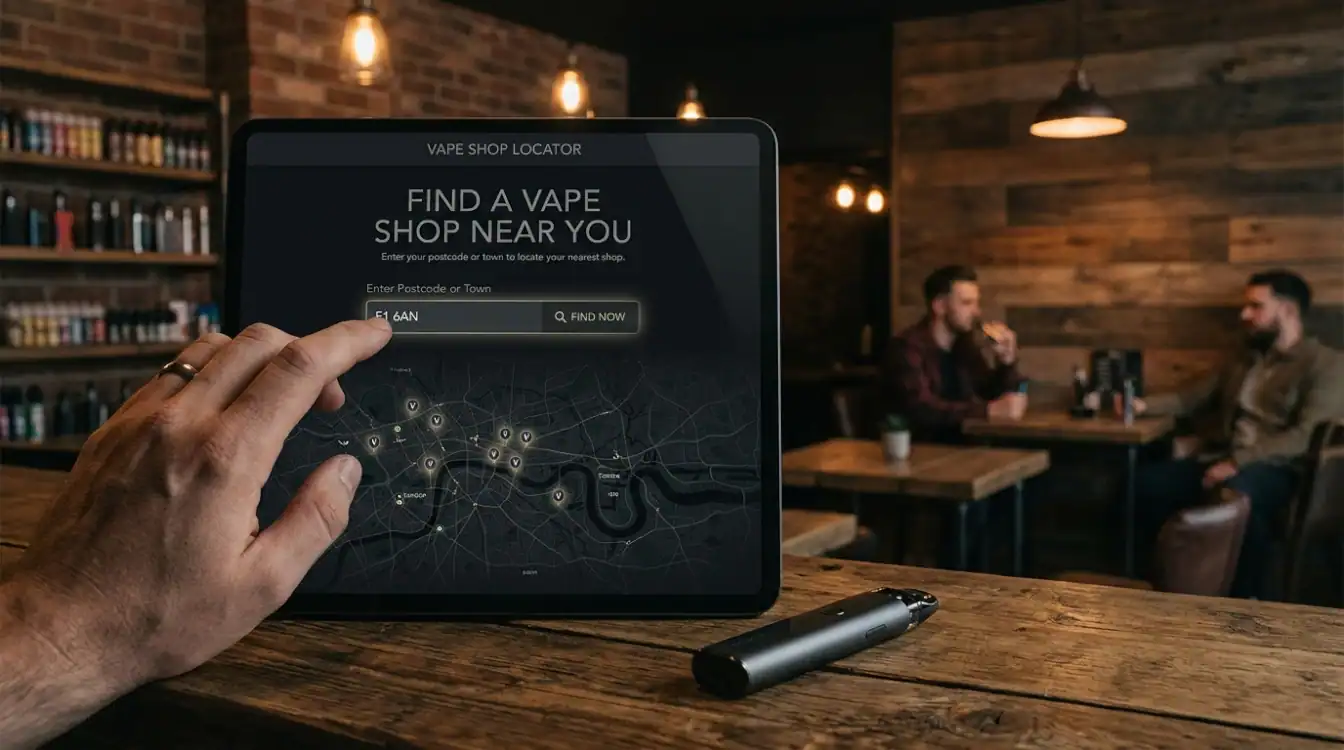
Find A Vape Shop – With Interactive Map
Looking to find a vape shop near you or in an area you’re visiting? Our interactive vape shop map makes it quick and easy to find local vape shops wherever you are.
Simply enter your town or postcode, or use your current location, and our map will show you vape shops in the surrounding area. You can browse locations, check star ratings based on customer reviews, and see useful information to help you choose the right shop.
Found a vape shop you want to visit? You can also get directions straight to the shop, making it easy to find a vape shop whether you’re at home, travelling, or exploring somewhere new.
Find a vape shop near you or wherever you’re headed — search by location and let our interactive map do the rest.
Vape Shops Near You Or Where Your Headed – Interactive Vape Shop Map
Buying Vapes From Vape Shops Guide
Key Takeaways
- Vape shops offer better product authenticity, expert advice, and hands-on support than gas stations or convenience stores — but you’ll pay a premium for those benefits.
- Disposable vapes look cheap upfront but can cost significantly more per month for regular users than a refillable pod system over time.
- Counterfeit vapes are a real problem — always verify serial numbers before leaving the store, especially with popular brands like Elf Bar and Innokin.
- State laws vary significantly on what vape shops can legally sell, including flavor restrictions that affect your options depending on where you live.
- Return policies at physical vape shops are often stricter than you’d expect, so ask before you buy.
Read on for the full breakdown.
Why Shop at Vape Shops Instead of Other Retailers
Understanding Different Vape Device Types
Price Comparison: Vape Shops vs. Gas Stations vs. Online
Long-Term Cost of Ownership by Device Type
Navigating Vape Shop Return Policies and Warranties
Geographic Legal Restrictions and Where You Can Buy
Counterfeit Detection: How to Spot Fake Vapes
What to Ask Vape Shop Staff Before Buying
Red Flags: Shops and Products to Avoid
Your Buying Vapes From Vape Shops Guide Checklist
Walk into the wrong vape shop unprepared, and you might leave $80 lighter with a device that’s fake, wrong for your needs, or both. It happens constantly — especially to new vapers who don’t know which questions to ask or what to watch for on the shelf. This guide exists to fix that. Whether you’re switching from cigarettes, upgrading your current setup, or just trying to understand what all the fuss is about, what follows will save you both money and frustration.
Why Shop at Vape Shops Instead of Other Retailers
Here’s the honest truth: not all vape-buying experiences are equal. Gas stations sell vapes. So does Amazon. So does the random smoke shop on the corner that also carries incense and phone cases. None of those compare to a dedicated vape shop — and the difference isn’t subtle.
Expert Staff and Personalized Recommendations
A good vape shop employee knows the difference between salt nic and freebase nicotine, can match a device to your smoking habits, and will actually ask what you’re trying to accomplish. That’s not something you get at a 7-Eleven. According to Innokin’s beginner’s guide to vaping, new users especially benefit from in-person guidance because device selection, nicotine strength, and coil resistance all interact in ways that aren’t obvious from a product label alone 3.
This matters more than people realize. A first-time buyer who picks the wrong nicotine strength — say, 50mg salt nic when they’re a light smoker — is going to have a miserable experience and probably write off vaping entirely.
Product Quality and Authenticity Guarantees
Legitimate vape shops source directly from authorized distributors. That matters because counterfeit products — more on those later — are flooding the market. Gas stations and third-party online sellers don’t always vet their supply chains. A dedicated shop has reputational skin in the game; they can’t afford to move fakes repeatedly and stay in business.
Immediate Availability
No shipping delays. No “out of stock” messages after you’ve already paid. You walk in, you choose, you leave with what you came for. For someone running low on supplies or urgently trying to step away from cigarettes, that immediacy has real value.
Community and Educational Resources
Many vape shops host beginner nights, post how-to content, and let you sample flavors before committing. That testing opportunity alone can spare you from buying a $15 bottle of juice you’ll despise. Some shops even troubleshoot devices at no charge — a level of after-sale support you simply won’t find on Amazon.
Understanding Different Vape Device Types
Walk into any vape shop and you’ll see dozens of products spread across wildly different categories. Knowing which type suits your situation before you arrive is half the battle. Our types of vapes explained guide covers every category in depth, but here’s a practical overview.
Disposable Vapes
Disposables are all-in-one devices — pre-filled, pre-charged, no buttons to learn, no coils to swap out. Use it until it’s empty, then throw it away. Brands like Elf Bar, Lost Mary, and Geek Bar dominate this space. Genuinely convenient. That’s the appeal.
Convenience has a price, though. More on that shortly.
✓ Pros
- Zero setup required
- Small and discreet
- Wide flavor variety
- No maintenance whatsoever
✗ Cons
- Expensive per-puff cost over time
- Non-recyclable, creates significant waste
- Can’t adjust nicotine delivery or airflow
- Heavily counterfeited
Pod Systems
Pod systems use refillable or pre-filled pods that snap into a rechargeable battery unit. Devices like the SMOK Novo, Vaporesso XROS, and Innokin Sceptre fall here. The upfront cost is higher — typically $20–$45 — but ongoing expenses drop sharply because you’re only replacing pods or buying e-liquid, not entire devices.
For most people switching from cigarettes, this is the sweet spot. The draw feels familiar, nicotine delivery is strong enough to satisfy cravings, and the hardware lasts for months.
✓ Pros
- Much lower long-term cost than disposables
- Compact and portable
- Good nicotine delivery for ex-smokers
- Easy to use without a steep learning curve
✗ Cons
- Higher upfront cost than disposables
- Pods need periodic replacement
- Less flavor variety than open-tank systems
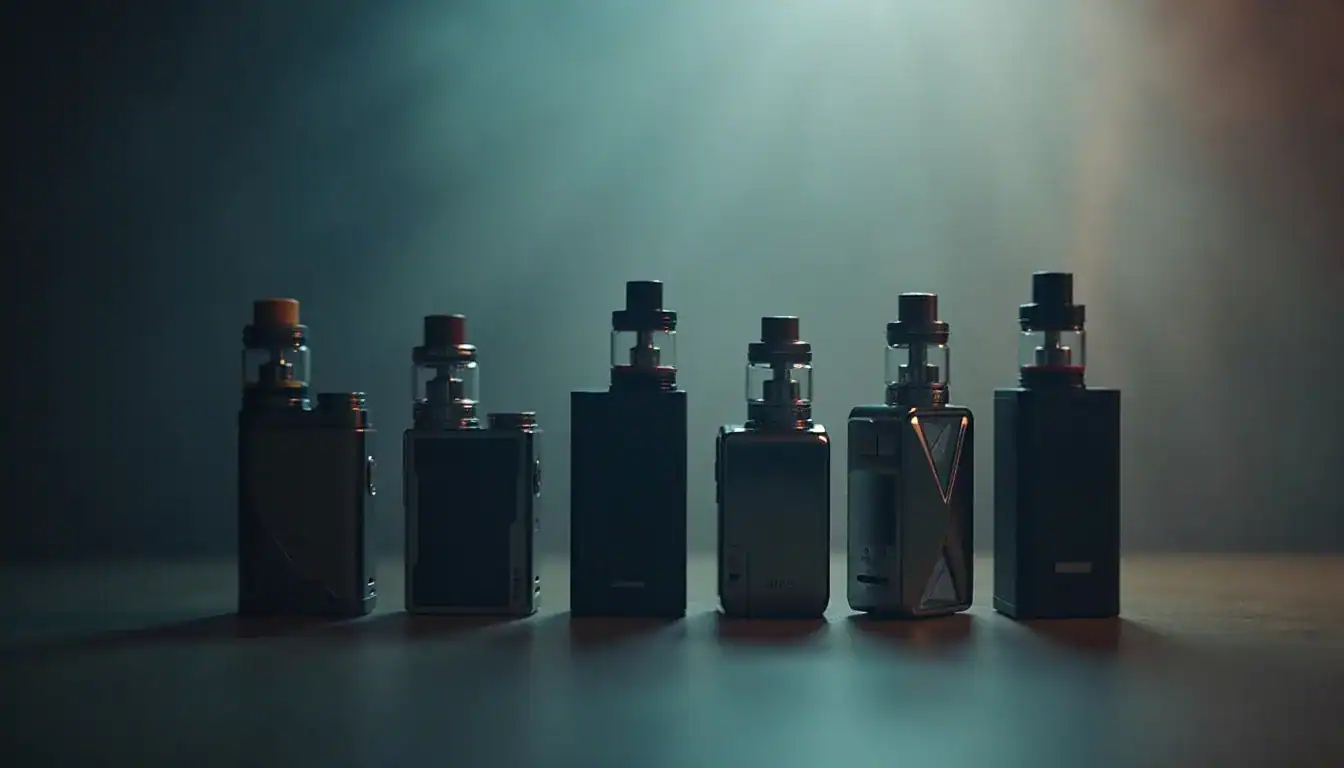
Box Mods and Tanks
Box mods are the full-featured, high-powered setups you’ll see serious vapers using. They pair a large battery unit with a separate tank you fill yourself. Voopoo, Vaporesso, and GeekVape lead this space. Substantial vapor, deep customization, total control over the experience.
Not for beginners. Full stop.
The learning curve is genuinely steep — wattage settings, ohm resistance, coil priming, tank maintenance. Starting here as a new vaper is the wrong move, regardless of what an enthusiastic salesperson might suggest.
✓ Pros
- Lowest per-puff cost at scale
- Highly customizable performance
- Best flavor and vapor production
- Long-lasting hardware with replaceable parts
✗ Cons
- Steep learning curve for new users
- Bulky compared to pods or disposables
- Requires regular coil changes and tank cleaning
- Higher upfront investment ($50–$120+)
Vape Pens
Vape pens sit between pod systems and box mods — slim, cylindrical devices using a tank and replaceable coils but without the complex settings of a full mod. A decent middle-ground option, though pod systems have largely made them redundant for most beginners. You’ll still spot them at vape shops, but they’re rarely the best fit for today’s buyers.
Price Comparison: Vape Shops vs. Gas Stations vs. Online
How much should you actually expect to pay? And does the retailer really matter?

It matters quite a bit.
Typical Price Markups Across Retailer Types
Take a popular disposable like the Elf Bar BC5000. At a vape shop, you’ll typically pay $12–$16. That same device at a gas station or convenience store routinely runs $17–$22 or more — and you receive zero expertise or support in exchange for that extra cost 1.
| Retailer Type | Elf Bar BC5000 Price Range | Pod System (e.g. SMOK Novo) | 30ml E-Liquid Bottle |
|---|---|---|---|
| Vape Shop | $12–$16 | $20–$35 | $12–$18 |
| Gas Station / Convenience Store | $17–$22 | $30–$45 (limited selection) | $18–$25 |
| Online (authorized retailer) | $9–$13 | $18–$30 | $10–$16 |
Price ranges reflect typical US market pricing and will vary by region and retailer.
Online Pricing and Hidden Costs
Authorized online retailers generally offer the lowest prices. Factor in shipping ($5–$10 unless you clear a free-shipping threshold), potential state taxes, and wait time, though. If you need something today, the price gap may not justify the inconvenience 1.
Why Vape Shops Charge More (And Whether It’s Worth It)
Vape shops carry real overhead — rent, trained staff, curated inventory. Their pricing reflects that. For first-time buyers or anyone who wants hands-on guidance, paying slightly more is often worthwhile. You’re essentially paying for expertise and accountability, not just the product itself. Once you know exactly what you want and you’re reordering the same thing regularly, buying online makes more financial sense.
Long-Term Cost of Ownership by Device Type
Sticker price is deceptive. What really matters is what each device type costs you over six to twelve months of regular use. You can also plug your own numbers into the SmokeTastic Vape Cost Calculator to get a personalized estimate.
Disposable Vape Cost Analysis
A moderate vaper might go through one disposable every two to three days. At roughly $14 each, that accumulates fast — potentially $140–$210 monthly for regular users. Across twelve months, costs can easily run well into the thousands. That number tends to shock people. It should.
Pod System Total Cost of Ownership
A pod system starter kit runs $25–$45. Replacement pods cost $10–$20 for a pack of two to four. E-liquid for an open-pod system runs $12–$18 per 30ml bottle, which a moderate vaper might work through every one to two weeks. Monthly outlay: roughly $40–$70. Over a full year, including the initial hardware, the total lands meaningfully below what disposables cost.
Box Mod Setup and Ongoing Expenses
Box mod starter kits — mod plus tank — typically run $60–$120. Replacement coils cost $12–$20 for a pack of five and last one to two weeks depending on how heavily you vape. E-liquid costs mirror pod system pricing. Once you have the hardware, monthly ongoing expenses run approximately $30–$55.
| Device Type | Upfront Cost | Est. Monthly Cost (moderate use) | 12-Month Est. Total |
|---|---|---|---|
| Disposables | $0 (no hardware) | $140–$210 | $1,680–$2,520 |
| Pod System | $25–$45 | $40–$70 | $515–$875 |
| Box Mod | $60–$120 | $30–$55 | $420–$780 |
These are estimates based on typical US retail pricing. Actual costs vary by usage frequency, brand, and location.
Hidden Costs to Budget For
Batteries for external-battery mods run $10–$15 each, and you’ll want two. A quality charger adds another $20–$30. Coil-building tools, drip tips, replacement glass — it all adds up. Budget an extra $50–$75 in year one for these incidentals if you go the box mod route. Our 18650 battery guide covers which cells are worth buying and which to avoid.
Navigating Vape Shop Return Policies and Warranties
Return policies at vape shops catch a lot of buyers off guard. Many people assume physical retail means easy returns. Not always.

Standard Return Windows at Physical Vape Shops
Most dedicated vape shops have a strict no-return policy on opened e-liquid and used devices — and that’s fair. You can’t resell a bottle of juice someone has already vaped from. For hardware, the typical window at US vape shops is 7–14 days for unopened, sealed items only.
Dead on arrival (DOA) devices are handled differently. A reputable shop will swap a malfunctioning unit immediately if you bring it back within 24–48 hours. Get that policy in writing — or at minimum, ask out loud before handing over cash.
Manufacturer Warranties and What They Cover
Most major vape hardware brands offer a 3–6 month manufacturer warranty against defects. Voopoo, GeekVape, and Vaporesso all publish warranty terms on their websites. Typically covered: internal chip failures, battery defects, and faulty firing buttons. Not covered: flooding the device, dropping it, or burning through coils from misuse.
Keep your receipt. Without proof of purchase from an authorized retailer, most manufacturers won’t honor a claim.
How Vape Shop Policies Compare to Online Retailers
Authorized online retailers often have more generous return windows — 14–30 days on hardware — because they handle higher volume and process returns more systematically. Resolution takes days, though. A physical shop can hand you a replacement in minutes if they’re willing.
The stronger play for warranty protection is buying from a vape shop that holds authorized dealer status for the brand. That designation matters when you file a manufacturer claim 1.
Geographic Legal Restrictions and Where You Can Buy
Most buying guides skip this section entirely. They shouldn’t — where you live significantly shapes what you can legally purchase.
Federal Regulations and Age Verification Requirements
At the federal level, the FDA requires all vape retailers to confirm customers are 21 or older. That applies everywhere — both online and in-store [6]. Any shop skipping ID checks is already operating outside federal law, which should raise immediate doubts about their overall compliance.
The FDA’s Premarket Tobacco Application (PMTA) process means only products with marketing authorization can legally be sold [6]. Many products currently on shelves haven’t completed that process — which partly explains why enforcement actions have intensified in recent years.
State-by-State Flavor and Product Restrictions
This gets complicated quickly. Several states have enacted flavor bans that go beyond federal policy:
- Massachusetts banned all flavored tobacco products, including flavored vape pods and e-liquid, in 2020.
- New Jersey banned flavored e-cigarette products statewide, with limited exceptions.
- California passed a flavored tobacco ban via Proposition 31 in 2022, with ongoing enforcement.
- New York restricts flavored e-cigarettes significantly, particularly those in cartridge or pod form.
If you’re in one of these states, your local vape shop’s inventory will look very different from one in Texas or Florida. Our guide on where vaping is illegal across the US covers this in more detail.
How Regulations Impact What Shops Stock
Vape shops operating in heavily regulated states often pivot to open-system devices — refillable tanks, pod mods — because those fall under different regulatory categories than pre-filled, flavored pods. Walk into a Massachusetts shop and find limited options? That’s regulation at work, not poor inventory management.
Counterfeit Detection: How to Spot Fake Vapes
Counterfeits are everywhere. Unverified and fake products have been found across non-specialized retailers — gas stations, smoke shops, and certain online marketplaces. This isn’t a minor inconvenience. Fake vapes have been linked to heavy metal contamination, unpredictable nicotine levels, and unregulated battery components.
Visual Inspection Checklist
Before buying any vape — especially a disposable — run through this quick check:
- Packaging quality: Authentic products have sharp, consistent printing with uniform fonts. Blurry text, color inconsistencies, or misspellings are immediate red flags.
- Weight and feel: Counterfeits often feel noticeably lighter or flimsier. If you’ve used the brand before, a dramatic difference in hand feel is suspicious.
- Mouthpiece finish: Fakes frequently have uneven mouthpiece finishes or inconsistent airflow openings — visible with a quick inspection.
- Logo placement: On Elf Bar products, the logo should be centered and clearly printed or debossed. On knockoffs, it’s often slightly off-center or applied as a sticker.
Serial Number Verification for Major Brands
This is your single most reliable authentication method. Major brands build verification directly into their packaging:
Elf Bar / EB Design: Scratch-off authentication codes on the box. Enter the code at elfbar.com to confirm legitimacy. If the code returns an error or shows prior use, the product is fake.
Innokin: Uses a QR code system on the packaging. Scan with any QR reader — it redirects to an authentication page on innokin.com. Innokin’s own beginner’s guide explicitly urges buyers to verify products before use 3.
GeekVape: Scratch-off code on the box, verifiable at geekvape.com/authenticate. Genuine products confirm purchase location and manufacture date.
SMOK: Anti-counterfeit code on the bottom of the box, checkable at smoketech.com. Any SMOK product without this code is definitively fake.
Do this in the store, before you pay. A legitimate shop won’t object. One that does is a shop worth leaving immediately.
Why Counterfeit Vapes Are Dangerous
Fake devices undergo no safety testing whatsoever. Battery cells sourced by counterfeit manufacturers have failed in documented incidents — including overheating and thermal venting. The liquid inside unverified products may contain contaminants, incorrect nicotine concentrations, or banned additives. Don’t skip verification to save two minutes of your time.
What to Ask Vape Shop Staff Before Buying
A knowledgeable vape shop employee is a genuine resource. Use them 4.
Nicotine Strength and Delivery Format
Ask specifically: “What nicotine strength would you recommend for someone who smokes [X] cigarettes per day?” A well-trained staffer will walk you through the differences between salt nic and freebase. Salt nic (typically 25–50mg) hits faster and more efficiently — better suited for ex-smokers. Freebase (typically 3–12mg) is smoother at lower concentrations and works better in sub-ohm setups. Our nicotine strength guide breaks this down further if you want to research ahead of your visit.
Battery Safety and Charging
Ask whether the device charges via USB-C (faster, more dependable) or older micro-USB. Ask about recommended charging habits — leaving most vapes plugged in overnight degrades battery capacity faster than most people realize. If you’re buying a device with external batteries, ask which 18650 cells the shop recommends. Independent testing data lives in our 18650 battery guide.
Flavor Testing Policy
Many vape shops let you sample e-liquid flavors before buying. Just ask. Don’t spend $15 on a bottle based purely on a name like “Blue Raspberry Custard” without knowing what it actually tastes like on the inhale. Flavor perception is deeply personal — what someone else finds delicious might be genuinely unpleasant to you 4.
Red Flags: Shops and Products to Avoid
Not every vape shop deserves your business. Some are worth walking straight back out of.

No age verification at the door. A shop that skips ID checks is already breaking federal law. What else are they ignoring?
Suspiciously low prices. A genuine Elf Bar BC5000 for $6? That’s not a deal — it’s almost certainly a counterfeit. Authentic products have floor prices set by wholesale costs. Anything dramatically below market pricing should trigger immediate skepticism 5.
Staff who can’t answer basic questions. Ask what separates salt nic from freebase. A blank stare or a guess tells you everything about the quality of guidance you can expect from that shop.
Poorly stored products. E-liquid degrades with heat and UV exposure. Bottles baking on an uncovered shelf in direct sunlight have already lost quality. Storage conditions matter more than most buyers ever consider.
No authentication markings on disposables. If a disposable brand lacks scratch-off or QR verification and staff can’t identify the authorized US distributor, walk away.
Your Buying Vapes From Vape Shops Guide Checklist
Use this before and during your shop visit.
Pre-Visit Research
- Decide on your device type preference (disposable, pod system, or mod)
- Research your target nicotine strength based on current smoking habits
- Check your state’s current flavor regulations
- Identify 2–3 products you’re interested in and look up their going retail price
- Use the SmokeTastic Vape Finder Quiz to narrow your options before you walk in
In-Store Evaluation
- Confirm the shop displays its state retail tobacco or vape license
- Ask to see the authentication code on any disposable before purchase
- Verify the code on your phone before paying
- Compare the price against known market rates — flag anything more than 20% below average
- Ask specifically about the DOA replacement policy
Final Questions Before You Buy
- “What’s your return window on hardware?”
- “Is this stock from an authorized distributor or a gray market source?”
- “What coil resistance and nicotine level do you recommend for my situation?”
Post-Purchase Setup
- Avoid charging your new device overnight on the first use
- Prime any coils before firing (for pod systems with replaceable coils, let liquid soak for 5–10 minutes)
- Start at lower wattage settings if your device is adjustable, then work up gradually
- Keep your receipt somewhere accessible for at least the first 30 days
Wrapping Up
The gap between a frustrating vape purchase and a great one comes down almost entirely to preparation. Know your device type. Understand what you’re actually spending over time — not just the sticker price. Verify what you’re buying before you hand over cash. Choose shops that take product knowledge as seriously as their inventory.
The cost breakdown alone should reshape how most people think about disposables. A pod system at $30 upfront can serve a regular vaper for months — compared to burning through a new disposable every few days at $14 a piece. Once that math becomes clear, it’s hard to unsee.
Regulations add another layer, particularly in states with active flavor bans. Knowing the rules in your area before you walk in saves confusion and wasted trips. Counterfeits, meanwhile, remain a genuine hazard — not merely a nuisance — which is why serial number verification is a step worth taking every single time.
At their best, vape shops offer something no gas station or Amazon listing can replicate: a person who genuinely understands the product, accountability when something goes wrong, and the ability to verify authenticity right there on the spot. Worth paying a few extra dollars for? In most cases, yes — but only if the shop actually delivers on those promises. Not all of them do. That’s precisely why this guide exists: so you walk in knowing what a good shop looks like, and what to ask before you spend a cent.
For additional help finding the right device, the SmokeTastic Vape Finder Quiz and our best beginner vape kits guide are solid next steps.
Frequently Asked Questions
Can you vape if you have an IUD?
There’s no direct medical evidence that vaping interferes with IUD placement or effectiveness, but nicotine — present in most vape products — is known to affect cardiovascular function and circulation. Anyone with an IUD who has concerns about nicotine’s systemic effects should speak with their OB-GYN or prescribing physician before vaping regularly. This is a conversation for a healthcare provider, not something to settle based on general vaping information.
Are vapes safe for people with celiac disease?
Most e-liquids contain propylene glycol, vegetable glycerin, nicotine, and flavorings — none of which typically contain gluten. That said, certain flavoring compounds used in some e-liquids may be processed in facilities that handle gluten-containing ingredients, and cross-contamination is theoretically possible. People with celiac disease who are concerned should contact the e-liquid manufacturer directly to confirm production processes before use.
Is it safe to vape if you have emphysema?
Vaping with emphysema is not considered safe, and most pulmonologists actively advise against it. Emphysema causes permanent damage to the lung’s air sacs, and inhaling any vaporized substance — including e-liquid aerosol — can further irritate already compromised tissue. If you have emphysema and are trying to quit smoking, speak with a pulmonologist about medically supervised cessation options rather than switching to vaping.
Does vaping increase LDL cholesterol?
Research on vaping and LDL cholesterol is still developing. Some studies suggest that nicotine — regardless of delivery method — may negatively affect lipid profiles over time, including potential impacts on both LDL and HDL levels. If you have existing cardiovascular concerns or elevated cholesterol, discussing vaping’s potential effects with your cardiologist before continuing use is the prudent move.
What should a first-time buyer bring to a vape shop?
Bring a valid government-issued photo ID proving you’re 21 or older — you won’t get in without it. Having a rough sense of how much you currently smoke helps staff guide you toward the right nicotine strength. A budget range in mind also helps narrow down whether a disposable, pod system, or full starter kit makes the most sense for your situation.
How do you know if a vape shop is legitimate?
A legitimate vape shop displays its state retail tobacco or vape license prominently, requires ID from every customer, stocks products with verifiable authentication codes, and employs staff capable of answering specific questions about nicotine levels, device compatibility, and battery safety. Shops that skip age verification, stumble over basic questions, or carry products with no authentication markings are operating carelessly at best — and illegally at worst.
Sources & References
1 VaporAuthority.com — “Where to Get a Vape Pen: A Practical Buying Guide” — https://www.vaporauthority.com/blogs/vaping-tips/where-to-get-a-vape-pen-a-practical-buying-guide
2 Reddit r/Vaping — “New to vaping, where do I start?” — https://www.reddit.com/r/Vaping/comments/1eb7rn9/new_to_vaping_where_do_i_start/
3 Innokin.com — “Beginner’s Guide to Vaping” — https://www.innokin.com/guide-to-vaping
4 Waka Vaping — “5 Things Beginners Must Know Before Entering a Vape Shop” — https://ca.wakavaping.com/blogs/vape-knowledge/5-things-to-know-before-entering-a-vape-shop
5 VapeJuice.com — “Vape Starter Kits: Ultimate Buying Guide for Newbies” — https://vapejuice.com/blogs/vape-juice-news/vape-starter-kits-buying-guide
[6] FDA.gov — Premarket Tobacco Product Applications and Deemed Products — https://www.fda.gov/tobacco-products/premarket-tobacco-product-applications