
Updated 2026-06-24 — Originally published 2019-04-10
The Best CBD Vape Juice for 2026 — Top E-Liquids Reviewed
Who Is CBD Vape Juice For?
Quick clarification first: “vape juice,” “e-liquid,” and “vape oil” all mean the same thing here. Don’t let the interchangeable names trip you up.
CBD vape juice isn’t just for one type of person. Some people come from a wellness angle — they’re already using tinctures or capsules and want something faster-acting. Others are ex-smokers looking for a nicotine-free option that still gives them something to vape. And some are simply curious about CBD and find vaping the most convenient entry point.
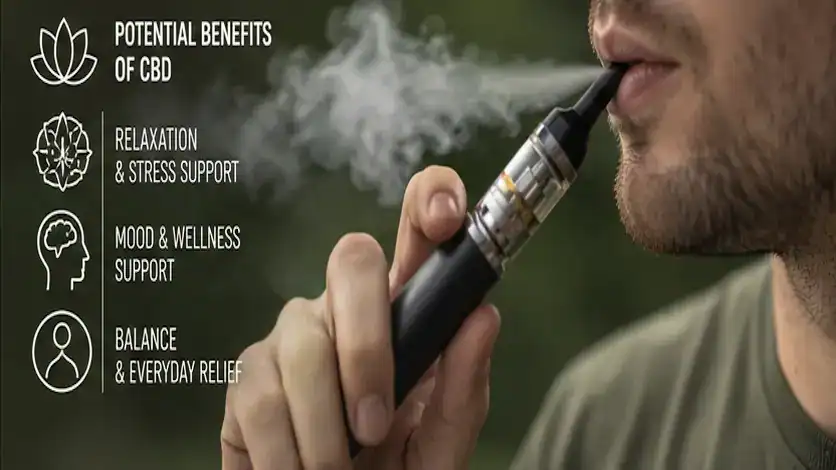
Here’s why vaping stands out over other delivery methods. When you inhale CBD, it goes directly into your lungs and straight into your bloodstream through the capillaries — skipping the digestive system entirely. Research has found oral bioavailability for CBD sits at just 4–20%. Inhaled? That jumps to 12–35%. You need less product to feel the same effect. That gap matters.
People across the US use the best CBD vape juice for a range of reasons:
- Pain and inflammation — Many users prefer CBD as a more natural approach than reaching for OTC pain relievers
- Quitting smoking — A study in Addictive Behaviors found CBD vapers significantly reduced their cigarette intake. Our guide on vaping to quit smoking covers this in more depth
- Anxiety — Research from Neurotherapeutics identified CBD as a promising option for certain anxiety disorders, partly because hemp-derived CBD contains zero meaningful THC — the compound linked to paranoia
- Opioid dependency — The same journal flagged CBD as showing potential in treating opioid addiction
- Epilepsy — The FDA approved Epidiolex, a CBD-based drug, for treating certain seizure disorders
- Sleep and general wellness — Probably the most common reason people try it today
⚠️ We’re not doctors. If you’re considering CBD for a medical condition, talk to your physician first. This article is informational — not medical advice.
The Three Types of CBD Vape Juice
Not all CBD e-liquid is the same. The type of extract used changes the experience — and the price.
Isolate CBD
Isolate is the most common type you’ll find across the US market. Manufacturers extract CBD from industrial hemp, refine it to a white crystalline powder, then blend it with PG, VG, and flavoring — exactly like standard e-liquid production. All other plant compounds get stripped away, so isolate is 100% THC-free. That makes it the safest pick if you face drug testing at work.
It’s also the most affordable option. Some users feel isolate produces a flatter experience compared to full spectrum — and honestly, that’s a fair criticism. But for most beginners, isolate is the right starting point. You know exactly what you’re getting.
Full Spectrum CBD
Full spectrum keeps the CBD along with most other naturally occurring cannabinoids and terpenes from the hemp plant — everything except significant THC. This combination creates what’s called the “entourage effect,” where multiple compounds work together and may amplify each other’s benefits.
Quality full spectrum products contain less than 0.3% THC — the legal federal limit for hemp-derived products. But if drug testing is a real concern, stick with isolate. Trace amounts can accumulate over time. Full spectrum costs more, but experienced CBD users tend to prefer it once they’ve tried both.
Full Spectrum+ (With Added Terpenes)
This is the premium tier. Full spectrum+ starts with a full spectrum base and adds extra terpenes sourced from cannabis plants rather than industrial hemp. Terpenes shape both flavor and — potentially — therapeutic effect.
Expect to pay a premium. This category suits experienced users who’ve confirmed CBD works for them and want to refine the experience further. For a first-time buyer, it’s unnecessary.
What to Look for When Buying
The CBD market still has quality control problems. Plenty of products — online and in stores — don’t contain what the label claims. Here’s what actually separates good from bad.
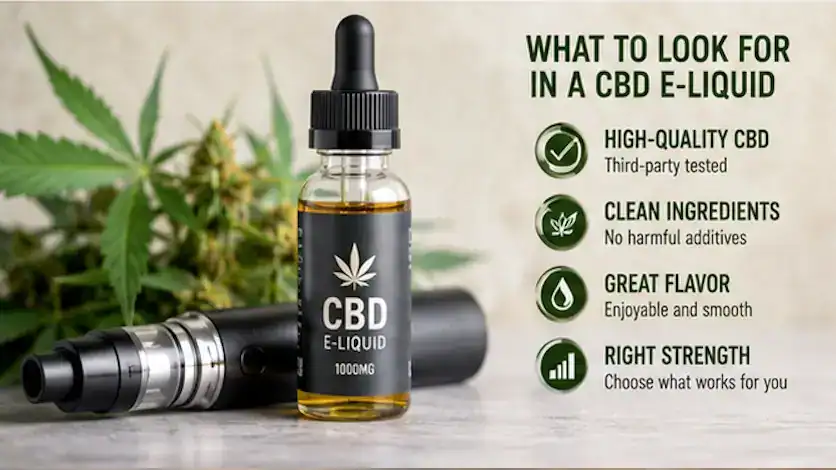
Third-party lab testing (COAs). Non-negotiable. Any reputable brand publishes a Certificate of Analysis from an independent lab confirming CBD content, THC levels, and screening for pesticides and heavy metals. No COA? Move on.
US-grown hemp. American-grown hemp operates under better agricultural oversight than most imports. Look for brands that specify domestic sourcing.
Potency range. Most US CBD vape juices come in 500mg, 1000mg, or 1500mg per 30ml bottle. Beginners should start at 500mg — that’s roughly 16mg per ml, a sensible opening dose. Push higher once you’ve got a feel for how your body responds.
VG/PG ratio. A 70VG/30PG blend gives solid vapor production and works well with most coils. Thinner, higher-PG blends suit mouth-to-lung vaping better. Know your setup before you buy.
Price expectations. A quality 30ml bottle at 1000mg should run $20–$50. Anything dramatically cheaper deserves skepticism.
Top CBD Vape Juice Brands in 2026
The market has tightened up since 2019. These brands consistently earn strong user reviews and maintain transparent lab practices across the US.
JustCBD — One of the most widely available CBD vape juice brands stateside. Eight flavor varieties, batch-tested products, and a 500mg–1500mg range that covers most users. Prices sit around $25–$45 depending on potency.
CBDfx — Strong reputation for full spectrum products. Their terpene-infused line stands out in the full spectrum+ category, and COAs are straightforward to find on their site.
Koi CBD — A solid isolate option with consistent potency and a clean flavor lineup. Widely stocked in US vape shops and online, ranging from $20–$40.
Medterra — Known for pharmaceutical-grade isolate and strict testing. Less flavor variety than competitors, but the quality control is among the best in the category.
Hemp Bombs — Budget-friendly isolate that’s easy to find nationally. Don’t expect terpene complexity — but the lab testing holds up and the price works for first-timers who aren’t ready to commit to a premium product.
Picking the Right Device
CBD vape juice works in most standard setups. But here’s the thing — lower wattage devices actually suit it better than high-powered sub-ohm mods. You don’t need massive clouds. You need controlled, consistent hits at lower temperatures that preserve the cannabinoids rather than burning them off.
A pod system running 10–20 watts is the sweet spot. The Vaporesso XROS Pro 2 handles CBD e-liquid well and gives you reliable wattage control without complexity. New to vaping hardware entirely? Start with our beginner’s guide to vapes before spending money on a device.
One practical note: full spectrum CBD e-liquid can run thicker than standard vape juice. Check that your coil handles higher VG blends — most modern coils do, but it’s worth confirming before you fill up.
Is CBD Vaping Safe?
Short answer: vaping CBD carries less risk than smoking, but it isn’t risk-free. The risks tied to vaping relate to the inhalation of heated liquid — not CBD specifically. Our article on CBD vaping benefits and risks goes deeper on the research if you want the full picture.
The 2019 EVALI lung injury outbreak — which made headlines and scared a lot of people off vaping entirely — was traced to vitamin E acetate in black market THC cartridges. Not legitimate CBD products. Buy from reputable brands with clean lab reports and you’re not in that risk category.
CBD is also non-intoxicating. No high, no impairment. That’s a significant reason many people have shifted toward CBD vape products over THC alternatives — they can use it during the day without it affecting work or driving.
The Bottom Line
Finding the best CBD vape juice comes down to three things: matching the CBD type to your needs, buying only from brands with published lab results, and starting at a lower potency until you understand how your body reacts.
Isolate is the affordable, low-risk entry point. Full spectrum is worth trying once you’ve confirmed CBD actually does something for you. Full spectrum+ is for people ready to invest in a more dialed-in experience.
The market is more transparent than it was when this article was first published in 2019 — but bad actors still exist. A lab certificate isn’t optional. Treat it as your baseline filter, not an afterthought.