

The Top Vaping Brands
Key Takeaways
- FDA authorization (PMTA status) is the clearest signal of a legitimate vaping brand in the US market as of 2026 — brands without it are operating in a gray zone at best.
- Ingredient transparency, meaning public flavor and nicotine sourcing data, separates trustworthy brands from ones hoping you won’t ask questions.
- Disposable puff counts range from roughly 300 to over 5,000, which changes the real cost-per-use math more than most shoppers realize.
- Retail prices for the same device can swing by several dollars depending on where you shop.
The single most useful takeaway: check a brand’s FDA PMTA status before anything else. It filters out roughly 90% of the noise instantly.
Wild, right? A flavor you love from one brand might share a factory, a nicotine supplier, or an ownership structure with three competitors you’ve never heard of. Retailers like Element Vape carry dozens of brands under one roof 1, and vaping.com does the same with an age-gated storefront built around brand browsing 4. But carrying a brand isn’t the same as vetting it. Nobody’s grading these companies for you at checkout.
So let’s actually grade them. No fluff, no brand worship, just the stuff that actually determines whether your money’s well spent.
5. Wismec
4. Wotofo
3. VooPoo
2. Vaporesso
1. SMOK
Honorable Mentions
Brand Comparison at a Glance
What Makes a Vaping Brand Trustworthy
The Market Leaders in 2026
Market Consolidation: Who Actually Owns These Brands
Price Structure & Why Costs Vary So Dramatically
5. Wismec
Wismec built their reputation on the Reuleaux series. Beefy, powerful box mods that experienced vapers still rate highly. No celebrity collaborations, no viral stunts. Just solid hardware, consistently.
In 2026, they’re still producing reliable kit — including the Wismec Reuleaux RX G and the WISMEC LUXOTIC NC Dual 20700 — but the release pace has slowed. Fewer launches, more refinement. That’s not always a bad thing. But it does mean they’re not competing aggressively in the pod or disposable space, which is where most of the US market has moved. They hold number five because their community reputation is still strong and their older products still perform well.
✓ Pros
- Long-standing community trust
- Reuleaux series remains highly reliable
- Good value for experienced vapers
- Solid build quality throughout their range
✗ Cons
- Slower product release cadence in recent years
- Not competitive in the pod or disposable market
- Customer service can be inconsistent
- Less beginner-friendly than rivals
4. Wotofo
Founded in 2012, Wotofo made their name with atomizers — RDAs and RTAs that the building community loved. The Recurve RDA, built in collaboration with Mike Vapes, was a genuine turning point. The Profile RDA series followed and became one of the most recommended mesh RDAs on the market for good reason.
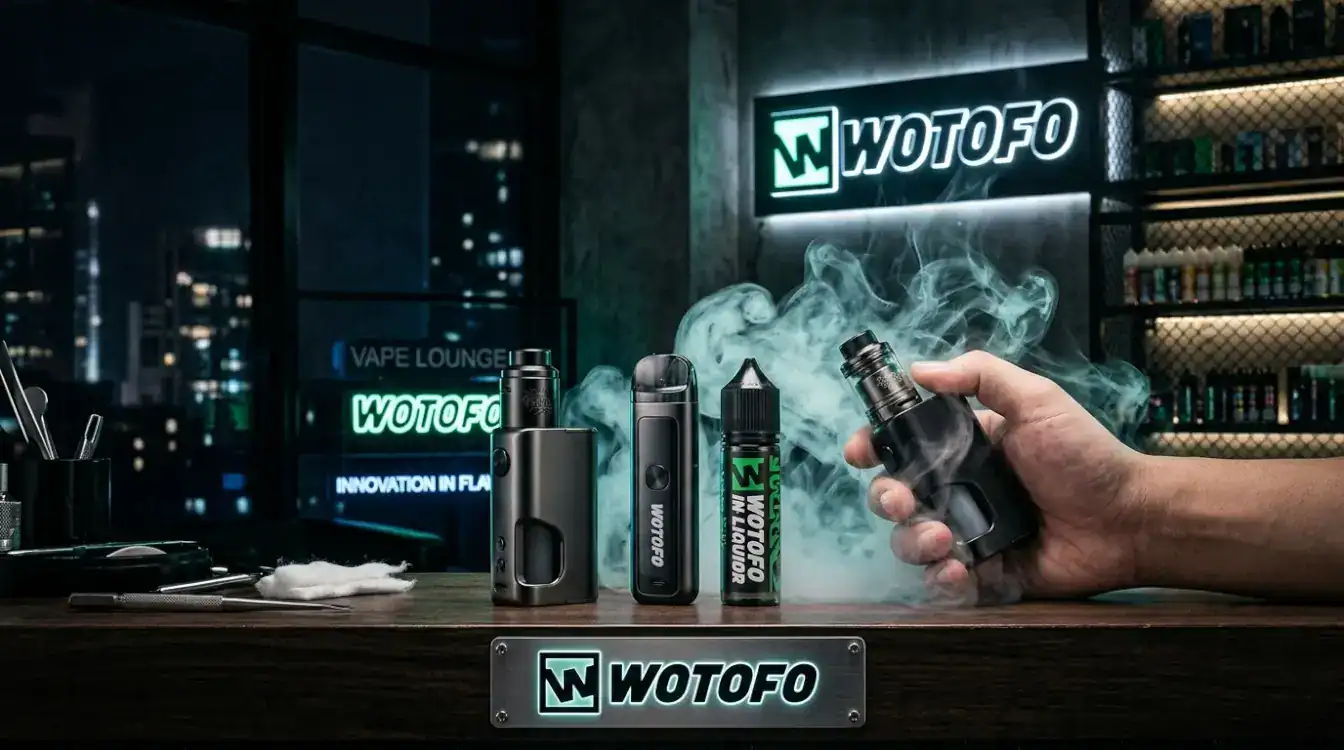
Here’s my honest take though: Wotofo’s weak mod lineup is still holding them back. Want a great tank or RDA? Hard to beat. Want a complete kit with a mod included? You’ll look elsewhere. Their Wotofo nexPOD and Wotofo Wafer 5000 show they’re aware of this gap and trying to close it. Smart moves — but they’re not leading those categories yet.
Still a top-four brand. Their atomizer game is genuinely second to none.
✓ Pros
- Best-in-class RDA and RTA products
- Strong collaborations with respected vaping creators
- Excellent mesh coil technology
- Active and respected in the vaping community
✗ Cons
- Very limited box mod lineup
- Pod and disposable range still maturing
- Not the right pick for beginners
- US availability can be hit or miss
3. VooPoo
VooPoo landed hard with the original Drag mod — the GENE chip changed expectations for firing speed and wattage accuracy. Since then, they haven’t stopped. The VOOPOO Drag 6 is their current flagship box mod. The Argus series covers pod users well. And the VooPoo Drag H40 sits nicely in the mid-range.
They have more coverage across device types than almost any other brand. That range is exactly why they’re at number three. The only thing holding them back from the top two is brand recognition — SMOK and Vaporesso still dominate US shelf space and name recognition among newer vapers.
✓ Pros
- GENE chip technology is genuinely class-leading
- Wide range covering mods, pods, and kits for every level
- Consistently high build quality
- Strong US retail presence
✗ Cons
- Some entry-level kits feel overpriced for what you get
- Product range can overwhelm new vapers
- Firmware updates aren’t always timely
2. Vaporesso
Vaporesso doesn’t always get the credit they deserve. They’ve built one of the most consistent product lines in the industry — quietly, without a lot of noise. The XROS pod system turned heads when it launched, and the Vaporesso XROS Pro 2 is still one of the best pod vapes you can buy in the US right now. The Vaporesso Luxe XR Max 2 handles the higher-end crowd.
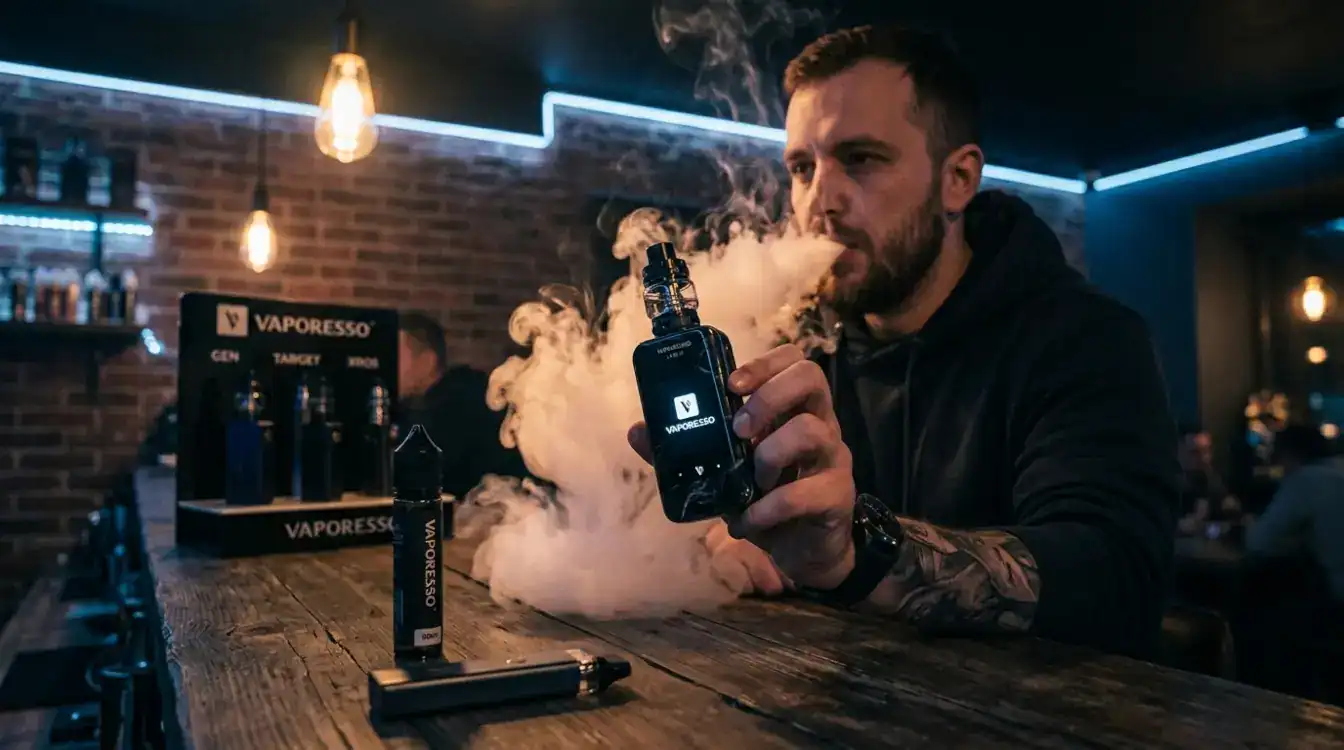
What actually sets them apart? Coil technology and e-liquid efficiency. Their AXON and COREX chips fire accurately and extend coil life noticeably compared to cheaper alternatives — which adds up to real savings over time. They sit at number two because of consistent innovation, solid US availability, and some of the best pod hardware currently on the market.
✓ Pros
- Excellent coil and chipset technology
- XROS pod series is among the best available anywhere
- Strong across both beginner and advanced ranges
- Good warranty support and US customer service
✗ Cons
- Some mid-range kits feel slightly underspec’d for the price
- Less brand recognition than SMOK among casual vapers
- Disposable range isn’t a standout strength
1. SMOK
SMOK topped most best vapes 2020 round-ups, and they’re still number one in 2026. Not because they’re flawless — they aren’t — but because of range, availability, and market penetration. Walk into any vape shop across the US and you’ll see SMOK. Every single time.
The Novo pod series has been a consistent success. The SMOK Novo 6 Ultra is the current version and it performs well. The RPM range covers pod-mod users at multiple price points. They’ve also moved into disposables with releases like the SMOK Priv Bar Turbo 15000, pushing output numbers that were unthinkable five years ago.
Do they have quality control issues occasionally? Yes — and I won’t pretend otherwise. But no brand operating at this scale is perfect. SMOK responds, replaces faulty units, and keeps releasing. That consistency — more than anything — is why they’re number one.
✓ Pros
- Widest product range of any vape brand
- Unmatched US retail and online availability
- Novo pod series is reliably excellent
- Easy to find replacement coils and accessories anywhere
✗ Cons
- Quality control can be inconsistent at this scale
- Some products feel rushed to market
- Build quality varies noticeably between price points
Honorable Mentions
A few brands didn’t crack the top five but deserve a call-out.
GeekVape — Arguably the best brand for pure build quality that still doesn’t get enough attention. The Aegis series is the most durable vape hardware on the market. The Geekvape Aegis Legend 5 is waterproof, shockproof, and still performs like a premium device. If durability is your top priority, start here.
Uwell — The Caliburn series put Uwell firmly on the map with casual vapers and ex-smokers. The Uwell Caliburn G5 is one of the cleanest, most user-friendly pods available right now. Great flavor, solid construction, fair price.
Innokin — A veteran brand that’s been around since the early days of vaping. They release less often, but their safety record is exceptional. Worth a serious look if you’re just starting out — our best beginner vape kits guide covers some of their strongest options.
Brand Comparison at a Glance
| Brand | Best For | Strongest Product Line | US Availability | Price Range |
|---|---|---|---|---|
| SMOK | All vapers | Pod systems, box mods | Excellent | $15–$80 |
| Vaporesso | Beginner to advanced | Pod systems, coil tech | Very good | $20–$90 |
| VooPoo | Intermediate to advanced | Box mods, pod-mods | Very good | $25–$85 |
| Wotofo | Experienced builders | RDAs, RTAs | Good | $20–$60 |
| Wismec | Experienced vapers | Box mods | Good | $30–$75 |
| GeekVape | Durability seekers | Ruggedized kits | Good | $35–$100 |
| Uwell | Beginners, pod vapers | Pod systems | Good | $15–$50 |
What Makes a Vaping Brand Trustworthy
There isn’t really a “vaping industry” made up of hundreds of scrappy independent companies. A trustworthy vaping brand comes down to three things: FDA compliance status, public ingredient transparency, and manufacturing consistency — not marketing budget or shelf space. Anyone can print a slick logo. Far fewer companies will show you their Certificate of Analysis without being asked twice.

Regulatory Compliance & FDA Standards
As of 2026, FDA Premarket Tobacco Product Applications (PMTAs) remain the backbone of US vaping legitimacy. A brand with an authorized PMTA has submitted product-specific data to the FDA and received a green light to stay on shelves. A brand without one is often selling on borrowed time, synthetic nicotine loopholes, or outright noncompliance. The UK’s Tobacco Products Directive and the FDA’s PMTA framework don’t recognize each other, so a brand fully compliant in Europe may have zero US authorization, and vice versa. That’s not an oversight. It’s two separate regulatory bodies with different risk tolerances for flavor bans, nicotine caps, and marketing rules.
Ingredient Transparency & Safety Data
The best vaping brands publish what’s actually in their e-liquid: flavoring compounds, nicotine source (synthetic vs. tobacco-derived), and third-party lab results. The rest hide behind vague marketing copy like “premium blend” or “quality tested,” which, honestly, means nothing without a lab report attached. Don’t take “trust us” as an answer.
Build Quality & Consistency
Device reliability comes down to manufacturing standards most shoppers never see: ISO certification, consistent coil quality, and batch-to-batch flavor stability. A brand that nails this once and fumbles it the next batch isn’t reliable. It’s lucky. This is where warranty support and customer service responsiveness become real signals, not fine print. If a company ghosts you after a faulty pod, that tells you everything about how it views long-term customers versus one-time sales.
The Market Leaders in 2026
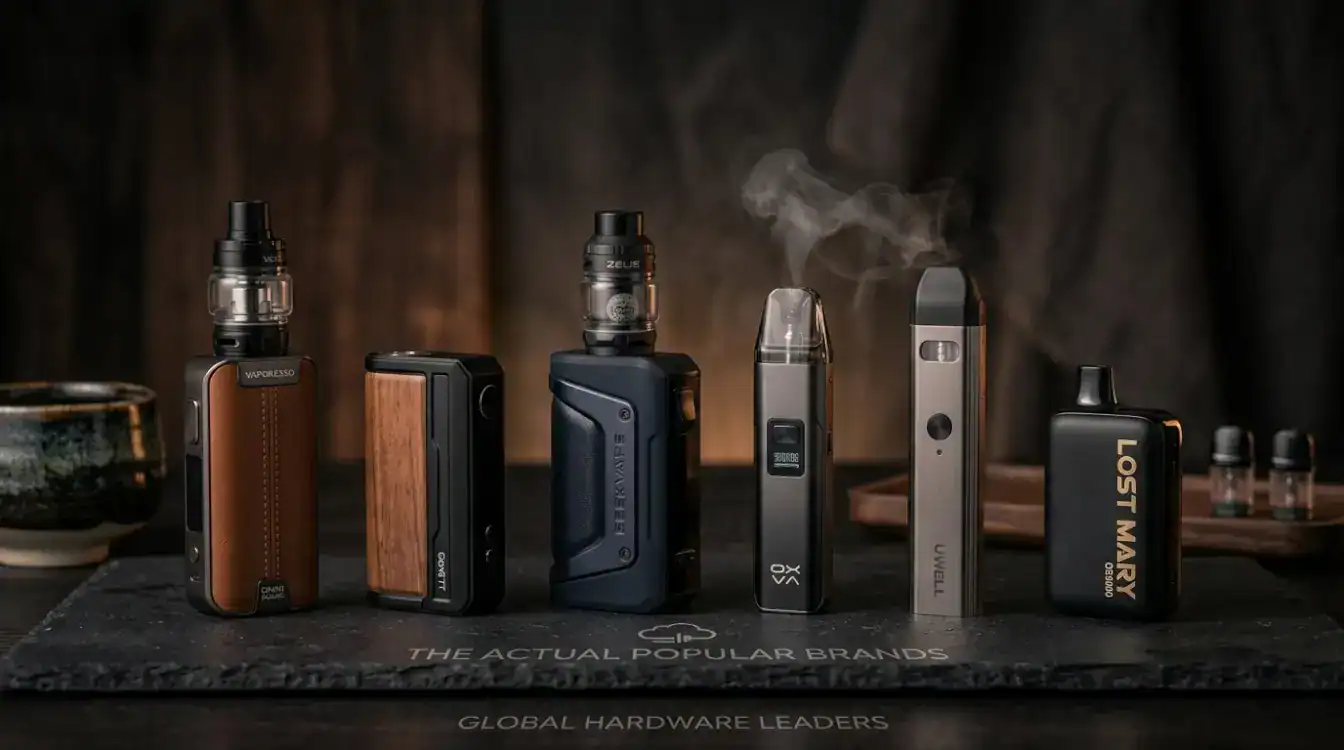
Sustained availability across major retailers like VaporDNA and Element Vape is a decent proxy for consistency, though distribution alone doesn’t prove quality 13.
Premium Pod & Device Brands
Pod system brands with real staying power tend to share a formula: replaceable pods, adjustable airflow, and battery life that survives a full day without a midday charge.
Disposable Vape Brands
VaporDNA’s disposable catalog alone spans dozens of SKUs across puff counts and flavor lines, which tells you how saturated this category has become 3. Bigger disposables generally mean bigger batteries tossed in the trash once they’re spent, a tradeoff covered in detail further down.
E-Liquid Specialists
Some brands built their entire reputation on flavor development rather than hardware, chasing genuinely complex profiles instead of generic fruit blends. They tend to publish more detailed ingredient breakdowns too, probably because flavor quality is their whole pitch.
Market Consolidation: Who Actually Owns These Brands
There are over 460 documented vaping brands on the market, and most sit under a handful of parent companies rather than operating independently 5. Lookah’s brand-mapping research identified that count, and a huge share of those brands roll up into shared ownership groups, private equity portfolios, or the same handful of manufacturing conglomerates 5.

Corporate Ownership Map
Ownership consolidation matters because it directly shapes product consistency, recall response, and pricing power across a brand’s entire portfolio. When one holding company owns half a dozen brands, a supply chain hiccup at the factory level can quietly affect all of them at once, even if only one name ends up in the headlines. That’s information you have to dig for yourself, and honestly, most shoppers never bother.
Supply Chain & Manufacturing Reality
The majority of vaping hardware, whether it lands under a big-name brand or a boutique label, comes out of a small number of contract manufacturers, largely concentrated in China. Brand differentiation often happens at the software, flavor formulation, and packaging level rather than the hardware level itself. It also explains why some “independent” brands feel suspiciously similar in flavor profile or device design; they’re often built on the same base hardware with different branding slapped on top. A shared factory doesn’t automatically mean shared quality control standards, but it does mean the “brand” you’re loyal to may have less control over your actual device than you’d assume. If you’re building out a full setup, it’s worth comparing options in something like a best vapes roundup before committing to one label, since device performance often has more to do with the underlying hardware than the logo on the box.
Price Structure & Why Costs Vary So Dramatically
The same disposable vape can run $8 at one retailer and $15 at another. The gap almost never comes down to product quality. It comes down to margin structure, distribution tier, and how many hands the product passes through before it reaches you.

| Pricing Factor | Impact on Retail Price |
|---|---|
| Direct-to-consumer brand sales | Lower markup, often 20-30% below distributor pricing |
| Multi-tier distribution (brand → distributor → retailer) | Each tier adds 15-25% margin, compounding fast |
| Regulatory compliance costs (testing, labeling, PMTA filings) | Baked into wholesale price before markup even starts |
| Online-only retailers | Lower overhead, often the cheapest reliable channel |
| Brick-and-mortar vape shops | Higher overhead, higher shelf price, but immediate availability |
Wholesale vs. Retail Margins
Retail markup structure explains most of the price swing you’ll notice while comparing the same product across stores. A brand selling directly through its own site cuts out the distributor tier entirely, which is part of why direct-to-consumer prices tend to undercut what you’ll find at a third-party shop. Big catalog retailers like VaporDNA carry enormous disposable inventories precisely because volume lets them negotiate better wholesale rates and pass some of that savings along 3. Smaller specialty shops can’t compete on price the same way, so they lean on curated selection and customer service instead. That’s a fair trade-off if you value expertise over the lowest sticker price.
What You’re Actually Paying For
Every price tag also covers costs you never see directly: lab testing fees, compliance filings, and packaging redesigns triggered by new labeling rules. None of that is cheap, and brands cutting corners here are usually the ones selling suspiciously far below market rate. The specialist e-liquid brands mentioned earlier invest real money chasing complex, accurate flavor profiles, and that R&D shows up in the price too. If you’re new to comparing devices and don’t know what’s driving cost yet, a vaping for beginners primer is a decent place to build that baseline before you start shopping around.
Sustainability & Device Longevity Analysis
Disposable vapes typically last anywhere from 300 to over 5,000 puffs, and that range alone tells you the cost-per-use math varies wildly depending on which device you grab off the shelf 3. A cheap 300-puff disposable might look like a bargain at $6. Do the math before you buy, not after — per-puff cost is what actually matters, not the sticker price.

✓ Pros of Disposables
- Zero maintenance, no coils to replace or e-liquid to refill
- Genuinely convenient for occasional or first-time users
- No upfront device cost beyond the unit itself
✗ Cons of Disposables
- Higher long-term cost-per-puff for regular users
- Battery and plastic waste with limited recycling infrastructure
- Puff-count marketing claims aren’t independently verified
Refillable vs. Disposable Economics
Refillable pod systems and open-tank setups cost more upfront but almost always win on total cost of ownership once you’re vaping daily. A single pod system might run $30-40 up front, but replacement pods and bottled e-liquid cost a fraction of what you’d spend cycling through disposables at the same rate. Anyone chasing sub-ohm clouds or heavier daily use should look at sub-ohm vaping practices to understand how tank-based systems change both the cost curve and the vaping experience.
Environmental Impact & Recycling
Lithium batteries inside disposables aren’t easily recyclable through standard consumer channels, and take-back programs remain rare across the industry. Refillable systems generate far less waste over time simply because the hardware gets reused instead of tossed after a few hundred puffs.
Frequently Asked Questions
What are the top vape brands?
Rather than one universal “best,” the strongest options split by category. Premium pod systems, high-puff-count disposables, and flavor-focused e-liquid specialists each have their own leaders, and the right pick depends on how you actually vape.
What are the top 10 vape brands?
There’s no single authoritative top-10 list, since rankings shift by category (disposables, pod systems, e-liquid) and by retailer inventory.
What are some vape brands that start with 4 letters?
Several well-known vaping brands use four-letter names, a common pattern in the industry since short names work well on small device packaging and pod labels. Checking a retailer’s brand directory, like Element Vape’s brand listing, is the most reliable way to browse by name length or category 1.
What brand of vape is the best?
The more useful question is which brands in your preferred category have FDA authorization, published lab testing, and a consistent quality track record, since those factors matter more than brand name alone. Category first, brand second.
Conclusion
The 460-brand landscape Lookah mapped out proves just how consolidated and repetitive this market really is beneath the surface 5. Once you know that, chasing a specific logo matters a lot less than chasing FDA compliance, real lab data, and honest puff-count claims.
My honest take? That’s not a brand recommendation. It’s just the math working in your favor, month after month, once you stop paying the disposable premium.
Sources
- elementvape.com BRANDS WE CARRY. https://www.elementvape.com/brands
- vapordna.com Disposable Vapes. https://vapordna.com/collections/disposable-vapes
- vaping.com Are You 21 or older?. https://vaping.com/pages/brands
- lookah.com All 460 Brands of Vapes and Their Owners. https://www.lookah.com/blog/all-460-brands-of-vapes-and-their-owners/


