Youth vaping crackdown intensifies
According to the latest vaping statistics from the CDC, 1.63 million US students currently vape — down significantly from the 2019 peak of over 5 million.
Key Takeaways
- The youth vaping crackdown intensifies in the US as federal agencies, courts, and lawmakers escalate pressure on manufacturers, retailers, and distributors simultaneously.
- The FDA has denied market authorization for thousands of flavored vaping products while selectively approving a narrow range of tobacco-flavored alternatives. 1
- Congress and the White House have moved beyond rhetoric — new legislation and executive directives are reshaping how vapes reach (or don’t reach) American teenagers.
- Supreme Court rulings have added legal complexity, giving some manufacturers temporary reprieves while ultimately strengthening the FDA’s long-term regulatory authority.
- Professional sports leagues, including the NBA and NFL, have entered the conversation in ways that traditional public health campaigns simply haven’t matched.
Read on for the full breakdown.
The Current State of Youth Vaping: Why Action Became Unavoidable
More than 2.1 million middle and high school students currently use e-cigarettes — and that number hasn’t dropped nearly as fast as regulators promised it would. 2

That’s the uncomfortable reality sitting beneath every press conference, every enforcement action, and every congressional hearing on vaping. The crisis didn’t emerge overnight. It built steadily through the mid-2010s, peaked with JUUL’s near-total domination of the teen market around 2018–2019, and then — rather than disappearing — mutated. New brands, new devices, new flavors, and new distribution channels replaced the ones that regulators targeted. And here we are.
The BBC reported as far back as 2018 that US health officials were already calling teen vaping an “epidemic,” with the FDA announcing plans to restrict sales through convenience stores and online platforms. 6 Those early warnings weren’t wrong. They just underestimated how adaptive the industry would prove to be.
What changed more recently is the political will to escalate. Previous enforcement cycles followed a familiar pattern — announcement, industry pushback, partial implementation, stagnation. The current crackdown feels different in scope and coordination. Federal agencies, state legislatures, school administrators, and even professional sports organizations are moving in the same direction at roughly the same time. That kind of alignment doesn’t happen by accident.
Honestly, the data alone should have triggered this level of response years earlier. The fact that it took this long reflects how effectively the vaping industry managed public perception, lobbied legislators, and exploited regulatory gray areas. But that window appears to be closing — fast.
What the Numbers Actually Show
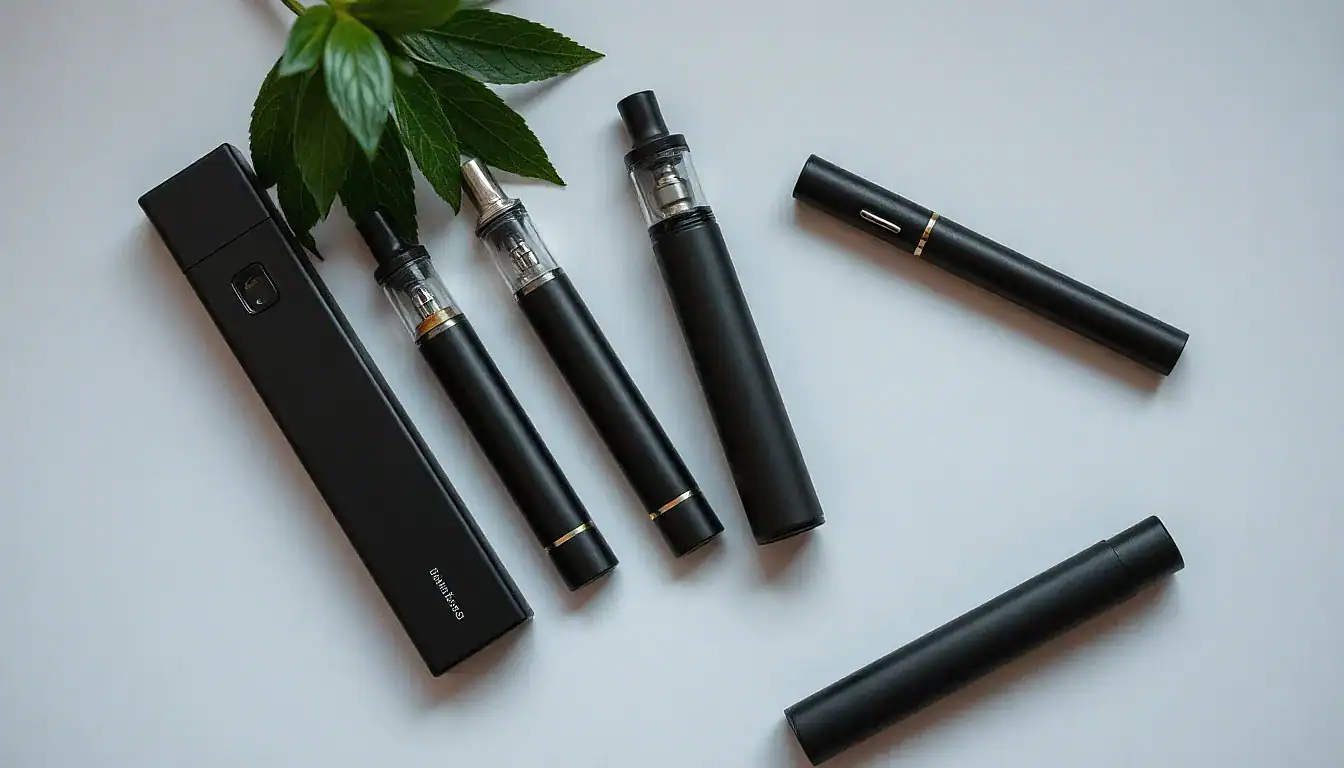
The 2023 National Youth Tobacco Survey (NYTS) confirmed that e-cigarettes remained the most commonly used tobacco product among US youth for the eleventh consecutive year. 2 Disposable devices — think Elf Bar, Lost Mary, Geek Bar — now dominate the youth market in ways that JUUL never quite achieved, largely because they’re cheap, inconspicuous, and available in flavors that taste nothing like tobacco.
ABC News reporting on illicit vapes found a “flashy new generation” of products deliberately designed to appeal to teenagers, with packaging resembling candy and gaming accessories. 4 These aren’t accidental aesthetic choices. Manufacturers know exactly who they’re targeting — and regulators know it too.
The shift toward disposables also complicated enforcement. Pod-based systems like JUUL were relatively easy to track. Disposables arrive in hundreds of SKUs from dozens of manufacturers, many based overseas, making supply chain intervention exponentially harder. 4
FDA’s Aggressive Enforcement Strategy
The FDA doesn’t lack authority here. What it has historically lacked is the speed and resources to match an industry that moves faster than any regulatory framework can comfortably handle.
That’s changing. Significantly.
Flavor Ban Implementation
The FDA’s premarket tobacco product application (PMTA) process has become the primary mechanism for clearing products from the market — or attempting to. The agency has issued marketing denial orders (MDOs) for millions of flavored e-cigarette products, effectively prohibiting their sale in the US. 1 The logic is straightforward: if a product hasn’t received FDA authorization, it cannot legally be sold.
But here’s the gap nobody in official channels wants to discuss openly — authorization denials only work if they’re enforced at the retail and distribution level. A denial order issued in Washington does nothing about the gas station in rural Georgia still stocking unauthorized mango-flavored disposables. A recent report covered by Ophthalmology Advisor put it bluntly: enforcement is falling short, with significant disconnects between the volume of MDOs issued and actual product removal from store shelves. 7
The FDA did authorize a limited set of flavored e-cigarettes — specifically some menthol and tobacco-flavored products from certain manufacturers — a move that AP News covered in detail, noting that the decision left many parents and pediatricians frustrated. 1 The selective authorization created a two-tier market: a small pool of legal products and an enormous illegal market operating largely unchallenged. For more on the specifics of what the FDA approved, our coverage of FDA-approved flavored vape products breaks down exactly which products cleared the bar and why.
Market Authorization Denials
The numbers here are staggering. The FDA has reviewed millions of PMTA applications and rejected the vast majority. 1 As of 2024, fewer than 30 e-cigarette products hold full marketing authorization — out of the thousands that flooded the market over the past decade. That’s not a regulatory process working at scale. That’s a bottleneck with serious consequences on both sides.
Manufacturers who invested heavily in the US market feel blindsided. Some — particularly smaller domestic producers — have argued that the PMTA process unfairly advantages large corporations with the legal and scientific resources to build extensive application portfolios. They’re not entirely wrong about that structural problem, even if their products probably shouldn’t be on the market either.
Retail Compliance Crackdowns
The FDA has ramped up retailer inspection programs significantly, partnering with state health departments to conduct compliance checks at convenience stores, gas stations, vape shops, and online platforms. Civil money penalties for repeat violations have increased. The agency has escalated to warning letters and injunctions for the most egregious distributors. 7
But the retail compliance picture remains messy. Illicit products — many manufactured in China and imported through complex distribution chains — continue reaching store shelves faster than inspectors can remove them. ABC News documented how some illicit vape distributors operate through shell companies, making it genuinely difficult to trace accountability back to any single entity. 4 The youth vaping crackdown intensifies in the US partly because regulators realize the retail enforcement model alone won’t solve this problem.
Youth Vaping Crackdown Intensifies in the US: What Changed in 2023–2024
Something shifted in 2023. The incremental, cautious approach that characterized federal vaping policy for years gave way to something more aggressive — and more politically charged.

Part of it was data. The persistence of high youth usage rates, even after years of regulatory activity, made the “we’re making progress” narrative increasingly untenable. 2 Part of it was political pressure. Anti-vaping advocacy groups got louder, more organized, and more effective at translating public health data into legislative momentum.
And part of it — let’s be honest — was the 2024 election cycle, which gave everyone in Washington an incentive to look tough on anything marketed to children.
Legislative Pushes from Congress
Congress introduced several significant pieces of legislation targeting youth vaping between 2023 and 2024. The Preventing Online Sales of E-Cigarettes to Children Act had already passed — requiring age verification and restricting mail delivery of vaping products — but enforcement gaps remained wide. 3 New proposals targeted flavored products more directly and sought to close the loopholes that disposable vape manufacturers had been exploiting for years.
The legislative picture isn’t clean bipartisan consensus. Some Republican members have pushed back against what they characterize as government overreach into adult consumer choices. But the core argument — that products designed to addict teenagers deserve aggressive restriction — has found support across party lines in ways that some other public health debates simply haven’t.
White House Policy Initiatives
The Biden administration made youth vaping a stated priority. Executive-level directives pushed federal agencies to coordinate enforcement more tightly, and the White House issued specific guidance urging the FDA to accelerate its review and enforcement timelines. 3 That kind of direct executive pressure matters — it shifts agency priorities in ways that routine rulemaking doesn’t.
The question worth asking is whether the institutional momentum built during this period survives a change in administration. Executive-driven regulatory priorities can reverse quickly. The structural changes embedded in legislation are far more durable — which is exactly why advocacy groups pushed so hard for statutory solutions rather than relying on FDA rulemaking alone.
The White House and Congress Take Center Stage
Federal action on youth vaping has never been purely a regulatory story. It’s always been political — and the political dynamics of 2023–2024 made sustained legislative engagement unavoidable.
What’s genuinely different now is the coordination. Previously, FDA enforcement and congressional oversight operated on separate tracks with limited synchronization. The current approach involves more deliberate alignment — agency officials testifying before committees, legislative language specifically designed to close gaps that FDA enforcement had identified, and White House communications teams treating youth vaping as a consumer protection win worth publicizing. 3
Senate vs. House Approaches
The Senate has generally moved faster on vaping legislation, reflecting the chamber’s broader willingness to engage with public health issues on bipartisan terms. The House has been more contentious — with some members pushing for sweeping flavor bans and others advocating for harm reduction approaches that preserve adult access to vaping as a smoking cessation tool.
That tension isn’t going away. It reflects a genuine policy disagreement about the primary purpose of e-cigarettes: are they a public health threat to be eliminated, or a harm reduction tool for adult smokers that happens to require better youth access controls? The answer shapes everything — from flavor policy to retailer licensing to import enforcement.
Bipartisan Support (and Resistance)
Bipartisan support exists, but it’s conditional. Legislators from tobacco-growing states bring complicated interests to these debates. Industry lobbying remains substantial — the vaping industry hasn’t rolled over the way some advocates predicted it would. 5 And the harm reduction argument genuinely complicates the “just ban everything” approach that some public health voices prefer.
The youth vaping crackdown intensifies in the US not because political consensus is perfect, but because the threshold of public concern has finally crossed the point where inaction carries more political risk than action.
Supreme Court Rulings and Their Impact on Enforcement
The Supreme Court doesn’t typically headline vaping policy discussions. But its decisions have quietly shaped how far federal regulators can actually reach — and the FDA has felt that influence directly.
The Court’s 2022 ruling in West Virginia v. EPA — which limited federal agencies’ ability to make sweeping regulatory decisions without explicit congressional authorization — cast a long shadow over FDA rulemaking. It didn’t target vaping specifically. But it handed industry lawyers a template for challenging aggressive agency action on the grounds that Congress never explicitly authorized it. Several vaping manufacturers moved quickly to use exactly that argument in their own litigation. 5
And it worked. Partially.
Some courts granted temporary stays on FDA marketing denial orders, allowing products to remain on shelves while legal challenges played out. The stays weren’t permanent victories for manufacturers — most eventually lost on the merits. But the delays mattered enormously in practice. A product that stays on shelves for an extra 12–18 months during litigation reaches millions of consumers, including teenagers, who might never have encountered it under faster enforcement. 7
The Supreme Court’s broader administrative law jurisprudence — particularly its skepticism around what it calls the “major questions doctrine” — creates genuine long-term uncertainty for FDA vaping enforcement. If a future court decides that flavored e-cigarette prohibition constitutes a “major question” requiring explicit congressional authorization, the entire PMTA framework could face serious challenge. That’s not a remote hypothetical. It’s a live legal risk that the FDA’s own attorneys are actively managing. 5
The better legislative path — and honestly, the only durable one — runs through Congress passing explicit statutory authority rather than relying on FDA rulemaking alone. The agency can do a great deal within its existing mandate, but the current legal environment makes statutory clarity more important than ever.
Real-World Consequences: What Youth, Parents, and Schools Face
Regulatory battles in Washington are one thing. What actually happens in a high school bathroom is another.

School Enforcement and Disciplinary Shifts
Schools across the US have installed vape detectors in bathrooms — devices that sense aerosol particles and alert administrators in real time. Several districts have deployed them widely, and the technology has caught enough students to justify the cost in administrators’ minds. But detectors are a symptom response, not a solution. A student who can’t vape in school isn’t necessarily a student who stops vaping. 2
The disciplinary picture is complicated. Harsh punishments — suspensions, expulsions — tend to push struggling students further from support systems rather than addressing nicotine dependence. Many school counselors have pushed for treatment-focused responses instead, connecting students who vape with cessation resources rather than treating the behavior purely as a disciplinary infraction.
If your teenager is already vaping regularly, understanding the signs and effects of vaping addiction is worth taking seriously — both the physical dependency mechanisms and the psychological patterns that make quitting genuinely difficult for adolescents. This isn’t a willpower problem. It’s a neurological one, and the nicotine concentrations in modern disposable devices are significantly higher than in earlier-generation products.
AP News reporting on conversations between parents and teenagers about vaping highlighted how many parents feel underprepared for these discussions — unclear on what current products look like, how they work, and what the actual health risks involve. 1 That information gap is real, and it matters. Parents who can recognize a Geek Bar or a Lost Mary by sight have very different conversations with their kids than parents who still picture vaping as something that looks like a cigarette. For parents navigating these conversations, our guide on what to do if your kids are vaping covers the practical steps in detail.
The Black Market Response
Here’s what nobody in the enforcement conversation wants to say out loud: aggressive restriction of legal markets doesn’t eliminate demand. It redirects it.
The illicit vape market in the US has grown substantially alongside increased enforcement pressure. ABC News documented distribution networks operating through bodegas, smoke shops, and informal peer-to-peer channels — products with no age verification, no ingredient transparency, and no accountability whatsoever. 4 These aren’t just unauthorized versions of legitimate products. Some contain synthetic nicotine compounds, unverified flavoring chemicals, and contaminants that even legal vaping products — whatever their risks — don’t carry.
The crackdown creates a perverse dynamic: compliant manufacturers get squeezed out while illicit operators fill the gap. That’s not an argument against enforcement. It’s an argument for enforcement that’s intelligent enough to account for market substitution effects — something the current strategy hasn’t fully addressed. 7
Cultural Pushback: Why the NBA, NFL, and Youth Athletes Matter
Public health messaging has a reach problem. Traditional anti-vaping campaigns — however well-funded and scientifically grounded — largely preach to the converted. The teenagers most at risk are precisely the ones most resistant to official messaging.

This is where professional sports entered the conversation in an unexpected way.
The NBA and NFL both prohibit vaping on team property and during official team activities. But the cultural influence runs deeper than league policy. When high-profile athletes — particularly those with substantial social media followings among teenagers — speak about vaping, training discipline, and respiratory health, it lands differently than a CDC infographic. Authentically. Without the institutional distance that makes official campaigns feel preachy.
Several NFL players have spoken publicly about the incompatibility of vaping with serious athletic performance — lung capacity, recovery time, cardiovascular endurance. These aren’t abstract health statistics. They’re performance consequences that teenage athletes understand immediately and personally. An aspiring football player who hears a professional linebacker describe how vaping affected his conditioning receives that information in a completely different register than he would from a school health presentation.
The NBA’s engagement has been slightly different — more focused on the broader wellness culture that pervades the league and athletes’ personal brand ecosystems. But the net effect is similar: professional sports visibility creates authentic anti-vaping messaging that cuts through the noise in ways that institutional campaigns can’t replicate.
Honestly, this might be one of the most underused tools in the entire prevention toolkit. The formal public health apparatus and professional sports leagues aren’t natural partners, and the coordination infrastructure doesn’t really exist yet. Building it should be a priority — not because athletes are health experts, but because they have the cultural access that health experts lack.
The Day the Crackdown Hit Hardest: Key Milestones and Turning Points
Some enforcement moments matter more than others. Not because of their immediate impact, but because they shifted the trajectory of everything that followed.
The day the FDA issued its first major wave of marketing denial orders against JUUL — June 2022 — stands as the clearest inflection point. The agency ordered JUUL’s products off the market entirely, citing insufficient evidence that the products’ benefits to adult smokers outweighed the risks to youth. 1 JUUL obtained a stay and eventually reached a modified outcome, but the message was unambiguous: no brand was untouchable, regardless of market share or political connections.
That decision reverberated through the entire industry. Manufacturers that had been leisurely assembling PMTA applications suddenly accelerated their timelines. Companies that had assumed FDA action would remain limited in scope began genuinely reconsidering their product strategies. 5
The September 2023 Justice Department announcement of criminal charges against illicit vape distributors marked another turning point. Civil enforcement — fines, warning letters, injunctions — had been the primary tool. Criminal prosecution signaled a categorically different level of governmental seriousness. 4 The youth vaping crackdown intensifies in the US most visibly when the apparatus of criminal law enters a space previously dominated by regulatory action alone.
And then there was the day Congress held joint hearings featuring the CEOs of major vaping companies — a deliberate echo of the 1994 tobacco hearings that remain a cultural touchstone in American public health history. The parallel was intentional. The political theater served a purpose: establishing a public record of industry accountability and signaling bipartisan willingness to use legislative power if voluntary compliance remained insufficient. 3
These moments don’t exist in isolation. Each one built on the last, creating cumulative momentum that individual enforcement actions couldn’t generate alone.
What’s Next: Projected Timeline and Emerging Challenges
The enforcement trajectory points clearly toward continued escalation — but several variables could complicate the picture significantly.

Import controls remain the most glaring gap. The vast majority of unauthorized disposable vapes sold in the US originate from Chinese manufacturers. Customs and Border Protection has increased seizures substantially, but the volume of products entering through commercial shipping channels — often mislabeled or disguised — overwhelms current inspection capacity. 4 Without meaningful cooperation from Chinese regulatory authorities or a fundamental change in import enforcement resources, this pipeline will remain open.
Nicotine pouch products represent an emerging regulatory frontier. Several manufacturers have positioned nicotine pouches as vaping alternatives — products that deliver high-concentration nicotine without aerosol inhalation. They’re currently regulated differently than e-cigarettes, and that regulatory asymmetry creates obvious substitution pathways for teenagers seeking nicotine products that avoid scrutiny. 2
Synthetic nicotine — derived from tobacco plant-independent chemical processes — created a significant regulatory gap that required legislative action to close. Congress specifically amended the Family Smoking Prevention and Tobacco Control Act to bring synthetic nicotine under FDA jurisdiction, but the industry’s demonstrated capacity for product innovation means new regulatory gaps will continue to appear. 5
The question of harm reduction philosophy also remains unresolved at the policy level. The UK’s approach — treating vaping as a legitimate smoking cessation tool while maintaining strict youth access controls — differs substantially from the American posture of aggressive restriction. 6 Some researchers and clinicians argue that the US approach risks being so restrictive that it drives adult smokers away from vaping and back toward combustible cigarettes, which carry demonstrably higher health risks. Our coverage of where the vaping industry is heading explores this tension in detail, and if you’re an adult smoker weighing your options, our guide on switching from smoking to vaping lays out what the evidence actually says.
The harm reduction argument is legitimate and shouldn’t be dismissed. But it also shouldn’t be used — as it often is in industry lobbying — as a rhetorical shield for products that serve no meaningful cessation purpose and are demonstrably designed for a youth market. 5
The Youth Vaping Crackdown in the US: Where Things Actually Stand
The youth vaping crackdown intensifies in the US not because the problem is solved — it’s because the problem has proven stubbornly resistant to every partial solution tried so far.

What’s working: the PMTA process has cleared enormous numbers of unauthorized products from the legal market. Criminal enforcement is creating real consequences for illicit distributors. Legislative action has closed several regulatory gaps that the industry exploited for years. Political will — across both parties, both chambers, and at the executive level — is stronger than it’s been at any point since the original tobacco settlement era. 3
What isn’t working: retail compliance remains inconsistent and enforcement resources remain stretched. The illicit market has grown in direct proportion to legal market restrictions. Import controls are inadequate. And a harm reduction framework that might allow effective adult access while genuinely protecting youth hasn’t been coherently articulated or implemented. 7
The teenagers who are vaping right now — the 2.1 million-plus who showed up in the NYTS data — aren’t abstractions. 2 They’re developing nicotine dependencies during the precise developmental window when those dependencies are hardest to break and most damaging neurologically. The urgency is real. The tools exist. The coordination is improving.
But the gap between policy intent and street-level reality remains wide. Closing it requires enforcement resources proportional to the problem, import controls that match the scale of the supply chain, and a harm reduction philosophy sophisticated enough to distinguish between products designed for adult smokers and products designed for teenagers who’ve never smoked a cigarette in their lives.
That distinction — enforced consistently and at scale — is the crux of the entire debate. If you’re an adult vaper wondering how all this regulatory turbulence affects your choices, our vape news section tracks the latest developments as they happen. And if you want to understand what’s actually been approved versus what’s still being sold illegally, the FDA scrutiny overview is worth bookmarking.
The industry built a youth market through deliberate design decisions. Dismantling it will require equally deliberate — and sustained — policy decisions. The clock is running.
Sources and References
- AP News — How parents can talk to their kids about vaping as FDA authorizes some flavored e-cigarettes
- ECig Intelligence — Youth vaping crisis declared totally over as youth vaping crisis gets really serious
- The Economist via Facebook — A youth vaping epidemic and a mysterious outbreak of lung disease in America
- ABC News — Inside the crackdown on a flashy new generation of illicit vapes popular with US teens
- Clive Bates — The great American youth vaping epidemic. Really?
- BBC News — US plans crackdown on e-cigarette firms citing ‘epidemic’ teen use
- Ophthalmology Advisor — Crackdown on Vapes Falling Short, Report Finds