

How to Avoid Foggy Windows Whilst Vaping (2026 Guide)
Updated 2026-09-27 — Originally published 2018-04-09
Does vaping leave a film on windows? Yes, it does. If you vape near glass regularly, you’ve probably already seen the hazy streaks to prove it. The good news is you can cut that film down significantly once you understand what causes it.
Key Takeaways
- Does vaping leave a film on windows? Yes — the culprit is Vegetable Glycerin (VG), a sticky humectant in e-liquid that clings to glass instead of evaporating like water vapor.
- Higher VG e-liquids (70/30 or higher) produce noticeably more window film than 50/50 VG/PG blends.
- Cracking a window, running the AC, or using a fan all help move vapor along before it settles on glass.
- Coil resistance and device size matter too. A higher-resistance coil or a smaller pod system cuts vapor output, and film, without giving up vaping altogether.
- Combining a few methods gets you the best real-world results.
Why Does Vaping Leave a Film on Windows?
The Best Fixes by Location
Other Tricks Worth Trying
Is It Worth Switching E-Liquids?
Why Does Vaping Leave a Film on Windows?
Vaping swaps one nuisance for a smaller one. Instead of tar, ash, and clothes that smell like an ashtray, you get foggy glass.
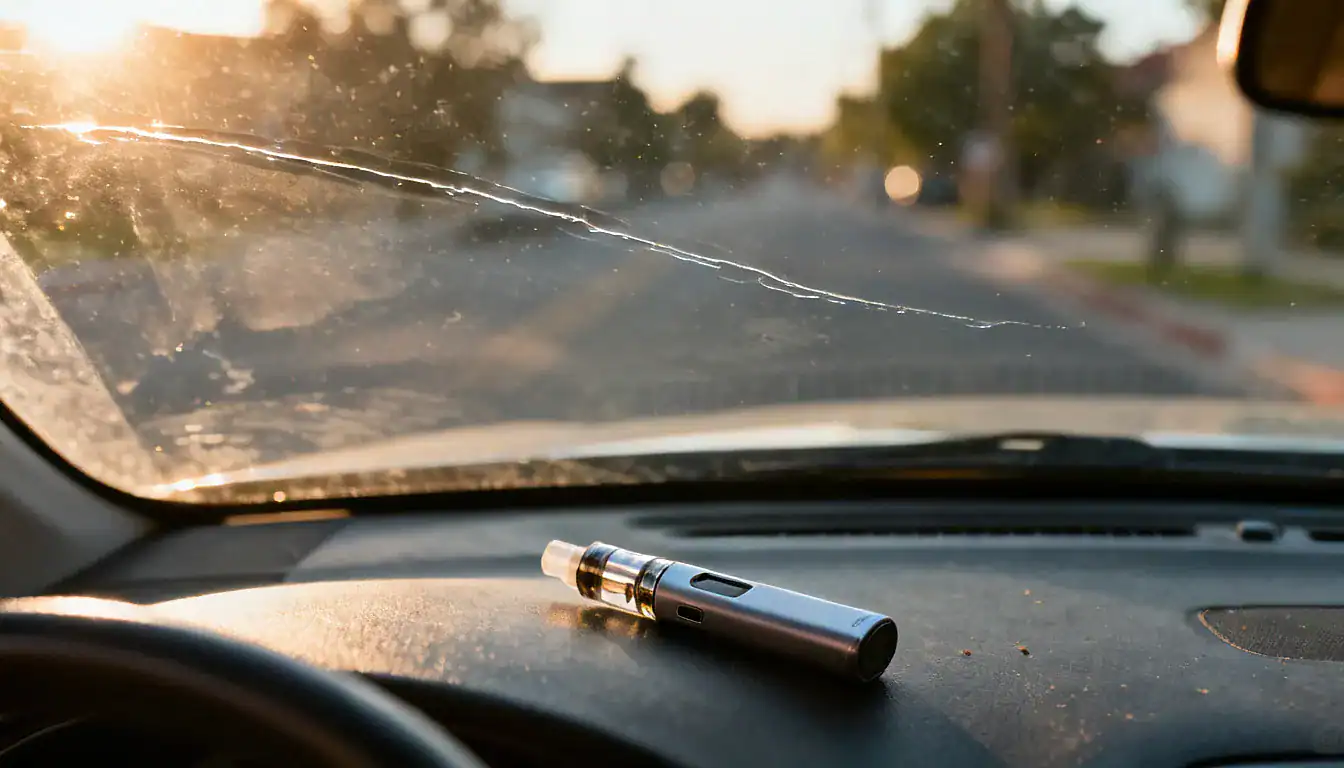
The film comes from Vegetable Glycerin (VG), the thick, slightly sweet base found in nearly every e-liquid. VG is a humectant. It holds onto moisture rather than releasing it, which is exactly why it produces those big, satisfying clouds. That same stickiness is the problem. Water vapor from a hot shower evaporates and disappears, but VG vapor doesn’t. It condenses on cool, flat surfaces like windows, mirrors, and tile, then stays there as a thin, slightly tacky residue.
Propylene Glycol (PG), the other main e-liquid ingredient, leaves some film too, but far less, since it’s thinner and evaporates more readily.
This is also why the film feels different from cigarette residue. Tar builds up as a brown, greasy layer that stains fabric and paint over time. Vape residue stays clear and doesn’t yellow walls the way tobacco smoke does, but on glass specifically, it can look surprisingly similar to a light oily haze until you clean it off.
The Best Fixes by Location
A few practical habits make a real difference depending on where you vape most.
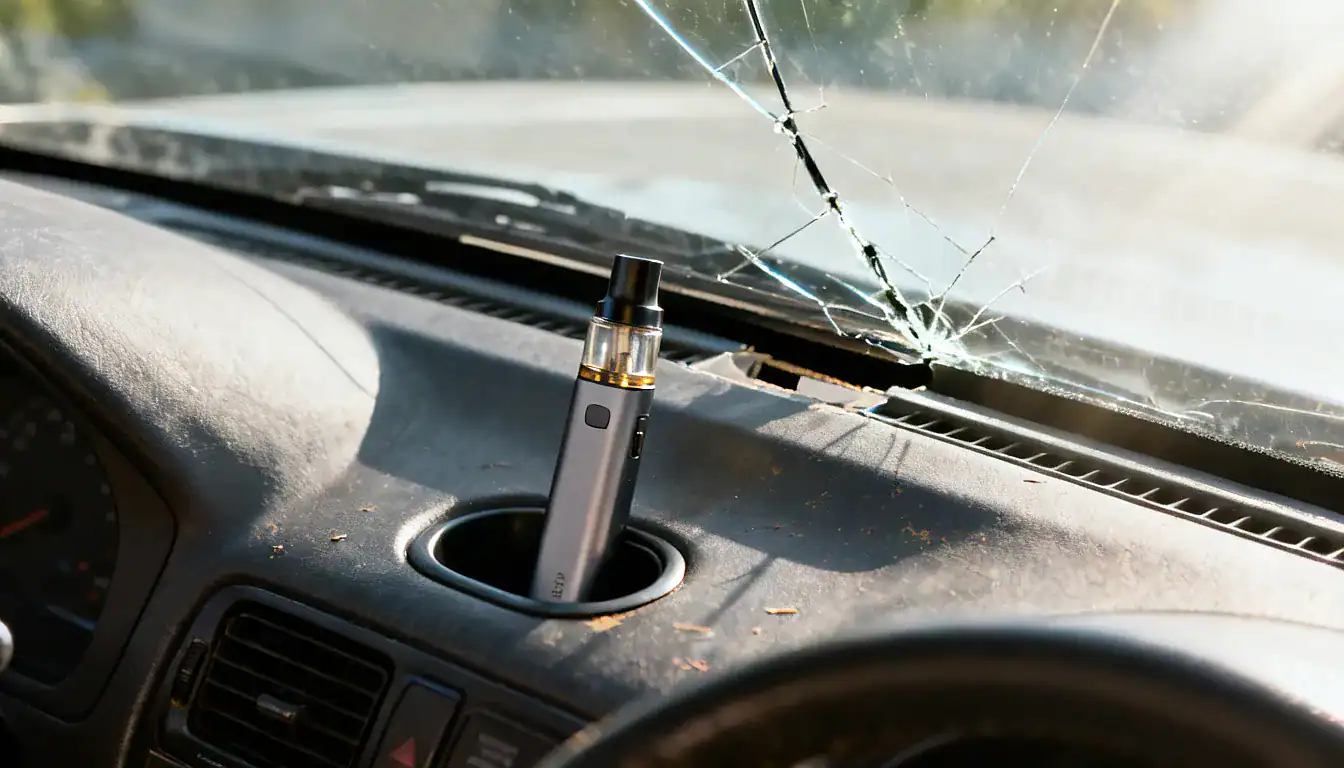
Driving
Car windows are probably the easiest to manage. Crack a window even an inch or two. That small gap gives vapor somewhere to go instead of hanging in the cabin and settling on the glass in front of you.
Run your air conditioning on the “recirculate outside air” setting rather than the fully sealed cabin mode. Combined with a cracked window, this keeps air moving and gives vapor far less chance to stick around. Defrost mode can help too, since it’s built to fight condensation in the first place.
At Home
Anti-fog sprays and specialty window cleaners help a little, but they’re a band-aid, not a cure. The bigger win comes from cutting your VG ratio, at least for the juice you keep for lounging around the house.

If you’re currently running 70/30 VG/PG, try dropping to 50/50 for home use. Owners who’ve made this switch report noticeably clearer windows within days, since there’s simply less sticky residue being produced per puff. You’ll lose a little cloud size, but your windows, and your walls, will thank you.
At the Office
This is the toughest environment to manage, since you can’t exactly crack a window or point a fan at your desk without questions. Start with the same VG reduction advice above, then consider a lower-output device for work hours specifically. Devices from the top vaping brands are built with exactly this kind of discreet, low-vapor use in mind.
✓ Pros
- Pod systems and cigalikes produce noticeably less visible vapor and residue
- Still deliver nicotine satisfaction for most users switching from cigarettes
- Small and easy to keep discreet in shared spaces
✗ Cons
- Weaker throat hit and smaller clouds compared to sub-ohm mods
- Some users find the reduced vapor output less satisfying long-term
Other Tricks Worth Trying
A few extra habits stack nicely on top of the fixes above.
- Add vinegar to your window cleaner. It cuts through oily residue better than glass cleaner alone, and it makes it a little harder for new vapor to stick between cleans.
- Switch to a higher-resistance coil. Coils above 1 ohm produce less vapor per puff than sub-ohm setups. You’ll get a milder hit, closer to a mouth-to-lung style draw, but noticeably less film builds up on nearby glass over a day of vaping.
- Keep air moving indoors. Open a window and point a fan toward it. This mimics the airflow trick that works so well in cars, giving vapor an exit route before it has a chance to settle.
Layer two or three together. Try a 50/50 juice, a slightly higher-resistance coil, and a cracked window, and the difference becomes obvious within a week or so.
Is It Worth Switching E-Liquids?
Switching your VG/PG ratio is worth considering if window film genuinely bothers you. Here’s a rough comparison of how common ratios stack up.
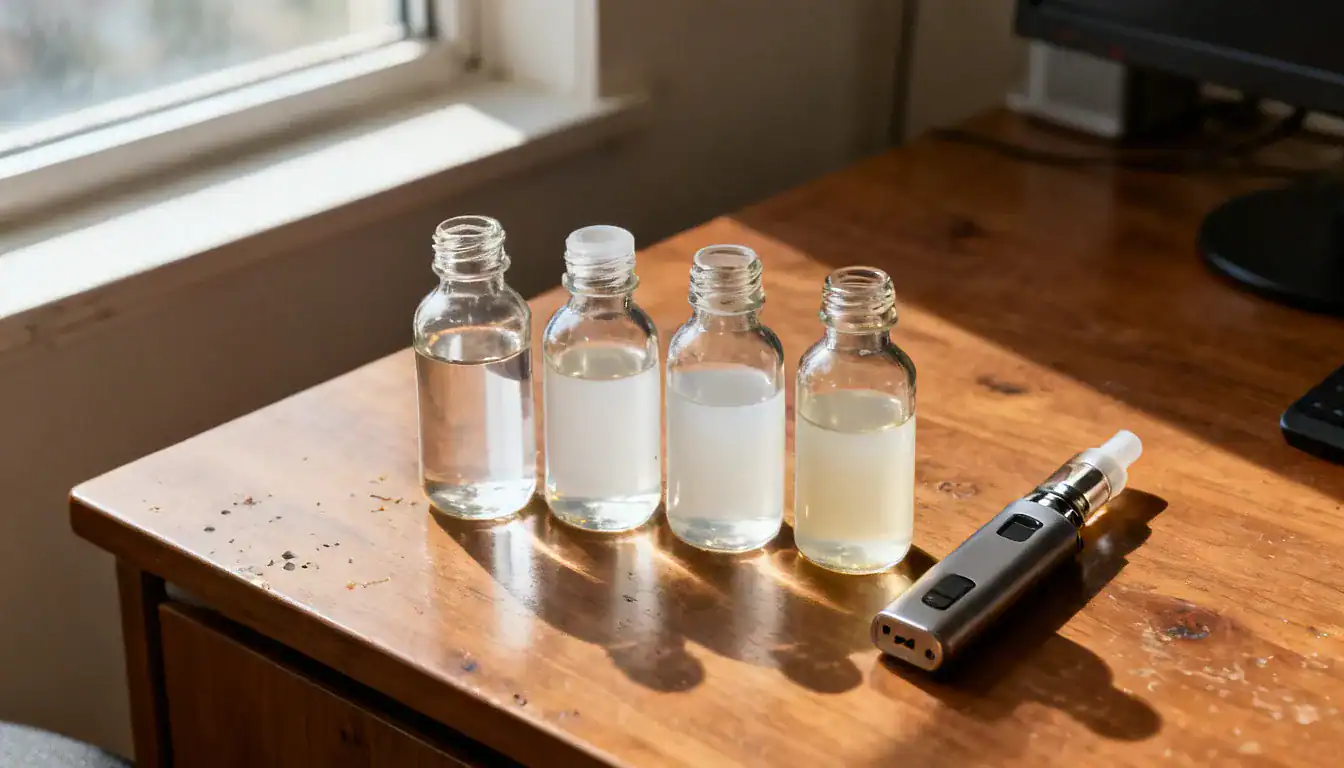
| VG/PG Ratio | Cloud Size | Window Film | Best For |
|---|---|---|---|
| 80/20 or higher | Very large | Heaviest residue | Cloud chasing, sub-ohm mods |
| 70/30 | Large | Noticeable film | Most sub-ohm tanks |
| 50/50 | Moderate | Light film | Pod systems, indoor use, offices |
| 30/70 (high PG) | Small | Minimal film | Strong throat hit, minimal cloud |
Worth noting: high-PG liquids aren’t for everyone. Some people find PG irritates their throat or triggers mild allergic reactions, so it’s a genuine trade-off rather than an automatic upgrade. If you’re new to adjusting ratios, our guide on E-Liquid PG and VG breaks down what each ingredient actually does in more detail.
If you’re still building your setup from scratch, it’s worth reading up on vaping for beginners before you commit to a high-VG mod purely for cloud size. You might decide the trade-off isn’t worth the mess on your windows.
Frequently Asked Questions
Can you tell if someone has vaped in your house?
Usually, yes. A faint sweet or fruity smell often lingers for an hour or two after vaping, and a light, slightly sticky film can show up on windows, mirrors, or countertops nearby. Unlike cigarette smoke, it won’t yellow walls or leave a strong stale odor, so the signs are subtler and fade faster.
Is vaping indoors bad for your house?
It’s not as damaging as smoking indoors, but it isn’t harmless either. Repeated vaping in the same spot can leave a faint, greasy buildup on nearby upholstery over months, something a lot of renters only notice when they move out and get their deposit questioned.
How do you get vape film off windows?
A standard glass cleaner with a splash of vinegar added works well for cutting through the sticky VG residue. Wipe with a microfiber cloth rather than paper towels, which tend to smear oily residue instead of lifting it.
How can you tell if someone is secretly vaping?
Look for a faint sweet smell that appears and disappears quickly, a slightly hazy film on nearby glass or mirrors, and small puddles of condensation on cool surfaces after use.
Does vaping leave a film on windows in every case?
Not always to the same degree. It depends heavily on how enclosed the room is and how often you vape there, not just what juice you’re using.
Sources & References
- Manufacturer specifications for e-liquid VG/PG ratios, as published by major e-liquid brands
- Owner reports and community discussion on window residue from vaping, referenced across vaping forums and review sites
- General chemical properties of Vegetable Glycerin and Propylene Glycol as humectants


