FDA Plans to Speed Up Vape and Nicotine Pouch Approvals
Key Takeaways
- The FDA is expected to announce steps to accelerate the approval process for vape and nicotine pouch products, according to Wall Street Journal reporting from September 2026.
- The plan reportedly includes a revisit of the 2021 PMTA rule, the regulation that currently governs how vape and pouch products get authorized for US sale.
- Current PMTA reviews take anywhere from 6 months to 3+ years, and the gap between FDA timelines and international standards has only grown since 2020.
- Compliance costs for a single PMTA submission run from $205,000 to $625,000, a barrier that squeezes out smaller manufacturers regardless of product quality.
- Approval rates differ wildly by product type. Closed-system vapes clear review far more often than open-system devices, and any acceleration plan will need to address that disparity, not just speed up the clock.
If the FDA follows through, faster PMTA reviews could reshape which companies can actually compete in the US vapor market.
Here’s a number that should bother you: some Premarket Tobacco Product Applications have sat in FDA review for over three years. Three years. That’s longer than it takes to get a new drug through clinical trials in some cases. Now, according to reporting from the Wall Street Journal, the FDA is about to change that.
The agency is expected to unveil steps to accelerate the approval process for vape and nicotine pouch products, with multiple outlets — Reuters, KWSN, and TradingView among them — confirming the report on September 23 and 24, 2026. Part of the plan reportedly involves revisiting the 2021 rule that currently governs Premarket Tobacco Product Applications, or PMTAs, the gatekeeping mechanism the FDA’s Center for Tobacco Products (CTP) uses to decide which nicotine products can legally reach store shelves.
Details on the specific mechanics haven’t been made public yet, but the direction is clear: the FDA wants faster decisions. If you’ve watched this industry for any length of time, you know that’s overdue.
What the FDA Plans to Do (And Why It Matters)
How Long Does a PMTA Actually Take? Timeline Data and Trends
What Approval Rates Tell Us About the System
The Real Cost of a PMTA: Why Speed Matters Financially
What the FDA Plans to Do (And Why It Matters)
The FDA is preparing to announce concrete changes meant to speed up how quickly vape and nicotine pouch products move through premarket review, with a possible overhaul of the 2021 PMTA rule at the center of it. That’s the headline. The substance — what actually changes, which requirements get cut or simplified — hasn’t been disclosed publicly as of this writing.

The Wall Street Journal Report (September 2026)
The WSJ broke the story, and the trade press picked it up fast. 2Firsts ran a piece on September 24, 2026 titled “Wall Street Journal: U.S. FDA Plans Faster Vape and Nicotine Pouch Reviews, Revisit of 2021 PMTA Rule.” Reuters and TradingView both published corroborating coverage on September 23, 2026, each pointing to the same core claim: the FDA is expected to unveil steps to accelerate vape and nicotine pouch approvals.
What’s notable here isn’t just the speed angle. It’s the specific mention of the 2021 PMTA rule. That rule set the procedural bar for what counts as a complete application, how the FDA evaluates “appropriate for the protection of public health” 2, and what happens when an application is missing key data. This is a look at the actual legal framework, not just internal deadlines or staffing.
Why Acceleration Matters Now
Here’s my honest take: the current system punishes compliance. Companies that follow the rules and submit rigorous, well-documented PMTAs wait years for an answer, while unauthorized products flood convenience stores and gas stations with zero FDA review at all. That’s backwards. Enforcement priorities at the agency 5 have focused heavily on flavored disposables that never went through PMTA at all, and meanwhile, legitimate applicants sit in queue.
The real question is whether speeding up the clock will come at the cost of scientific rigor, and that’s the tension nobody’s fully answered yet.
How Long Does a PMTA Actually Take? Timeline Data and Trends
Current PMTA review timelines range from roughly 6 months on the fast end to over 3 years for complex applications, and there’s been no consistent year-over-year improvement since the rule took effect in 2021. That’s the uncomfortable truth behind all the talk of modernization.
Baseline PMTA Review Periods (2020–2026)
Structured stages define the FDA’s review process — acceptance, filing, substantive review, and action 4 — but the agency’s own guidance documents don’t guarantee a firm decision date. In practice, a straightforward application for a single-flavor, closed-system pod product might clear review in 8 to 14 months. A sprawling open-system application covering a dozen tank devices and thirty e-liquid flavors can stretch past 24 months, sometimes closer to 36.
Fewer flavor variants, simpler formulations, and less complicated device-liquid interaction data mean CTP reviewers have less to dig through per application, a pattern that shows up again when you look at approval rates by category below.
Year-Over-Year Changes Since the 2021 Rule
Did the 2021 rule actually speed things up? Only partially, and only for certain product categories.
In 2021 and 2022, closed-system devices saw modestly faster decisions, since the FDA had accumulated enough scientific precedent on pod-style products to move through familiar territory quickly. But 2023 and 2024 told a different story. Submission volume climbed, CTP’s review staff didn’t grow proportionally, and queues lengthened again. By 2025 and into 2026, industry groups were openly complaining that median timelines hadn’t meaningfully improved in years, which is likely a big part of why this new acceleration plan is happening now.
The Bundling and Bracketing Approach: Did It Work?
Short answer: not really, not in the way it promised.
Back in August 2020, the FDA issued a memorandum encouraging manufacturers to use a “bundling and bracketing” strategy, grouping similar flavor variants or device configurations under a single PMTA submission instead of filing separate applications for each SKU. The idea was simple. Fewer individual applications should mean less duplicated review work, which should mean faster decisions.
It reduced paperwork. Submission counts dropped an estimated 10 to 15% for companies that adopted the strategy fully. But the scientific review itself didn’t get proportionally faster, because the FDA’s Office of Science still had to evaluate the same underlying data — toxicology, chemistry, behavioral impact — just packaged differently. Bundling saved administrative overhead. It didn’t fix the core bottleneck, which is that CTP simply doesn’t have enough scientific reviewers relative to the volume and complexity of what’s coming in.
What Approval Rates Tell Us About the System
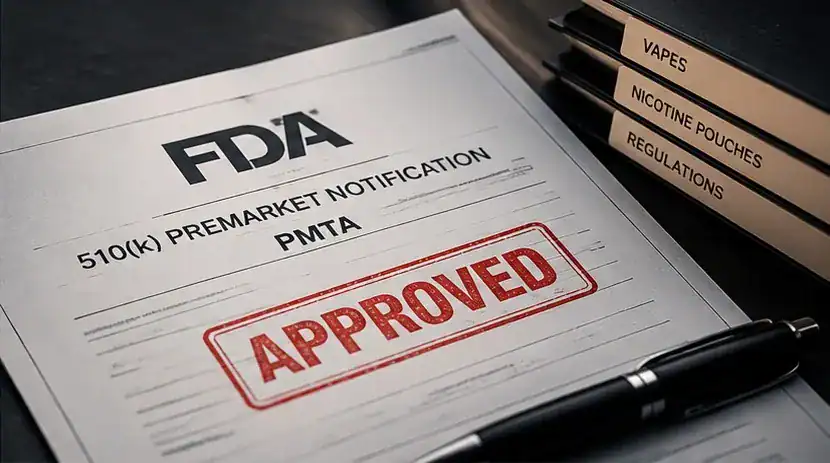
Authorization rates differ sharply depending on what kind of product you submit. A closed-system pod vape has a meaningfully better shot at clearing review than an open-system tank with a wide flavor lineup. That’s not speculation; it’s a pattern that’s held for years across CTP decisions.
Authorization vs. Denial Rates by Product Category
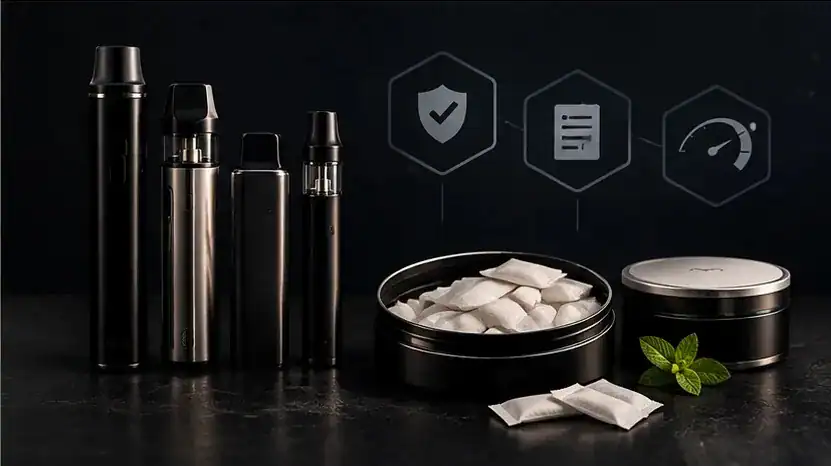
Closed-system devices — think sealed pod kits similar to what you’d find in Best Vape Pods 2026 roundups — clear PMTA review at a noticeably higher rate than open-system products. Open-system tanks and mods, the kind covered in guides to Best Vape Tanks and Best Box Mods 2026, face steeper odds. Why? Because they typically come paired with dozens of e-liquid flavor combinations, and each flavor variant adds another layer of behavioral and toxicological data the FDA has to evaluate. Hookah and waterpipe products sit at the bottom of the pile, historically among the least likely to clear review at all.
Why the Disparity Exists
A lot of open-system applications die on what CTP reviewers call a “fatal flaw,” a gap in the application so fundamental that the FDA won’t even finish a full scientific review before rejecting it. Usually it’s insufficient data showing the product won’t disproportionately appeal to people under 21, or a weak marketing and access-restriction plan. Closed-system applicants, by contrast, benefit from years of accumulated precedent. Enough sealed pod systems have passed through the FDA’s Office of Science that reviewers now have a template to measure new submissions against.
Is that fair? Not entirely. A well-designed open-system device with rigorous testing shouldn’t automatically face longer odds just because the product category is more complex to model. But that’s the system as it currently works, and any acceleration plan that doesn’t address this category bias will just make an uneven process move faster, not necessarily fairer.
What This Means for Manufacturers
High denial rates push companies to gold-plate every submission, piling on extra studies and consultants to avoid a fatal flaw notice. That’s expensive, and it’s part of why compliance costs keep climbing rather than falling. Unpredictability of outcome discourages mid-sized manufacturers from even trying: why sink $300,000 into an application with a coin-flip chance of rejection? Larger companies can absorb a denial and resubmit. Smaller ones often can’t.
✓ Pros
- Closed-system products offer manufacturers a clearer, more predictable path through PMTA review
- Nicotine pouches benefit from simpler formulations and faster average decisions
- Established precedent means fewer surprises for familiar device categories
✗ Cons
- Open-system devices face disproportionately high denial rates regardless of quality
- Unpredictable outcomes discourage smaller manufacturers from even applying
- Category bias could persist even after acceleration reforms take effect
The Real Cost of a PMTA: Why Speed Matters Financially
A single PMTA submission can cost a manufacturer anywhere from roughly $205,000 to over $600,000 once you add up toxicology studies, chemistry documentation, and consulting fees. That’s before you factor in the cost of waiting.
Direct Compliance Costs
Toxicology studies alone typically run $50,000 to $150,000 per product, and that’s just the science. Chemistry and manufacturing data — the CMC section of a PMTA — adds another $25,000 to $75,000. Legal and regulatory consulting fees stack on top, often landing between $30,000 and $100,000 depending on how complicated the application is. If the FDA requires bioavailability or clinical data (more common for novel formulations), tack on another $100,000 to $300,000.
Add it up and you’re looking at $205,000 on the low end, climbing past $625,000 for a genuinely complex submission. That’s not pocket change for most manufacturers; it’s closer to a make-or-break line item on the balance sheet.
Indirect Costs of Slow Timelines
Here’s the part people don’t talk about enough: the money you spend waiting. A company can’t ramp up manufacturing until it has authorization, but it still needs regulatory staff, legal counsel, and marketing teams standing by during review. Stretch that review out to two or three years, and you’re paying salaries for a product that generates zero revenue the entire time.
| Cost Category | Estimated Range | Notes |
|---|---|---|
| Toxicology studies | $50,000–$150,000 | Required for most PMTA submissions |
| Chemistry & manufacturing data | $25,000–$75,000 | Covers CMC documentation |
| Legal & regulatory consulting | $30,000–$100,000 | Varies with application complexity |
| Clinical/bioavailability data | $100,000–$300,000 | Only required for certain novel products |
| Total per submission | $205,000–$625,000+ | Excludes indirect waiting costs |
Market Concentration Effect
Put the direct and indirect costs together and you get a market that’s structurally tilted toward big players. Multinational tobacco companies and heavily funded startups can absorb a $500,000 application and a two-year wait. A regional manufacturer or an independent brand usually can’t, and that’s a real problem if you care about competition and consumer choice, not just harm reduction on paper. Honestly, this is the piece of the acceleration story that deserves more attention than it’s getting. Faster reviews help everyone, but faster and cheaper reviews are what would actually open the market back up to smaller players who got squeezed out after the FDA approved flavored vape products under the current framework.
How Other Countries Do It Faster: International Comparisons
The FDA’s PMTA process takes considerably longer than comparable frameworks in the EU, UK, and Canada, largely because those systems rely on notification rather than full pre-market authorization.
European Union (Tobacco Products Directive)
Under the EU’s Tobacco Products Directive, manufacturers notify member states six months before launching a product. There’s no requirement to wait for approval; if regulators don’t object within that six-month window, the product can proceed. Median time-to-market lands around 6 to 9 months. The trade-off is less upfront scientific scrutiny, since the EU leans more heavily on post-market surveillance to catch problems after products are already on shelves.
United Kingdom (Post-Brexit)
The UK largely mirrors the EU’s TPD2 framework with its own amendments, keeping the same six-month advance notification requirement. Time-to-market runs about 6 to 8 months, genuinely fast compared to what US manufacturers deal with.
Canada (Tobacco and Vaping Products Act)
Canada takes a middle path: pre-market notification paired with a simplified scientific review for lower-risk products, like closed systems using familiar ingredients. More complex or novel products get deeper scrutiny; simpler ones move through faster. Median approval time sits around 8 to 14 months. One key structural difference is that Canada doesn’t tie authorization to reduced-harm marketing claims, so a product can launch without first proving it’s safer than combustible cigarettes.
FDA PMTA vs. International Models
Full pre-market authorization is required before a single unit can legally sell in the US, full stop. There’s no notify-and-wait shortcut like the EU or UK offer. Combine that with CTP’s limited reviewer capacity relative to submission volume, and you get the multi-year timelines we’ve already covered. If the FDA’s acceleration plan borrows anything from these international models — risk-based tiering, for instance, similar to Canada’s approach — that alone could meaningfully shrink the gap.
Frequently Asked Questions
Which vapes have received FDA approval?
The FDA has authorized a limited number of tobacco-flavored e-cigarette products through the PMTA pathway, with most authorizations going to closed-system devices rather than open tanks or mods. The list changes as the agency issues new marketing orders and withdraws others, so checking the FDA’s own tobacco products database 3 is the most reliable way to see current status.
Is one puff of a vape equal to one cigarette?
No, a single puff from a vape is not equivalent to smoking one cigarette. Nicotine delivery per puff varies enormously by device wattage, e-liquid strength, and puff duration, so there’s no fixed conversion rate between vape puffs and cigarettes.
How long does FDA approval usually take?
PMTA reviews typically run anywhere from about 6 months for simple, well-precedented applications to over 3 years for complex open-system submissions. Nicotine pouches and closed-system pod devices tend to move faster than open tanks with large flavor lineups.
Will the FDA approve flavored vapes?
The FDA has historically been reluctant to authorize non-tobacco flavored vape products, citing youth appeal concerns, though a small number of flavored authorizations have occurred under the PMTA pathway. Any acceleration to the review process wouldn’t automatically change this stance, since flavor-related denials are usually tied to insufficient data on youth uptake rather than review speed.
Final Thought
Faster isn’t automatically better. That’s the honest caveat here.
Differentiating review depth by actual risk, rather than applying the same exhaustive process to every single submission, is the smarter path — and it’s the one international models like Canada’s risk-tiered system hint at. If the FDA’s coming announcement addresses that — not just timelines, but how products get sorted for review — this could be the most meaningful tobacco regulation shift since the original 2021 rule. If it’s just a speed bump without structural change, we’ll be having this same conversation again in three years.
Either way, manufacturers and consumers alike should watch this closely.
Sources
- fda.gov an “appropriate for the protection of public health”. https://www.fda.gov/media/127853/download
- fda.gov fda.gov (cited by 1 of the top results). https://www.fda.gov
- fda.gov Regulations & Guidance. https://www.fda.gov/tobacco-products/products-guidance-regulations/rules-regulations-and-guidance-related-tobacco-products
- fda.gov Compliance & Enforcement. https://www.fda.gov/tobacco-products/compliance-enforcement-training