
Ultimate Vape Shop Buying Guide
Key Takeaways
- A legitimate vapers shop checks ID every time, no exceptions — federal law requires buyers to be 21 or older 4.
- FDA has authorized only a small number of vape products for legal sale, yet thousands of unauthorized products still sit on shelves nationwide.
- Counterfeit devices are a real problem. Always buy from an authorized retailer and check for batch verification or QR codes on packaging.
- Disposable vapes create a fast-growing e-waste problem that most shoppers never think about until the drawer fills up with dead devices.
- Nicotine salts and freebase nicotine aren’t interchangeable — picking the wrong one for your device usually ruins the experience before it starts.
Wall-to-wall mods, a fridge of e-liquid bottles, disposables stacked by flavor and brand — a first visit to a vape shop can feel like a lot. Where do you even start?
Here’s the thing nobody tells beginners: the shop matters almost as much as the product. Online retailers like Element Vape and Vaping.com built entire businesses around massive selection 54, while local shops like Ivy Smoke and Vape lean into personal guidance. “How can we help you?” isn’t just a tagline, it’s the whole model 7. Both approaches work, but they solve different problems, and picking the wrong one for your situation wastes money and time.
Guessing wrong on nicotine strength or device type is the #1 reason beginners quit vaping in the first two weeks — a mismatch on day one can sour someone on vaping entirely before they’ve given the right setup a chance.
What Is a Vapers Shop & Why It Matters
Understanding FDA Regulations & What You Can Actually Buy
Spotting Fake Products: Authentication & Quality Control
Nicotine Strength 101: Freebase vs. Salt Nic vs. Synthetic
Online vs. In-Store Vapers Shop Shopping
Device Types & Longevity: Which Ones Actually Last
What to Bring & Ask on Your First Vapers Shop Visit
Finding a Reputable Local Vapers Shop Near You
The Environmental & Health Angle: What Shops Should Disclose
What Is a Vapers Shop & Why It Matters
A vapers shop is a retailer, online or physical, that specializes in vaping hardware, e-liquid, and nicotine products. Specialty shops like Roots Smoke Shop and Huff and Puffers stock deep catalogs across device categories, flavors, and nicotine strengths 13, something a convenience store simply can’t match.

Why does specialization matter? Staff at a real vapers shop know the difference between a mesh coil and a ceramic one. They can tell you why your throat hurts after switching brands. Try getting that at a gas station counter.
The Vape Shop vs. Convenience Store Difference
A convenience store treats vapes as an impulse buy sitting next to the lighters and gum. A dedicated shop treats them as the whole business. That difference shows up in three places:
- Selection depth — dozens of flavors and strengths versus a handful of bestsellers
- Staff knowledge — trained on coil types, battery safety, and nicotine equivalency
- Compliance rigor — stricter ID checks and age-verification software
Why Specialists Matter: Regulation & Knowledge
Specialty shops tend to stay current on state law because their entire business depends on it. A convenience store selling vapes as a side hustle has less incentive to track flavor bans or nicotine caps closely, and that gap can land you with an illegal product you didn’t know was illegal.
What a Legitimate Vapers Shop Carries
Expect a real shop — online or in-store — to stock:
- Pod systems and starter kits
- Box mods and rebuildable atomizers
- Disposables across multiple nicotine strengths
- Freebase and salt nic e-liquids
- Replacement coils, batteries, and chargers
- Accessories like cases and drip tips
Understanding FDA Regulations & What You Can Actually Buy
The FDA has authorized only a fraction of the vape products currently sold in the US. As of 2024, the agency had cleared roughly two dozen products for legal marketing while tens of thousands remain on the market without authorization, according to FDA enforcement reports. That gap creates real confusion at the shop counter.

Here’s what that means practically: a product being sold doesn’t mean it’s been FDA-authorized. Most disposables and flavored pods fall into a legal gray zone the agency hasn’t fully enforced against yet.
Current FDA Rules & Timeline
The FDA gained authority to regulate vaping products in 2016 under the Deeming Rule, requiring manufacturers to submit Premarket Tobacco Product Applications (PMTAs). Products without an approved PMTA are technically illegal to sell, but enforcement varies wildly by state and even by city.
State-Level Restrictions: Flavor Bans & Nicotine Caps
Some states cap nicotine salt concentration at 20mg or 35mg, while others allow up to 50mg or 59mg. A handful of states and cities, including parts of California and Massachusetts, restrict flavored e-liquid sales entirely.
Why Some Products Aren’t Available in Your State
If your favorite flavor disappeared from shelves, it’s probably not the shop’s fault. It’s likely a state-level flavor ban or a nicotine strength cap, and enforcement can shift with little warning when a new rule takes effect. This happens constantly in markets like Chicago, IL, where local ordinances add another compliance layer on top of state and federal rules.
How Shops Verify Age & Compliance
Every legitimate shop — online or brick-and-mortar — verifies you’re 21 or older before selling anything 4. Online retailers typically use ID-scanning software at checkout; physical shops check a driver’s license at the register, no exceptions. Ask staff directly about anything that seems unclear; at a compliant shop, they’ll know exactly what’s legal to sell you in your state.
Spotting Fake Products: Authentication & Quality Control
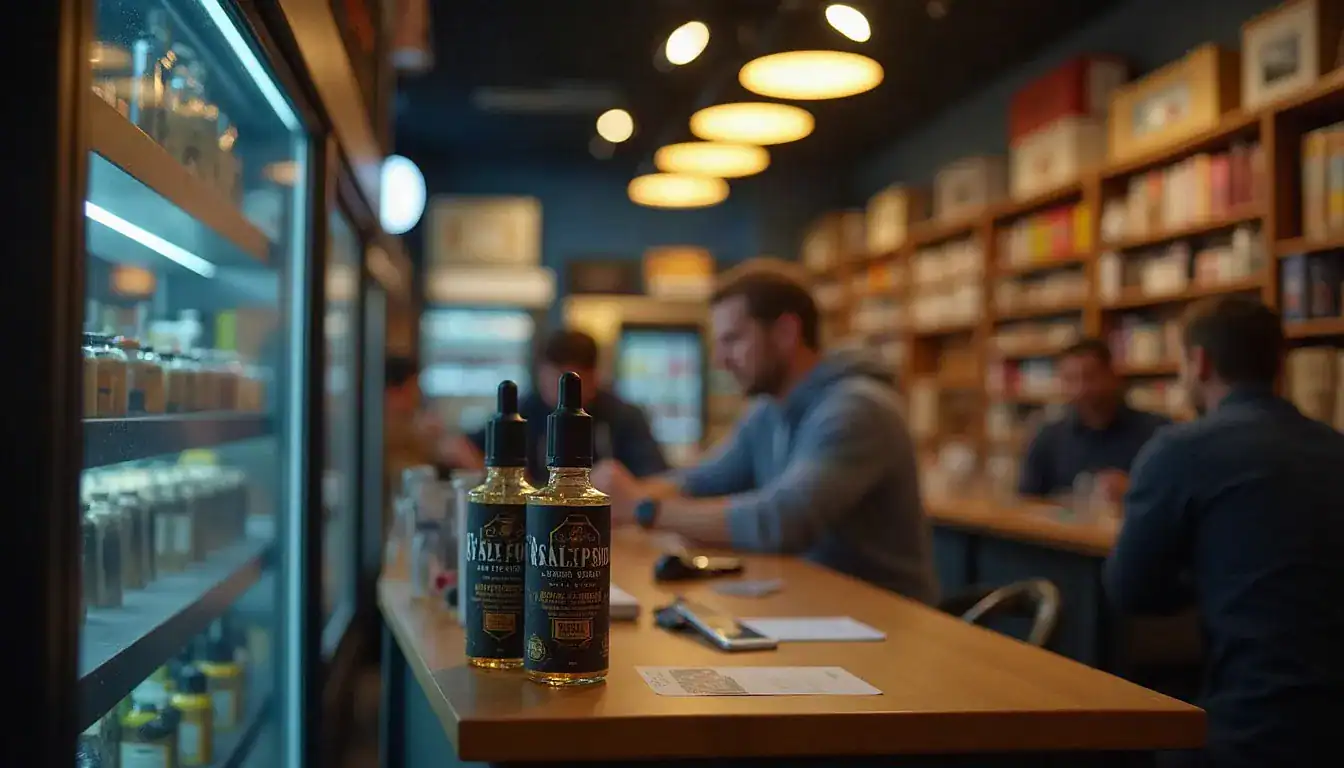
Counterfeit vape devices circulate through unauthorized retail channels more than most shoppers realize. This isn’t a rare problem — it’s common enough that reputable shops build entire verification processes around it.
The Counterfeit Problem in Vape Retail
Fake versions of popular disposables and pod kits show up on gray-market sites and even in some brick-and-mortar shops that don’t source directly from manufacturers. The scary part is that they often look identical to the real thing.
How to Check for Real vs. Fake Devices
A few checks take thirty seconds and save you from a bad battery:
- Check the packaging for printing quality — blurry logos or crooked labels are a red flag
- Weigh the device in your hand; counterfeits often feel lighter or cheaply built
- Compare the flavor name and branding against the manufacturer’s official site
- Look for a lot number or batch code printed on the box
QR Codes, Serial Numbers & Batch Verification
Most legitimate brands, Geek Bar included, print a QR code or scratch-off verification code on the packaging that links to an authentication page. If that code doesn’t scan or the shop can’t explain it, walk away. For a closer look at what authentic flavor lineups actually look like, Geek Bar’s flavor catalog is a useful reference point for comparison.
Red Flags at the Register
Watch for prices that seem too low, shops that won’t let you scan a verification code, or staff who dodge questions about sourcing. If a shop can’t tell you where its product comes from, that’s disqualifying on its own.
Why Buying from Authorized Retailers Matters
Authorized retailers buy directly from manufacturers or approved distributors, which cuts counterfeit risk dramatically. Counterfeit devices also carry real safety risk beyond a bad experience — bad wiring, unregulated batteries, and mislabeled nicotine strength have all been documented in seized shipments. Buying authorized is the single easiest way to protect yourself, and it costs nothing extra.
Nicotine Strength 101: Freebase vs. Salt Nic vs. Synthetic
Nicotine salts absorb into your bloodstream faster and smoother than freebase nicotine, which is why most high-strength disposables and pods use salt formulas instead. Freebase, by contrast, delivers a harsher throat hit at high concentrations. That’s great for sub-ohm mods, but rough for a small pod system.
| Type | Typical Strength | Best For |
|---|---|---|
| Freebase Nicotine | 3–12mg | Sub-ohm mods, high-wattage devices |
| Nicotine Salts | 20–50mg | Pod systems, disposables |
| Synthetic Nicotine | Varies (matches salt/freebase) | Tobacco-free preference, sensitive users |
Matching Nicotine Type to Your Device
Sub-ohm mods and rebuildable atomizers pair with freebase e-liquid at low strength because the massive vapor volume would make high-strength salt nic overwhelming. Anyone eyeing an RDA setup should stick to freebase in the 3-6mg range. Pod systems and disposables run on salt nic instead, since their smaller vapor output pairs better with a stronger nicotine hit.
How Much Nicotine Do You Actually Need?
Heavy smokers (a pack a day or more) usually start around 35-50mg salt nic. Light or social smokers do fine at 20-25mg. Never smoked before? Skip nicotine altogether or start at the lowest strength available. There’s no reason to build a habit you didn’t have.
✓ Pros of Salt Nic
- Smoother throat hit at high strength
- Faster nicotine satisfaction
- Ideal for heavy smokers switching over
✗ Cons of Salt Nic
- Not compatible with sub-ohm mods
- Higher dependency risk at max strength
- Fewer flavor options in ultra-high concentrations
Device Types & Longevity: Which Ones Actually Last
Pod systems and box mods generally outlast disposables by months or years, simply because they’re built for repeated use rather than a single charge cycle. That said, longevity depends heavily on build quality and how well you maintain the battery.
Pod Systems: Pros, Cons & Durability
Pod systems balance simplicity and lifespan well. Check out current top-ranked pod systems if you’re shopping for something that’ll survive daily use for six months or more.
Box Mods & Advanced Devices: Build Quality Matters
Box mods, especially ones with replaceable batteries, tend to last the longest of any category. The best box mods on the market today often run for years with basic coil maintenance. Mechanical mods require more hands-on knowledge but reward you with serious longevity if built correctly, something covered well in guides to the best mech mods.
Disposables: Convenience, Cost & the Environmental Cost
Disposables win on convenience and lose on everything else related to longevity. They’re designed to die after a few hundred puffs, and the per-puff cost usually works out higher than a refillable pod system once you run the numbers over a month. That short lifespan is also what drives the e-waste problem discussed later in this guide.
Warranty & Repair: What Shops Actually Cover
Most manufacturers cover manufacturing defects for 30-90 days, but physical damage or battery misuse voids that fast. Proper battery care extends device life significantly. Lithium-ion battery safety practices matter more than people think.
What to Bring & Ask on Your First Vapers Shop Visit
Walk in with payment, a valid government-issued photo ID, and, if you’re switching from cigarettes, a rough sense of your smoking history — how much you smoked and for how long. Staff will use that to steer you toward the right nicotine strength and device.

First-Timer Questions to Ask
- “What’s the difference between this pod and that one?”
- “Do you carry beginner-friendly kits for someone new to vaping?”
- “What’s your return policy on defective devices?”
- “Can you show me how to replace the coil?”
Planet of the Vapes frames this well — the shop’s whole job on visit one is helping you figure out “where to start” 6, not upselling you on the most expensive mod in the case.
Finding a Reputable Local Vapers Shop Near You
Beyond ID checks and return policies, a reputable shop’s staff will typically walk you through basic upkeep — coil changes, battery care, storage — before you leave with a new device. If nobody offers that, ask.
Red Flags: Signs of a Sketchy Vapers Shop
- No ID check at the register
- Unmarked or poorly printed packaging
- Prices dramatically below market average
- No visible return or defect policy
- Staff who rush you toward the most expensive option without asking questions first
Chicago, IL & Major Markets: Shop Culture Differences
Cities like Chicago, IL layer local ordinances on top of state and federal rules, so shop practices vary block to block. The fastest way to sort the good from the bad is to use find a vape shop near you to compare verified local options instead of guessing from a Google search.
The Environmental & Health Angle: What Shops Should Disclose
Each disposable device combines plastic, a lithium battery, and e-liquid residue, none of which breaks down cleanly, and multiplied across the volume sold monthly nationwide, the waste problem stops being hypothetical. Few shops mention this at checkout, and honestly, more of them should.

What Health Questions Should Staff Answer?
A good shop should walk you through nicotine dependency risk, especially for younger buyers, a concern regulators have flagged repeatedly, including in ongoing coverage of underage vaping trends and FDA response. Staff should also flag any known health advisories tied to specific device types or batches, rather than leaving customers to find out secondhand.
Frequently Asked Questions
Can I legally buy vapes online?
Yes, as long as the retailer verifies your age (21+) and ships to a state where the product is legal.
Can I buy vapes on Amazon?
Amazon restricts most nicotine-containing vape products, so you generally won’t find e-liquids or disposables with nicotine sold directly through the platform. Vape hardware without nicotine, like empty pod devices or accessories, sometimes appears but policies shift frequently.
Can I buy nicotine vapes in Chicago?
Yes, though the city and Illinois both impose specific rules on flavored products and sales locations. Local ordinances in Chicago can be stricter than state law, so availability varies by neighborhood.
Where is the best place to buy a vape?
The best place depends on what you value — online shops offer bigger selection and competitive pricing, while local shops offer hands-on guidance and immediate purchase. Beginners generally do better starting in person, where staff can match a device to their needs.
Do vape shops sell to people under 21?
No. Federal law prohibits the sale of vaping products to anyone under 21, and legitimate shops verify ID at every transaction, online or in-store 4.
How do I know if a nicotine strength is too high for me?
Signs include dizziness, nausea, or a harsh throat hit after just a few puffs. If that happens, drop to a lower strength immediately. There’s no benefit to pushing through discomfort.
Is “tobacco-free” nicotine the same as nicotine-free?
No, and this trips up a surprising number of first-time buyers. “Tobacco-free” typically refers to synthetic nicotine rather than nicotine derived from tobacco leaf — the product still contains active nicotine and carries the same dependency risk.
Sources
- rootssmokeshop.com smoke stuff. https://www.rootssmokeshop.com/
- huffandpuffers.com FEATURED PRODUCTS. https://www.huffandpuffers.com/
- vaping.com Are You 21 or older?. https://vaping.com/
- elementvape.com Element Vape – Online Vape Shop – Disposables, Kits & E-Liquids. https://www.elementvape.com/
- planetofthevapes.com Wondering where to start with vaping?. https://www.planetofthevapes.com/
- ivysmokeandvape.com How can wehelp you?. https://www.ivysmokeandvape.com/