
The Effects of Vaping
Key Takeaways
- Vape aerosol isn’t harmless water vapor — it contains nicotine, heavy metals, formaldehyde, and ultrafine particles that reach deep into lung tissue 5.
- Cigarette smoke contains thousands more chemicals and far higher concentrations of known carcinogens than vape aerosol, but “fewer toxins” doesn’t mean “no risk” — vaping still causes measurable lung and vascular changes 7.
- EVALI, the 2019 outbreak of vaping-related lung injury, was linked primarily to vitamin E acetate in illicit THC vape products, not standard nicotine e-cigarettes 5.
- Device wattage and heating temperature directly change aerosol chemistry — higher power settings generate more formaldehyde and other toxic byproducts 7.
- Secondhand vape aerosol exposes bystanders to nicotine and fine particulates, especially in enclosed spaces like cars and apartments 45.
The single most useful takeaway: if you don’t currently vape or smoke, there’s no version of vaping that qualifies as a safe habit to start.
Ask ten vapers what’s actually in their pod, and you’ll get ten different answers — most of them wrong. “It’s just flavored water vapor” is the line the industry has sold for over a decade. It’s also false. What comes out of an e-cigarette is an aerosol: a suspension of ultrafine liquid droplets and particulates carrying nicotine, heavy metals, and a rotating cast of chemical byproducts generated the moment a heating coil hits your e-liquid 56.
Roughly 4.5% of U.S. adults currently use e-cigarettes, and the number climbs sharply among younger age groups, according to CDC surveillance data 2. That’s not a fringe habit anymore. It’s a mainstream one, and the health consequences are still being written in real time, one epidemiological study at a time.
Here’s my honest take: the effects of vaping sit in an uncomfortable middle ground. Vaping almost certainly exposes users to fewer toxic chemicals than combustible cigarettes do 7. But “fewer than cigarettes” is a low bar — cigarettes are, after all, one of the deadliest consumer products ever legally sold 3. Fewer toxins doesn’t mean zero harm, and it definitely doesn’t mean safe. If you’re currently vaping and telling yourself it’s basically harmless, I’d push back on that. Hard.
This piece walks through what the research actually shows — lung effects, cardiovascular changes, cancer risk, device chemistry, secondhand exposure, and the ingredients doing the damage. No scare tactics. No industry talking points either. Just the data.
What Is Vaping and How Does It Work?
The Effects of Vaping on Lung Health
Vaping and Cardiovascular Health
Cancer Risk and Carcinogenic Compounds
Device Variability and Aerosol Composition
Secondhand and Thirdhand Vape Exposure
The Role of Vaping Ingredients: Propylene Glycol and Vegetable Glycerin
THC Vaping and EVALI
Vaping vs. Smoking: Harm Reduction or Gateway?
What Is Vaping and How Does It Work?
Vaping means inhaling an aerosol produced by heating an e-liquid — typically a mix of propylene glycol, vegetable glycerin, nicotine, and flavoring chemicals — using a battery-powered device 56. Unlike a cigarette, there’s no combustion. There’s no burning tobacco leaf, no smoke in the traditional sense. But don’t let that fool you into thinking it’s just “flavored steam.”

How Vape Devices Function
Every vape device shares the same basic architecture: a battery, a heating coil (often called an atomizer), and a reservoir or pod holding the e-liquid 6. When you press the fire button or draw on the mouthpiece, the battery sends current through the coil. The coil heats rapidly — often exceeding 400°F depending on wattage — vaporizing a thin film of e-liquid on contact 7.
That vaporized liquid doesn’t stay a gas for long. It condenses almost instantly into an aerosol: a cloud of microscopic droplets suspended in air, small enough to travel deep into lung tissue 5. This is the same basic physics behind an asthma inhaler or a fog machine — heat plus liquid plus rapid cooling equals aerosol, not vapor.
Why “Vapor” Is Misleading: Aerosol vs. Water Vapor
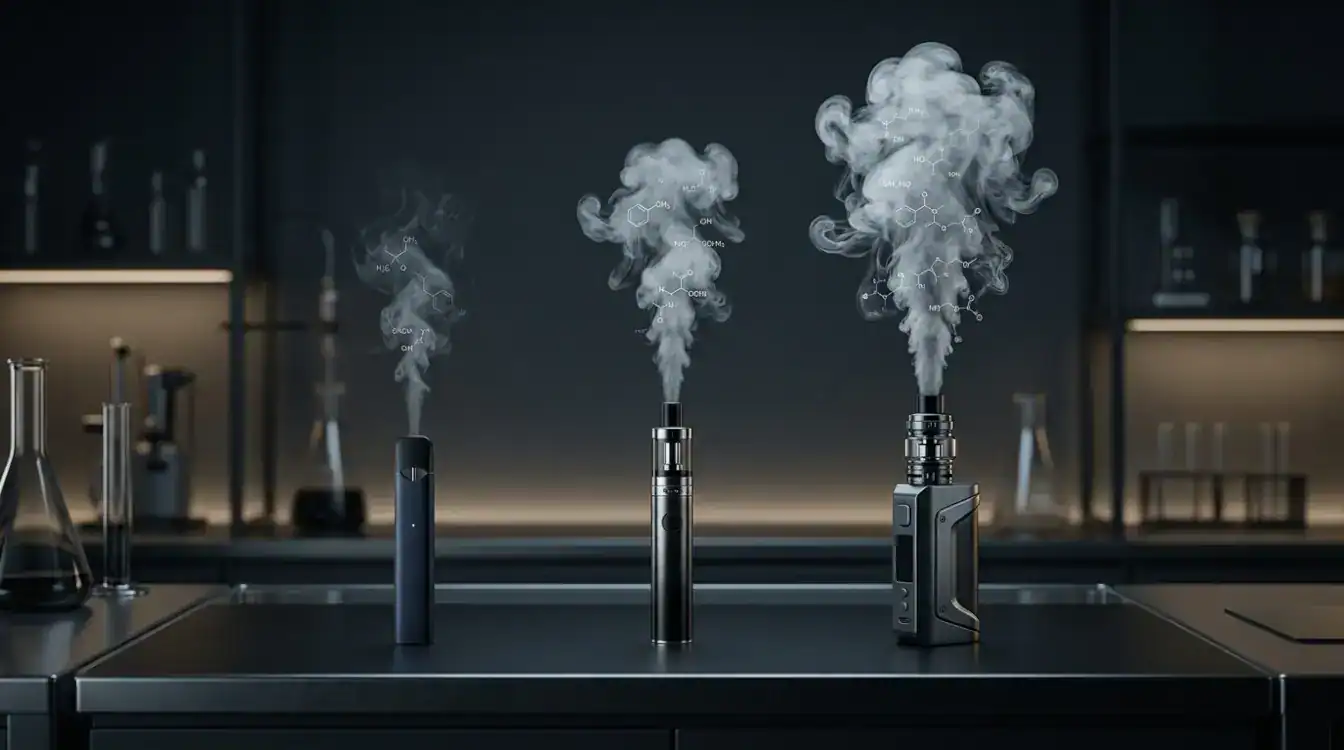
Water vapor is water in gas form — nothing else. Vape aerosol is a completely different animal, carrying nicotine, ultrafine particulate matter, heavy metals like lead and nickel leached from the heating coil, and volatile organic compounds including formaldehyde and acetaldehyde 57. The American Lung Association has been blunt about this: what you’re inhaling is “an aerosol, not a harmless water vapor,” and the distinction matters because aerosol particles carry chemical passengers that plain water vapor never could 7.

Why does the industry keep using the word “vapor,” then? Simple. It sounds clean. It sounds safe. Marketing language and chemistry are two very different disciplines, and only one of them is regulated by the FDA.
The Effects of Vaping on Lung Health
The effects of vaping on the lungs range from immediate airway irritation to long-term inflammatory damage, and the severity scales with how often someone vapes, what device they use, and what’s actually in the e-liquid 57. This is the organ system where researchers have the clearest, most consistent findings — and where the case against vaping is strongest.

Short-Term Lung Effects
Coughing, throat irritation, and shortness of breath show up in new vapers within days to weeks of regular use, according to clinical observations reported by the Cleveland Clinic 6. Some users also report chest tightness, particularly after switching to higher-nicotine e-liquids or increasing their device’s wattage.
These aren’t just nuisance symptoms. They’re signals of airway inflammation — your lungs responding defensively to a foreign aerosol they weren’t built to process 7. Short-term irritation is the canary in the coal mine. Ignore it long enough, and it tends to escalate.
Long-Term Lung Damage and Scarring
Chronic vaping is associated with reduced lung function, increased airway resistance, and in severe cases, a rare but serious condition called popcorn lung (bronchiolitis obliterans), tied historically to diacetyl — a buttery-flavor chemical once common in e-liquids 7. The American Lung Association has documented cases of vaping-associated lung injury requiring hospitalization, some severe enough to cause permanent scarring 7.
Here’s where I’ll offer an opinion: the “we don’t have enough long-term data” argument gets used constantly to wave away vaping concerns, and it’s wearing thin. We have enough short- and medium-term data to know inflammation happens fast and doesn’t resolve itself just because someone switches flavors. Waiting twenty years for definitive longitudinal studies before taking the early warning signs seriously isn’t caution — it’s denial with better PR.
Chemical Comparison: Vape Aerosol vs. Cigarette Smoke
Cigarette smoke contains over 7,000 chemicals, at least 70 of which are known carcinogens, including polonium-210, benzene, and tar in massive quantities generated by combustion 34. Vape aerosol skips combustion entirely, which means it’s largely free of tar and carbon monoxide — two of the most damaging byproducts in cigarette smoke 7.
But “largely free of” isn’t the same as “free of.” Vape aerosol still contains formaldehyde, acetaldehyde, acrolein, and heavy metals like lead, chromium, and nickel — leached from the heating coil itself — though generally at lower concentrations than combustible tobacco smoke produces 57. The honest comparison looks like this:
| Chemical/Toxin | Present in Cigarette Smoke | Present in Vape Aerosol |
|---|---|---|
| Tar | Yes — high concentration | Absent (no combustion) |
| Carbon monoxide | Yes — high concentration | Generally absent |
| Formaldehyde | Yes | Yes — lower but present, rises with device wattage |
| Nicotine | Yes | Yes — often at comparable or higher concentrations |
| Heavy metals (lead, nickel, chromium) | Yes — from tobacco and paper | Yes — leached from heating coil |
| Diacetyl (linked to popcorn lung) | Yes — trace | Historically yes in flavored e-liquids |
That table alone should end the “vaping is basically harmless” argument. It’s not the same risk profile as smoking — it’s a different risk profile, and in some categories (heavy metals, certain flavoring chemicals) vaping introduces exposures cigarettes don’t 57.
Threshold Data: How Much Vaping Causes Detectable Lung Injury?
Measurable declines in lung function and airway inflammation markers have shown up in research subjects after just a few months of regular vaping — we’re talking daily use over roughly 3 to 6 months, not years 7. That’s a shorter runway than most people assume.
This matters because a lot of vapers treat the habit as a “someday” problem — something that might catch up with them decades down the line, if ever. The research doesn’t support that level of comfort. Airway inflammation and reduced lung function show up early. Frequency is the dose that matters most here — someone vaping a pod a day faces a very different risk trajectory than an occasional social vaper, and lumping both groups together in casual conversation does nobody any favors.
Vaping and Cardiovascular Health
Does vaping cause heart problems? Yes — nicotine exposure through vaping raises heart rate and blood pressure, and emerging research links regular e-cigarette use to increased arterial stiffness, a known precursor to cardiovascular disease 56. The mechanism isn’t mysterious. Nicotine is a stimulant, and stimulants tax the cardiovascular system regardless of delivery method.

Does Vaping Cause Heart Problems?
Nicotine triggers the release of adrenaline, which speeds up heart rate and constricts blood vessels 6. Do that daily, multiple times a day, and you’re asking the cardiovascular system to run a low-grade stress response almost continuously. Cleveland Clinic cardiology guidance flags this repeated strain as a legitimate long-term concern, not a theoretical one 6.
Short-term spikes in blood pressure are well documented. What’s still being nailed down is the long-term cumulative risk — whether years of vaping produce heart attack and stroke rates comparable to smoking, lower, or somewhere in between. Early signals point toward real but likely lower risk than combustible cigarettes, though “lower than one of the most dangerous consumer products on Earth” is a strange thing to market as a selling point.
Nicotine’s Effect on Blood Vessels
Chronic nicotine exposure is linked to endothelial dysfunction — a fancy way of saying the inner lining of your blood vessels stops working properly, losing some of its ability to dilate and regulate blood flow 6. Endothelial dysfunction is an early marker doctors watch for because it precedes more serious cardiovascular events by years, sometimes decades.
Younger vapers often assume cardiovascular risk is an “old person’s problem.” It isn’t. Endothelial changes can start showing up in users in their twenties and thirties, particularly among those vaping high-nicotine products daily 6.
Propylene Glycol and Cardiovascular Risk
Propylene glycol, one of the two main base liquids in most e-liquids, hasn’t been studied nearly as extensively for cardiovascular effects as nicotine has. What limited data exists doesn’t show the same direct vascular impact nicotine does, but inhaling any aerosolized substance daily, for years, introduces a level of uncertainty that a “probably fine” shrug doesn’t quite cover.
I’ll say this plainly: the cardiovascular case against vaping is less airtight than the lung case, but it’s not nothing. Anyone with existing heart conditions — arrhythmia, hypertension, prior cardiac events — should treat vaping as a genuine risk factor, not an afterthought.
Cancer Risk and Carcinogenic Compounds
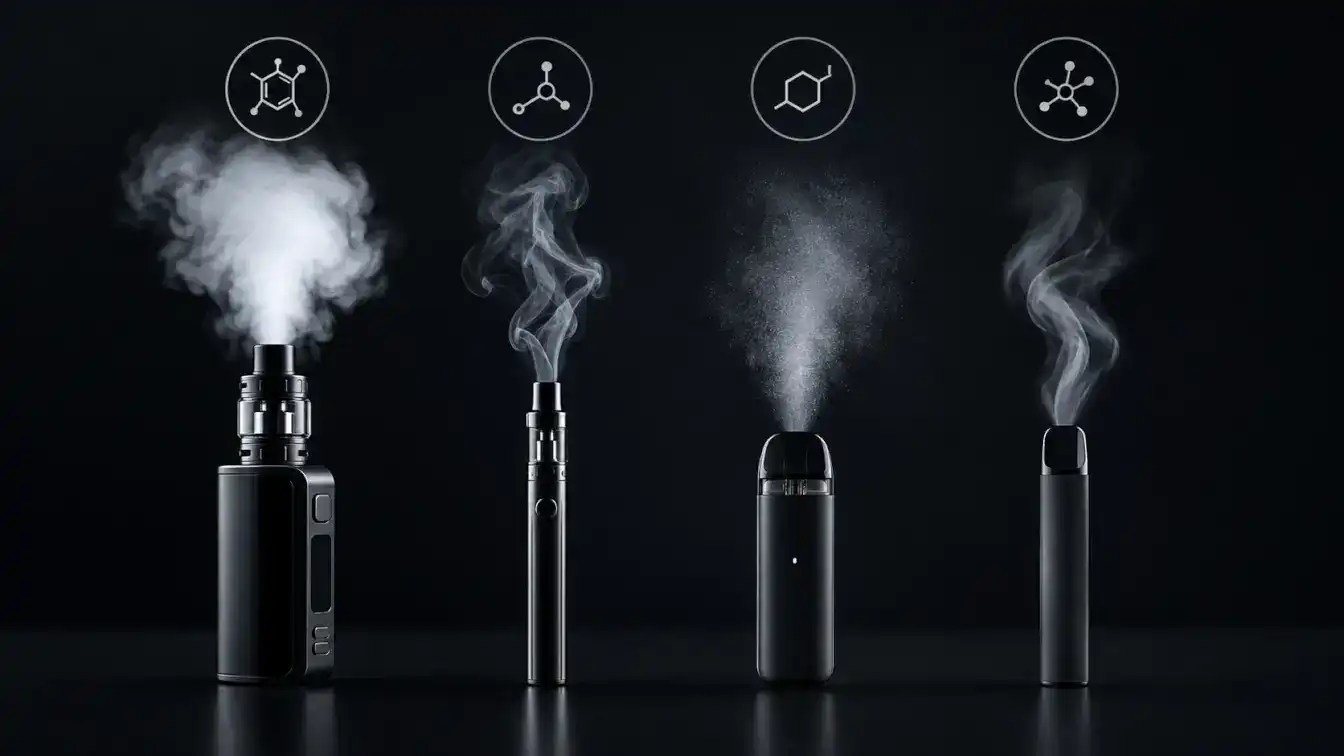
Does vaping cause cancer? The honest answer is that it’s too early to say definitively, but vape aerosol does contain known carcinogens — including formaldehyde and acetaldehyde — at lower concentrations than cigarette smoke, and lower concentration doesn’t mean zero risk 57. Cancer typically takes decades to develop after carcinogen exposure, and e-cigarettes have only been widely used in the U.S. since around 2010. We simply haven’t had enough time to run the kind of long-term population studies that definitively answer this question for vaping the way we can for smoking.
Does Vaping Cause Cancer?
What we know: cigarette smoke contains dozens of Group 1 carcinogens — the highest classification the International Agency for Research on Cancer assigns — at high, sustained concentrations from tobacco combustion 34. Vape aerosol contains some of the same carcinogenic compounds, particularly formaldehyde and acrolein, but generally in smaller amounts because there’s no burning tobacco leaf generating them 57.
Smaller amounts of a carcinogen is still exposure to a carcinogen. That’s not fear-mongering — it’s just how carcinogen exposure works. There’s no scientifically established “safe threshold” for something like formaldehyde inhalation, so framing reduced exposure as “safe” misrepresents the research.
Formaldehyde and Other Aldehydes in Vape Aerosol
Formaldehyde forms when e-liquid overheats — particularly at higher wattages or when a coil runs “dry” from insufficient liquid saturation 7. Acetaldehyde and acrolein form through similar thermal degradation processes. All three are respiratory irritants; formaldehyde specifically carries a Group 1 carcinogen classification tied to nasopharyngeal cancer risk in occupational exposure studies.
The amount generated varies wildly by device and user behavior, which is exactly why blanket statements — in either direction — misrepresent the reality. A low-wattage pod system used properly generates meaningfully less formaldehyde than a high-wattage mod running hot, dry coils 7.
The Role of Heating Temperature and Device Wattage
Higher coil temperatures push more e-liquid past its thermal breakdown point, generating more formaldehyde, acetaldehyde, and other aldehydes per puff 7. This is a straightforward chemistry problem, not a mystery. Sub-ohm mods running at 60-80 watts produce meaningfully different — and generally more toxic — aerosol chemistry than a basic 15-watt pod system.
This is a genuinely underappreciated point in most vaping coverage: the device matters as much as the liquid. Two people vaping identical e-liquid at different wattages are inhaling measurably different chemical cocktails. We’ll break down exactly how in the next section.
Device Variability and Aerosol Composition
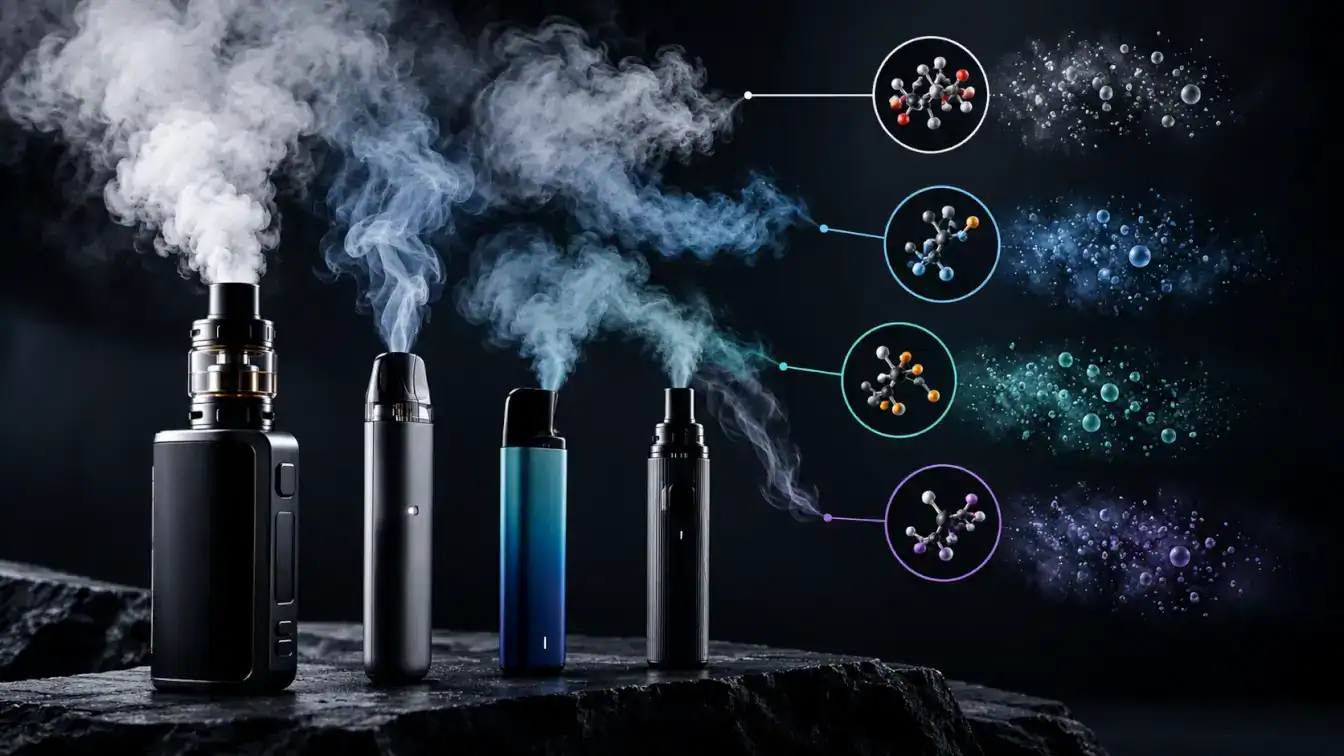
Different vape devices produce meaningfully different aerosol chemistry, and wattage is the single biggest variable driving that difference 7. A device isn’t just a delivery mechanism — it’s a chemistry set, and how you set it up changes exactly what you’re inhaling.
Low-Wattage vs. High-Wattage Devices
Low-wattage pod systems, typically running 10-25 watts, heat e-liquid gently enough to minimize thermal breakdown byproducts like formaldehyde and acetaldehyde 7. High-wattage sub-ohm mods, often running 60-100+ watts, vaporize liquid faster and hotter, which generates measurably more of those same toxic aldehydes per session 7. If you’re curious how these categories actually differ in practice, the different types of vaping devices break down pretty differently once you factor in coil design and airflow, not just wattage alone.
This isn’t a minor technical footnote. It’s the difference between a device engineered for controlled, lower-risk use and one engineered for maximum vapor production regardless of chemical consequence. Sub-ohm vaping in particular pushes coils harder and faster, and understanding sub-ohm vaping practices matters if you’re going to use that kind of setup at all.
Temperature-Dependent Toxin Production
Coil temperature and e-liquid saturation interact in a way most vapers never think about. A coil running “dry” — meaning the wicking material isn’t saturated enough to keep pace with the heat — spikes formaldehyde production dramatically compared to a properly saturated coil at the same wattage 7. This is part of why wicking material quality actually matters for health outcomes, not just flavor purity or vapor production.
Here’s my take: most of the vaping community treats coil and cotton choice as a flavor-chasing hobby detail. It’s not just that. Poor wicking material or overdue coil changes measurably increase toxic byproduct generation, and that’s a health issue dressed up as a hardware preference.
Pod Systems, Mods, and Disposables: Composition Differences
Disposable vapes, pod systems, and rebuildable mods don’t just differ in convenience — they differ in the consistency of their aerosol output. Disposables and sealed pod systems use fixed coil designs calibrated by the manufacturer, generally producing more predictable (and often lower) toxin output than open-system mods where users control wattage manually 67.
That predictability comes at a cost, though. Once a disposable’s coil degrades near end-of-life, aerosol chemistry can shift unpredictably, and most users have no way to detect that shift happening in real time. Battery quality plays into this too — a device running on a degraded or mismatched cell can overheat coils unpredictably, which is one more reason battery selection isn’t just a performance question.
✓ Pros of Lower-Wattage Devices
- Lower formaldehyde and acetaldehyde output per puff
- More consistent, predictable aerosol chemistry
- Generally gentler on airway tissue for sensitive users
✗ Cons of Lower-Wattage Devices
- Less vapor production and throat hit for users who prefer that
- Still contains nicotine, heavy metals, and irritant chemicals
- Doesn’t eliminate long-term lung or cardiovascular risk
Secondhand and Thirdhand Vape Exposure
Secondhand vape aerosol exposes bystanders to nicotine, ultrafine particles, and volatile organic compounds, particularly in enclosed spaces with poor ventilation 45. Unlike secondhand cigarette smoke, which disperses more visibly and has been studied for decades, secondhand vape exposure is a newer research area — but the early data isn’t reassuring.
Indoor Air Quality and Aerosol Concentration
Vape aerosol raises indoor particulate matter concentrations measurably, especially in small, poorly ventilated rooms, cars, and apartments 45. The CDC’s secondhand smoke guidance, while focused historically on combustible tobacco, established the underlying principle that airborne exposure to another person’s habit carries real health risk for bystanders — a principle that extends logically to vape aerosol given its particulate and nicotine content 4.
A car is probably the worst-case scenario here. Confined space, poor airflow, close proximity — passengers in a vehicle with an active vaper get a concentrated dose of secondhand aerosol whether they want it or not.
Nicotine Residue on Surfaces
Thirdhand exposure — nicotine and chemical residue settling onto furniture, carpets, and surfaces after vaping indoors — is a documented phenomenon, though research specific to vape residue (as opposed to cigarette residue) is still developing 5. Residue doesn’t just disappear when the cloud clears. It settles, and it lingers.
Risks to Children and Bystanders
Children face disproportionate risk from both secondhand and thirdhand exposure because of their smaller body size, higher respiratory rate relative to body weight, and tendency to put hands and objects in their mouths after touching contaminated surfaces 45. Nobody vaping around kids indoors is doing them a favor, full stop.
If you’re a parent who vapes, take this seriously: step outside, don’t vape in the car with kids present, and don’t assume a fruity flavor cloud is any gentler on a child’s lungs than cigarette smoke would be.
The Role of Vaping Ingredients: Propylene Glycol and Vegetable Glycerin
Propylene glycol (PG) and vegetable glycerin (VG) make up the bulk of most e-liquids by volume, and while both are recognized as safe for ingestion and topical use, their safety profile when inhaled chronically is far less settled 67. This is a distinction that gets lost constantly — “safe to eat” and “safe to inhale daily for years” are not the same claim.
Propylene Glycol: What We Know
Propylene glycol is a synthetic compound used widely in food, cosmetics, and pharmaceuticals, and it carries FDA “generally recognized as safe” status for ingestion 6. Inhalation is a different exposure route entirely, and some vapers report throat and airway irritation specifically attributable to PG content, particularly at higher PG ratios 67.
Chronic inhalation studies on PG specifically remain limited. That gap gets exploited constantly by people trying to claim vaping is “just PG and VG, both totally safe” — which is a half-truth stretched well past what the evidence supports.
Vegetable Glycerin Safety Data
Vegetable glycerin is generally considered less irritating to the throat than PG, which is why high-VG e-liquids are popular among users prone to throat irritation 6. It also produces thicker vapor clouds, one reason sub-ohm vapers often favor high-VG blends. But “less irritating” doesn’t mean “inert” — chronic inhalation of any aerosolized glycerin compound introduces exposure that simply hasn’t been studied over the multi-decade timelines we have for tobacco smoke.
If you’re choosing between e-liquid ratios, understanding PG and VG differences will tell you more about throat feel and vapor production than any generic “PG vs VG” summary — but don’t mistake ratio choice for a health decision with a clearly safer winner.
Flavoring Chemicals and Airway Irritation
Flavoring chemicals are, frankly, the wild card of the entire e-liquid category. Compounds generally recognized as safe for oral ingestion — think diacetyl, cinnamaldehyde, or vanillin — haven’t been thoroughly tested for what happens when you inhale them directly into lung tissue day after day 7. Diacetyl’s link to bronchiolitis obliterans (popcorn lung) is the clearest cautionary example: a flavor additive perfectly fine in food, shown to cause serious respiratory damage when inhaled repeatedly 7.
This is where I’ll be blunt: the flavor industry built an entire product category on ingredients tested for the wrong exposure route. Sweet, dessert-flavored e-liquids in particular tend to carry higher concentrations of these irritant compounds, precisely the flavors most popular with younger users.
THC Vaping and EVALI
EVALI (E-cigarette or Vaping product Use-Associated Lung Injury) is a severe lung condition that caused a nationwide outbreak of hospitalizations and deaths across the United States in 2019, linked overwhelmingly to illicit THC vape products containing vitamin E acetate, not standard nicotine e-cigarettes 5. It remains one of the clearest, most severe examples of what can go wrong when unregulated additives enter the vaping supply chain.

What Is EVALI?
EVALI presented with symptoms including severe shortness of breath, chest pain, vomiting, and fever, and it sent thousands of people to U.S. emergency rooms during the height of the 2019 outbreak, with cases reported across nearly every state including Florida 5. Some cases proved fatal. It was a genuine public health crisis, not a media exaggeration — and it exposed just how little oversight existed in the illicit THC vape supply chain at the time.
Vitamin E Acetate and Other Adulterants
Vitamin E acetate, used as a thickening agent in illicit THC vape cartridges to dilute oil and stretch product volume, was identified by health investigators as the primary chemical linked to EVALI cases 5. When inhaled, vitamin E acetate interferes with lung surfactant function — the substance that keeps tiny air sacs in the lungs open — leading to the severe respiratory symptoms seen in EVALI patients.
This wasn’t a nicotine vaping problem. It was an unregulated, black-market THC problem, and conflating the two muddies a distinction that actually matters for consumer safety.
THC Vape Safety in Regulated vs. Illicit Markets
Regulated THC vape products sold through licensed dispensaries in states with legal cannabis markets undergo testing for additives like vitamin E acetate that illicit products don’t 5. That regulatory gap is the entire story of EVALI: the outbreak tracked overwhelmingly with illicit, off-market THC cartridges rather than products purchased through licensed, tested dispensary channels.
If there’s one unambiguous piece of advice in this entire piece, it’s this: never buy THC vape products from an unregulated or off-market source. The EVALI outbreak proved exactly how dangerous that gamble can be.
Vaping vs. Smoking: Harm Reduction or Gateway?
Vaping likely exposes users to fewer harmful chemicals than combustible cigarettes, but it introduces nicotine addiction risk to a growing population of young people who never would have smoked otherwise, and that tradeoff is at the center of the entire public health debate 25. Both things are true simultaneously, and pretending otherwise — in either direction — misrepresents the evidence.

Absolute Risk Comparison
Cigarette smoking remains one of the leading preventable causes of death in the United States, driven by tar, carbon monoxide, and dozens of high-concentration carcinogens generated through combustion 23. Vaping avoids combustion entirely, which plausibly makes it less immediately harmful on a per-use basis. But “less harmful than one of the deadliest consumer products in history” is a low bar, and it shouldn’t be mistaken for “safe.”
For a deeper look at the numbers behind these comparisons, vaping statistics lay out adoption rates, age breakdowns, and health outcome data that put a lot of this debate in clearer context.
Nicotine Addiction and Youth Uptake
Youth vaping rates climbed sharply over the past decade, prompting regulatory crackdowns across the U.S. aimed at flavored products and marketing practices that critics argue specifically targeted younger users 25. This is the part of the vaping story that frustrates me most. An entire generation that largely avoided cigarettes got hooked on nicotine through a product marketed as the safer alternative — and plenty of them never smoked a single cigarette first. That’s not harm reduction. That’s a new addiction pipeline, and the youth vaping crackdown intensifying across the country reflects just how seriously regulators have started treating it.
Vaping as a Smoking Cessation Tool
Some adult smokers do successfully use vaping as a step-down tool to quit cigarettes entirely, though results vary significantly based on individual approach, device choice, and nicotine tapering strategy 6. It’s not a guaranteed path off nicotine, and plenty of people just end up dual-using both products indefinitely, which arguably combines rather than reduces total exposure risk.
✓ Pros of Switching from Smoking to Vaping
- Eliminates tar and carbon monoxide exposure from combustion
- Removes thousands of combustion byproducts present in cigarette smoke
- Some users successfully taper nicotine down to zero over time
✗ Cons of Switching from Smoking to Vaping
- Still delivers nicotine and maintains chemical dependency
- Introduces new exposures like heavy metals and flavoring chemical irritants
- Many users end up vaping indefinitely rather than quitting nicotine entirely
If quitting nicotine altogether is the actual goal, it’s worth being honest that vaping isn’t a finish line — it’s a detour that some people successfully ride all the way to zero, and others just live on indefinitely.
Conclusion
The effects of vaping don’t fit neatly into either the “totally safe alternative” narrative or the “just as bad as smoking” narrative — the real picture sits somewhere in between, and it’s more nuanced than either side wants to admit. Vaping avoids combustion, cutting out tar and carbon monoxide, two of the most damaging components of cigarette smoke 7. But it introduces its own risks: nicotine dependency, heavy metal exposure from heating coils, formaldehyde generation at high wattages, and flavoring chemicals never designed for repeated inhalation 57.
My honest opinion, after going through all of this: vaping is a reasonable harm-reduction tool for an adult smoker actively trying to quit combustible cigarettes, used deliberately and temporarily. It’s a poor choice as a recreational habit for someone who never smoked in the first place. Those are two completely different use cases, and public health messaging often collapses them into one confusing conversation.
If you’re currently vaping, know what’s actually in your device and liquid, keep your wattage as low as your setup allows, replace coils on schedule, and never buy THC cartridges from an unregulated source. If you’re trying to quit entirely, tapering off vaping systematically beats cold-turkey attempts for most people. And if you’re not vaping at all right now? Don’t start. There’s no version of this habit that qualifies as risk-free, and the data on lung inflammation, cardiovascular strain, and unresolved long-term cancer risk all point the same direction.
Frequently Asked Questions

What are the 5 side effects of vaping?
Common side effects include throat and airway irritation, coughing, shortness of breath, increased heart rate, and nausea, particularly in new users or those using high-nicotine e-liquids 67. Some users also report headaches and dry mouth, both linked to propylene glycol content in the aerosol.
What happens to your body if you vape every day?
Daily vaping exposes your lungs and cardiovascular system to repeated nicotine, heavy metals, and irritant chemicals, which can produce measurable airway inflammation and elevated heart rate within months of regular use 67. Over time, this pattern is linked to reduced lung function and increased arterial stiffness, both established precursors to more serious chronic disease.
What can 3 years of vaping do to you?
Three years of regular vaping can produce sustained airway inflammation, reduced lung function, and early markers of cardiovascular strain, particularly in users who vape daily at higher wattages 67. The exact severity varies by device type, e-liquid composition, and frequency of use, but sustained daily use over that timeframe moves well past the “just experimenting” risk category.
Is 100 puffs of a vape a day bad?
100 puffs a day represents heavy, frequent use that meaningfully increases nicotine exposure, airway irritation, and cumulative inhalation of aldehydes and heavy metals compared to occasional or social vaping 57. At that frequency, the cardiovascular and respiratory strain described throughout current research applies at the higher end of the risk spectrum, not the lower end.
Is vaping bad for you?
Yes — vaping exposes users to nicotine, heavy metals, and toxic byproducts like formaldehyde, and it’s linked to lung inflammation, reduced lung function, and cardiovascular strain, even though it likely carries less risk than combustible cigarette smoking 567. “Less bad than smoking” is not the same claim as “safe.”
Can vaping cause heart problems?
Yes — nicotine in vape aerosol raises heart rate and blood pressure and is linked to arterial stiffness and endothelial dysfunction, both established risk factors for long-term cardiovascular disease 6. The cardiovascular research on vaping is younger than the lung research, but the early signals point toward genuine, not theoretical, risk.
Sources
- cdc.gov Smoking and Tobacco Use. https://www.cdc.gov/tobacco/index.html
- cdc.gov Cigarette Smoking. https://www.cdc.gov/tobacco/about/index.html
- cdc.gov Secondhand Smoke. https://www.cdc.gov/tobacco/secondhand-smoke/index.html
- cdc.gov E-cigarettes (Vapes). https://www.cdc.gov/tobacco/e-cigarettes/index.html
- my.clevelandclinic.org Vaping (E-Cigarettes). https://my.clevelandclinic.org/health/treatments/21162-vaping
- lung.org The Truth About What Vaping Is Doing to Your Body. https://www.lung.org/blog/illnesses-vaping-causes