

Hotcig Centaur RTA Tank Review (2026)
Updated 2026-09-08 — Originally published 2017-11-20
Editor’s Note: This product has since been superseded by the Centaur 24 RTA by Hotcig – Two-Post (Discontinued). This review covers the original model, which is no longer widely available.
Hotcig made some noise years back with a single-coil RTA called the Centaur, and this Hotcig Centaur RTA Tank Review looks at whether it still holds up in 2026. The RTA market wasn’t short on options back then, and it’s even more crowded now. Still, some builders keep coming back to this tank because it’s simple, cheap, and gets flavor right without much fuss.
This review breaks down what you actually get, how it performs, and whether it’s still worth tracking down secondhand or through clearance listings. Spoiler: it’s a decent tank, but you should know what you’re getting into before you go hunting for one.
Key Takeaways
- Flavor performance is genuinely strong for a budget single-coil tank, rivaling pricier options from bigger brands.
- Airflow uses a dual-sized, 5-slot system that felt precise across our testing, not just a gimmick spec on paper.
- No leaking turned up during testing, and the retail bundle included spare parts, o-rings, and a build tool.
- Hotcig discontinued the original Centaur. It’s been replaced by the two-post Centaur 24, so treat any listing you find as secondhand or clearance stock.
What You Get
The Hotcig Centaur is a single-coil RTA (24mm diameter) built for people who like tinkering with builds rather than dropping in pre-made coils. If you’re new to rebuildables and aren’t sure how an RTA differs from an RDA, our guide on the difference between RDA and RTA is worth a read first.
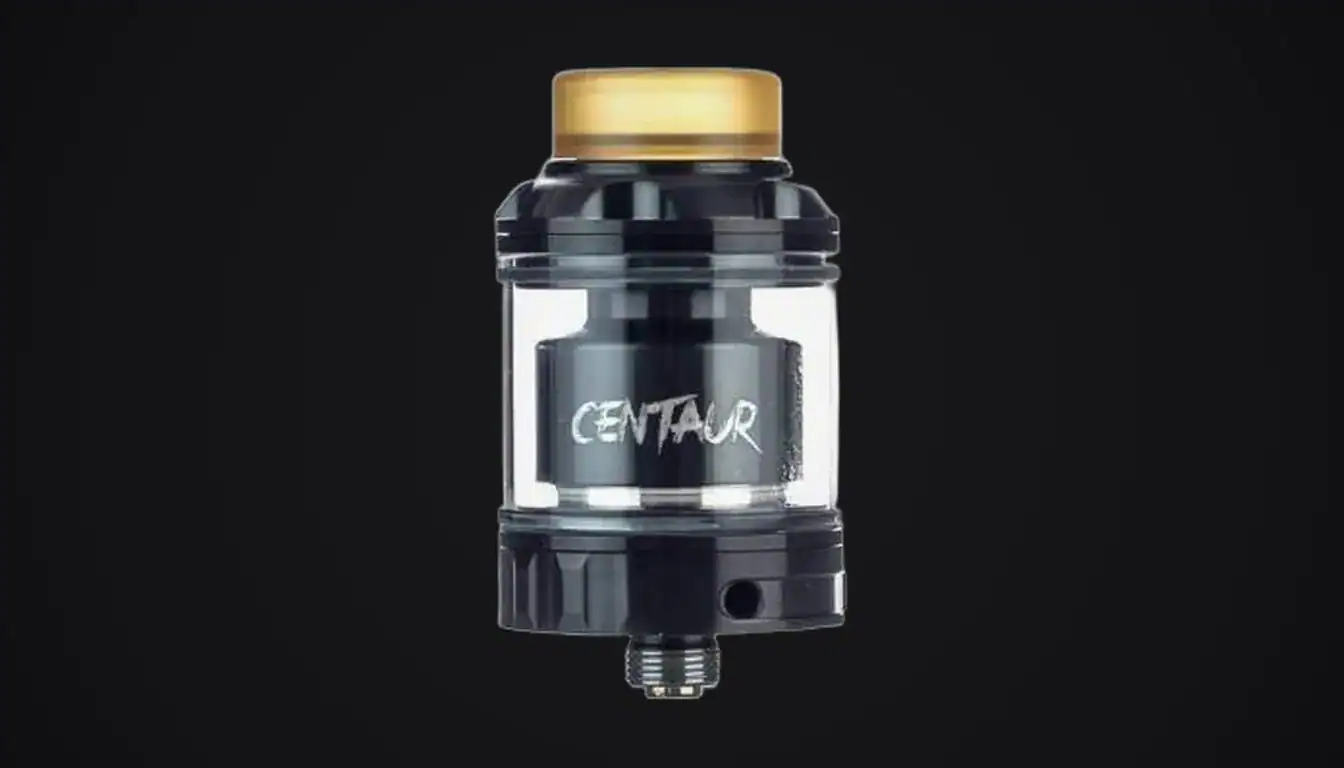
The build deck is roomy and beginner-friendly, with 3mm terminal posts and oversized wicking slots. Two gold-plated posts give you plenty of room to secure leads without fighting tiny screws. Wicking slots measure 4mm by 6mm, so tucking material in is straightforward even if your hands aren’t exactly surgeon-steady.
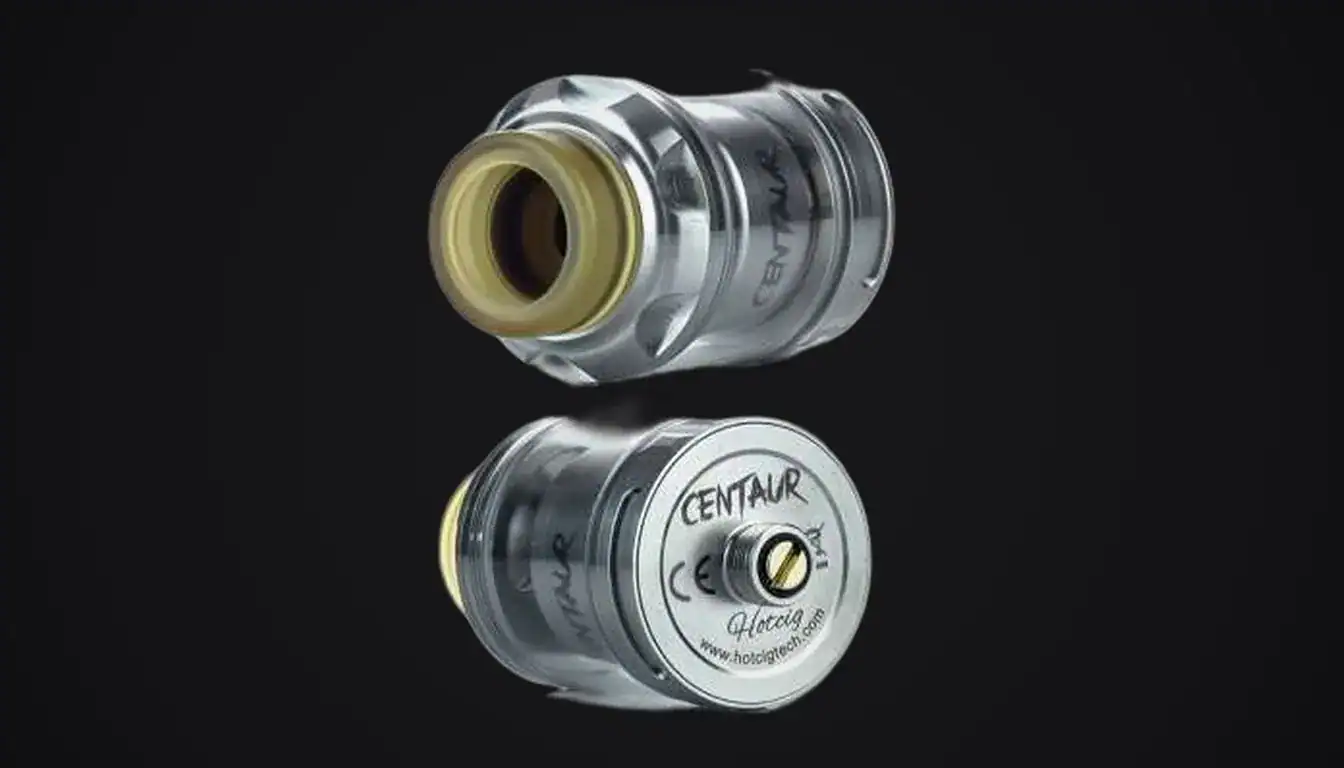
Airflow comes from a dual-sized, 5-slot system you can adjust to taste. We ran it through several airflow configurations, from wide open to nearly closed, and the adjustments felt precise rather than vague. That matters if you’re particular about draw resistance.
Tank capacity starts at 2ml but extends to 4ml with the included extension piece. Honestly, 2ml alone feels stingy for daily use. You’d be refilling constantly. The 4ml setup is the sweet spot for most people, cutting down on refills without turning the tank into something bulky. Top-fill design means you just pop the top cap and pour, which keeps mess to a minimum.
Power demands are modest since it’s a single-coil setup, but pairing it with a quality mod still makes a difference in how the tank performs.
✓ Pros
- Spacious, beginner-friendly build deck
- Adjustable 5-slot airflow with real range
- 4ml capacity with the included extension
- Top-fill design minimizes spills
✗ Cons
- Discontinued — new stock is scarce in 2026
- Not built for big clouds
- 2ml base tank is too small without the extension
Flavor
Flavor is where the Centaur earns its keep. Airflow channels do a good job preserving the juice’s natural taste instead of muting it, which is a common complaint with cheaper tanks. We ran it against several flavor-focused tanks during testing, and the Centaur matched or beat most of them.

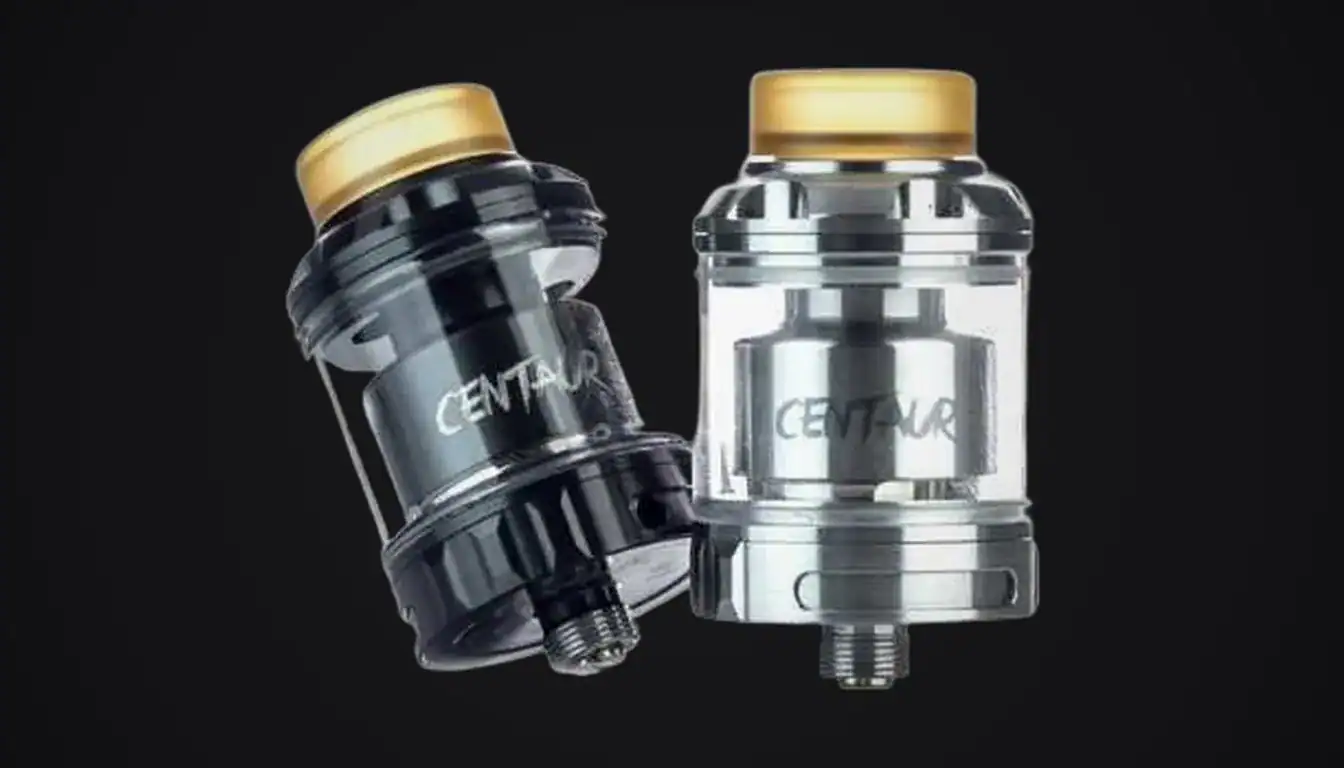
It supports both stainless steel and nickel coils, so you can pick whichever wire profile suits your taste preference. Clapton coils in particular pulled excellent flavor from the deck, and swapping wire types didn’t reveal any weak spots in how the airflow interacts with the build.
Design
Materials feel solid, the finish is clean, and nothing rattles or feels flimsy after repeated rebuilds. That’s a pleasant surprise given the tank’s original budget positioning. The deck’s layout also rewards frequent rebuilders, since there’s little fumbling with tiny hardware compared to tighter, more cramped decks.
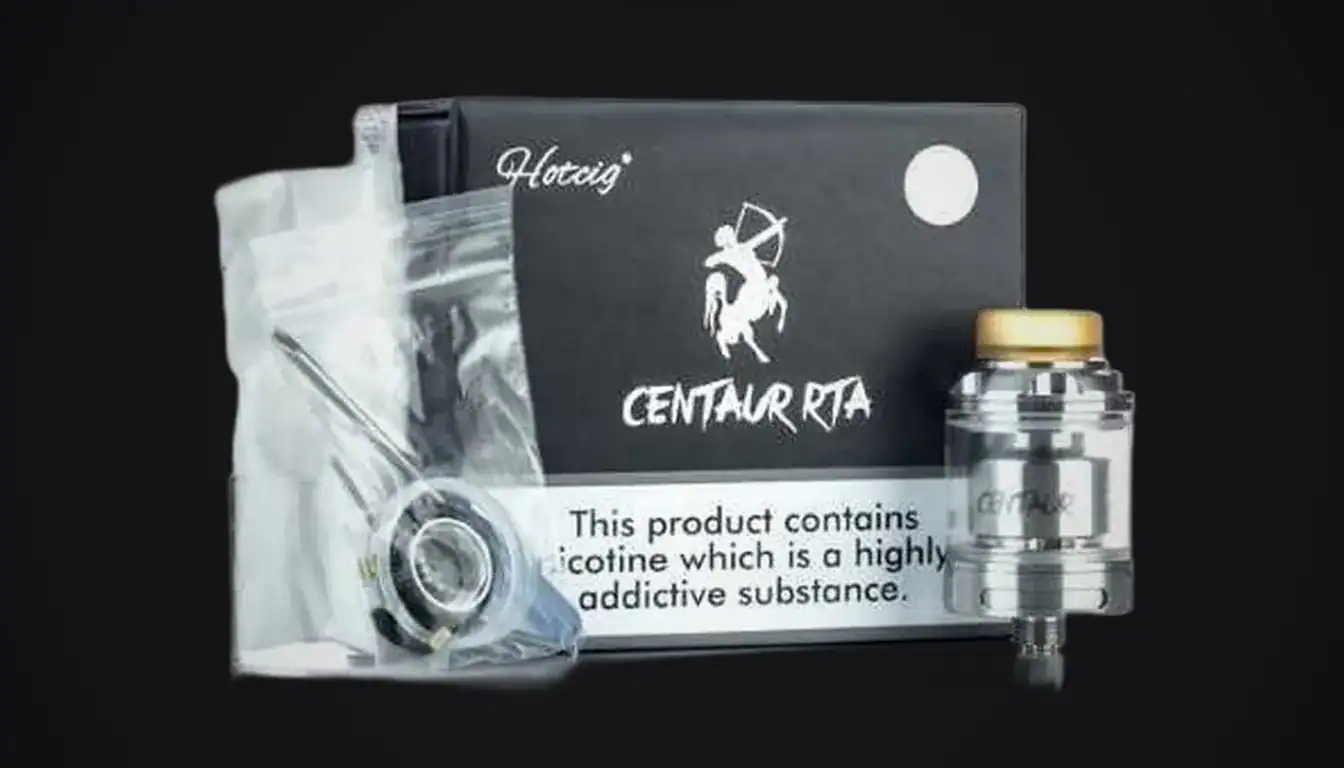
Original retail packaging included the tank itself, a 4ml glass section, a chimney extension, spare parts, o-rings, a build tool, and a manual. That’s a solid bundle for a tank that originally sold in the $35–$45 range. These days, you’ll mostly find it through secondhand marketplaces or old clearance stock, and pricing varies a lot depending on condition — expect anywhere from $20 to $40 if you can track one down.
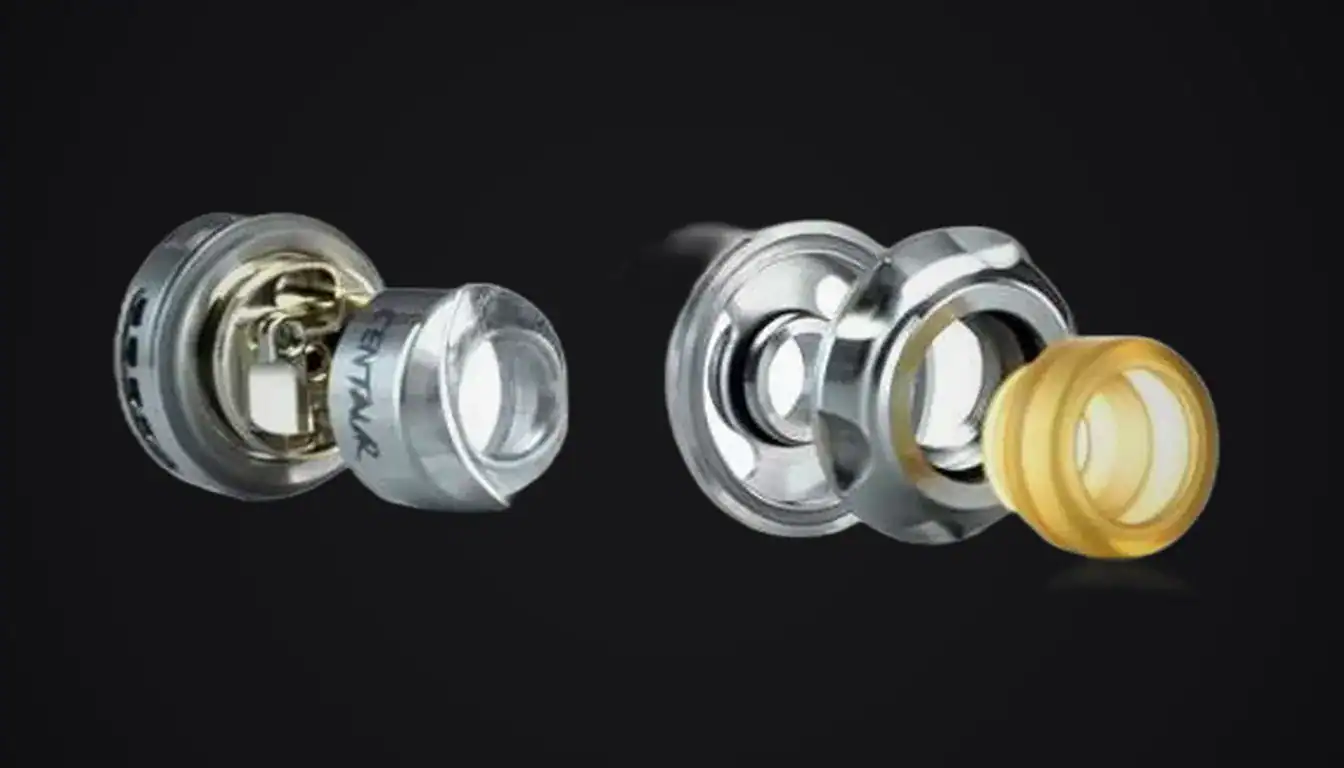
It’s still a good-looking tank. Gold accents against clear glass give it a bit of flash without going overboard, and it holds up well next to newer tanks you’d actually find in stock, like the Wotofo Bravo RTA.
Performance
Construction holds up well, too. No leaking turned up during our testing, which is more than some tanks in this category can say. If you’ve been burned by leaky tanks before, this one’s a nice change of pace.
| Spec | Hotcig Centaur RTA |
|---|---|
| Diameter | 24mm |
| Coil setup | Single coil |
| Tank capacity | 2ml (4ml with extension) |
| Airflow | Dual-sized, 5-slot adjustable |
| Fill style | Top-fill |
| Original price | $35–$45 |
| Availability in 2026 | Discontinued, secondhand only |
Should You Still Buy One in 2026?
Here’s the honest answer: only if you find one cheap and you’re specifically after a single-coil, flavor-focused RTA with an easy build deck. Worth noting: because parts are scarce, a cracked glass section or lost o-ring could effectively end the tank’s life for good, so factor that risk into whatever price you’re willing to pay.
If new availability matters more to you than nostalgia, tanks like the Vandy Vape Kylin Mini RTA or the Geek Vape Zeus X offer similar build-friendliness with better long-term parts support. A currently-supported RTA with similar build-friendliness, like the WOTOFO Serpent Alto, is also far easier to find in 2026.
For browsing more current options, our full tank review archive covers everything from budget RTAs to high-end sub-ohm setups.
Frequently Asked Questions
Which is better, RDA or RTA?
Neither is strictly “better” — it depends on what you want. RDAs generally deliver slightly stronger flavor since juice sits directly on the coil, but they need frequent redripping. RTAs hold more juice and stay convenient for all-day vaping while still letting you build your own coils.
Is Hellvape a good vape brand?
Hellvape has a solid reputation in the rebuildable tank space, known for tanks like the Dead Rabbit series that balance flavor and vapor production well. Build quality across their lineup tends to be consistent, and they’re a common recommendation alongside brands like Wotofo and GeekVape for flavor-chasers.
How does the Hellvape Dead Rabbit V2 RTA compare to the Centaur?
The Dead Rabbit V2 supports dual coils and generally produces more vapor, while the Centaur sticks to a single coil built purely for flavor. Want bigger clouds with strong flavor? The Dead Rabbit V2 is the more versatile option. The Centaur, or its successor, is the better call if you’d rather keep things simple with one coil.
Is the Hellvape Dead Rabbit 4 RTA worth considering instead?
The Dead Rabbit 4 is a newer, dual-coil RTA that’s widely available and well-supported with replacement parts and coils — something the discontinued Centaur can’t offer anymore. If parts availability and long-term support matter to you, the Dead Rabbit 4 is the safer buy in 2026.
Can I still buy replacement glass or parts for the Hotcig Centaur?
Not easily. Your best bet is checking vape forums, secondhand marketplaces, or seeing if a local shop has old stock tucked away.
Sources & References
- Manufacturer specifications and original retail packaging details, Hotcig
- Hands-on testing and airflow/flavor comparisons conducted by the SmokeTastic review team


